
East Central Europe (49,293 – 28,578 …
Years: 49293BCE - 28578BCE
East Central Europe (49,293 – 28,578 BCE) Upper Pleistocene I — Ice-Edge Steppes, River Terraces, and Cave Lifeways
Geographic and Environmental Context
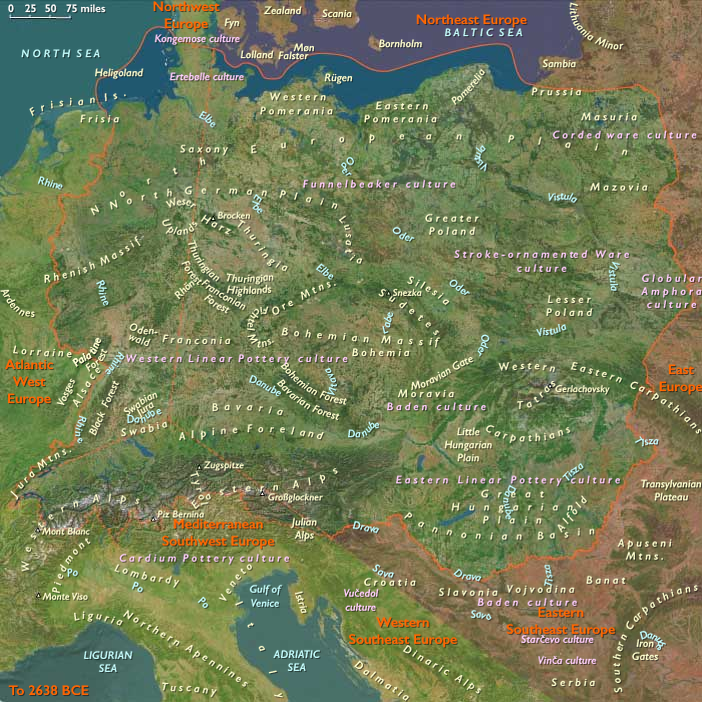
East Central Europe includes the greater part of Germany (including Berlin, Munich, Hamburg), Poland, Czechia (Bohemia and Moravia), Slovakia, Hungary, northeastern Austria, and the Danube basin through the Carpathian arc.
-
Anchors: Lower Danube terraces and loess bluffs, Iron Gates gorges (NE Serbia–Romania), Thracian Plain margins, Dobruja uplands, Carpathian forelands.
-
Periglacial steppe–tundra covered plains; conifer pockets in sheltered valleys; Black Sea level sat far below modern.
Climate & Environmental Shifts
-
Last Glacial Maximum: cold, arid, windy; braided rivers; expanded loess mantles; seasonal ice on the Danube margins.
Subsistence & Settlement
-
Foragers hunted mammoth, bison, horse, reindeer on terrace shoulders; fishing and waterfowl exploited seasonally.
-
Camps in loess promontories and caves/rock shelters; hearths, butchery floors, windbreaks.
Technology & Material Culture
-
Blade–microblade toolkits; burins/scrapers; bone/antler points; eyed needles (tailored furs).
-
Ornaments (pierced teeth, shell); broad ochre use.
Movement & Interaction Corridors
-
Lower Danube trunkway; Iron Gates as winter refugium and crossing; steppe corridors across Dobruja to the Black Sea shelf.
Cultural & Symbolic Expressions
-
Engraved bone/ivory animal imagery; ochred burials imply shared Upper Paleolithic symbolism with the wider Eurasian north.
Environmental Adaptation & Resilience
-
High mobility between river–steppe–shelter niches; layered clothing and fuel caching enabled deep-winter occupation.
Groups
Topics
Commodoties
Subjects
Regions
Subregions

Years: 49293BCE - 28578BCE
Groups
Topics
Commodoties
Subjects
Regions
Subregions