
Eastern Southeast Europe (376–387 CE): Gothic Crisis …
Years: 376 - 387
Eastern Southeast Europe (376–387 CE): Gothic Crisis and the Battle of Adrianople
Settlement and Migration Patterns
Arrival and Settlement of the Goths
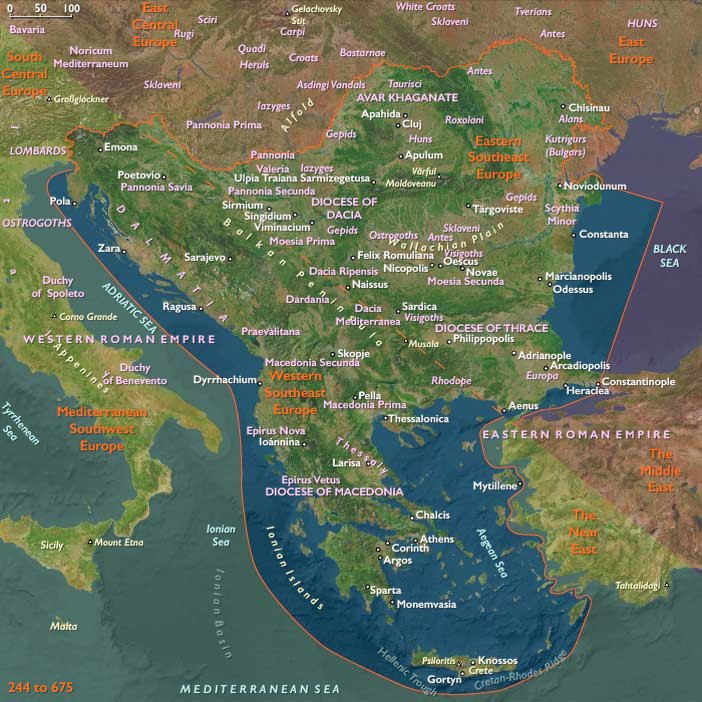
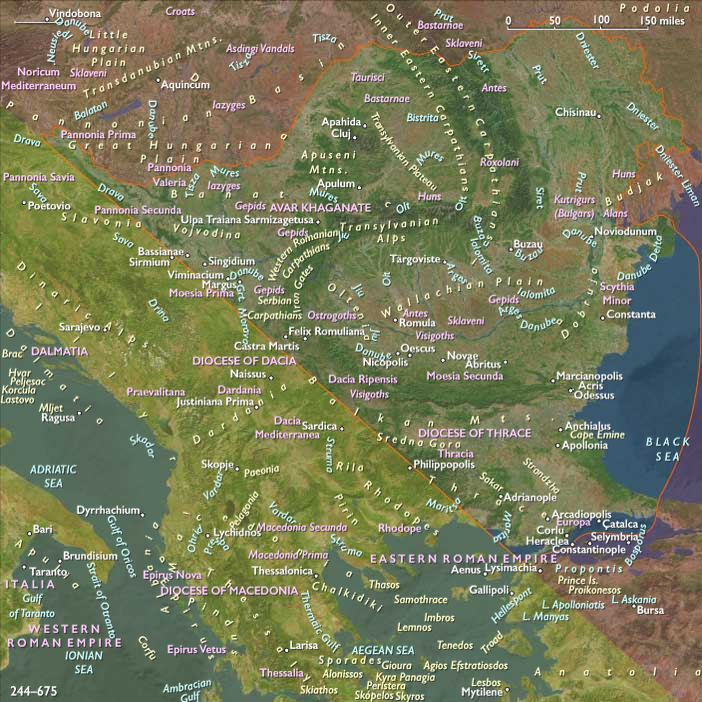
In 376 CE, a massive influx of displaced Goths, primarily the Thervingi, led by Fritigern, arrived at the banks of the Danube River, fleeing from the advancing Huns. They requested refuge within the Roman Empire, and Emperor Valens allowed their settlement on the empire’s southern frontier, promising land, protection, and food provisions in exchange for their status as foederati (allied peoples serving Roman interests).
Roman Mismanagement and Humanitarian Crisis
Despite assurances, Roman corruption and logistical failures resulted in inadequate provisions, severe famine, and inhumane conditions. The Goths, largely retaining their arms due to Roman corruption, were confined without sufficient food, forced into the desperate measure of trading their own people—especially children and women—as slaves in exchange for dog meat to survive. This severe humanitarian crisis precipitated open revolt.
Military Developments and Conflict
Outbreak of Gothic Revolt
Frustrated by Roman treachery and incompetence, the Goths began open rebellion following a failed assassination attempt on their leaders in the city of Marcianople. By 377 CE, the Goths had organized into a substantial military threat, systematically plundering the countryside, overwhelming weak Roman defenses, and laying waste to significant areas of Thrace and the Balkans.
Battle of Adrianople (378 CE)
Emperor Valens personally led a Roman army north from Constantinople in an attempt to defeat the Gothic rebellion decisively. However, the Roman forces suffered a catastrophic defeat at the Battle of Adrianople (378 CE), in which Valens himself was killed. This event marked a pivotal turning point, severely weakening the empire’s military capabilities and prestige.
Subsequent Gothic Raids and Roman Response
Following their victory, the Goths gained almost unchecked freedom to raid and pillage. In 379 CE, they moved northwest, ravaging the region of Dacia, and subsequently split into two factions due to logistical strain: the Tervingi under Fritigern moved southeast toward Macedonia, while the Greuthungi traveled north into Pannonia, where they suffered defeat by the Western Roman Emperor Gratian.
Economic and Technological Developments
Devastation of Regional Economy
The Gothic incursions severely disrupted the local economies. Agricultural production collapsed, trade routes were compromised, and significant damage to urban centers and rural infrastructure created economic instability. Many regions of the Roman Balkans experienced long-term economic stagnation, with some areas never fully recovering.
Changes in Military Logistics
The crisis compelled the Romans to rethink their military strategies and logistics, prompting significant adaptations, including reliance on allied barbarian foederati troops. This shift in military policy laid groundwork for future Roman-barbarian relations, altering military provisioning and infrastructure demands.
Cultural and Artistic Developments
Cultural Displacement and Decline
The widespread destruction and demographic upheaval significantly disrupted cultural continuity. Cities like Adrianople and Marcianople witnessed destruction or severe damage, impacting the preservation and transmission of classical traditions. Cultural activities increasingly shifted toward defensive and survivalist priorities.
Social and Religious Developments
Emergence of Foederati System
Following the Gothic victory, Rome, facing irreversible territorial and military realities, formally recognized the Goths as an autonomous people within imperial boundaries. The peace treaty of October 3, 382 CE, represented a monumental shift in imperial policy, setting a precedent for future barbarian settlements within the empire, effectively institutionalizing the foederati system.
Religious and Social Adaptations
Amidst this turmoil, social structures and religious practices adapted to new realities. Indigenous and Roman traditions persisted, though significantly challenged by the profound instability and shifting demographics resulting from Gothic integration.
Long-Term Consequences and Historical Significance
The era from 376 to 387 CE represented one of the most significant turning points in Roman and European history. The catastrophic Roman defeat at Adrianople symbolized the empire’s increasing inability to manage internal crises and external threats effectively. For the first time, Rome accommodated a substantial autonomous barbarian group within its borders, establishing a critical precedent that hastened the eventual fragmentation of Roman authority and the rise of successor barbarian kingdoms throughout Europe.
People
Groups
- Polytheism (“paganism”)
- Dacians, or Getae, or Geto-Dacians
- Transylvania, region of
- Macedonia, Roman
- Thrace, Theme of
- Mithraic Mysteries
- Gepids (East Germanic tribe)
- Goths (East Germanic tribe)
- Thracia (Roman province)
- Moesia Inferior (Roman province)
- Dacia, Roman
- Huns
- Thervingi (East Germanic tribe)
- Greuthungi (East Germanic tribe)
- Roman Empire: Tetrarchy
- Christianity, Nicene
- Hunnic Empire
Topics
- Roman Age Optimum
- Migration Period
- Visigothic Raids on the Roman Empire, Early
- Fall of the Western Roman Empire
- Adrianople, Battle of
Commodoties
Subjects
Regions
Subregions
Years: 376 - 387
People
Groups
- Polytheism (“paganism”)
- Dacians, or Getae, or Geto-Dacians
- Transylvania, region of
- Macedonia, Roman
- Thrace, Theme of
- Mithraic Mysteries
- Gepids (East Germanic tribe)
- Goths (East Germanic tribe)
- Thracia (Roman province)
- Moesia Inferior (Roman province)
- Dacia, Roman
- Huns
- Thervingi (East Germanic tribe)
- Greuthungi (East Germanic tribe)
- Roman Empire: Tetrarchy
- Christianity, Nicene
- Hunnic Empire
Topics
- Roman Age Optimum
- Migration Period
- Visigothic Raids on the Roman Empire, Early
- Fall of the Western Roman Empire
- Adrianople, Battle of
Commodoties
Subjects
Regions
Subregions