
Eastern Southeast Europe (364–375 CE): Barbarian Invasions …
Years: 364 - 375
Eastern Southeast Europe (364–375 CE): Barbarian Invasions and Cultural Transitions
Settlement and Migration Patterns
Onset of Barbarian Invasions
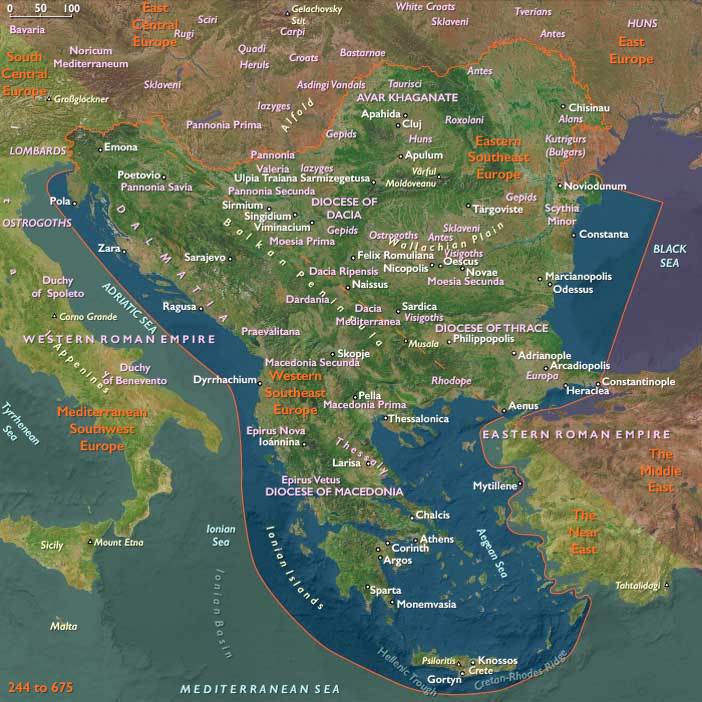
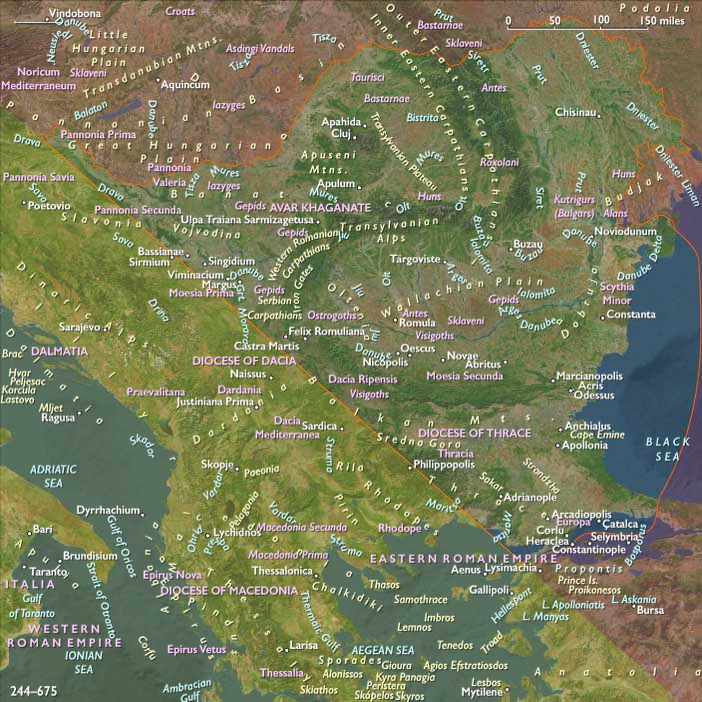
Between 364 and 375 CE, Eastern Southeast Europe experienced intensified invasions by Germanic and Central Asian tribes, dramatically reshaping the region's demographic and cultural landscape. The first major incursions included those by the Visigoths, Ostrogoths, Gepids, and later the nomadic pastoralist Huns, who arrived around 370 from Central Asia. These groups swept across the Danube frontier, overwhelming Roman defenses and precipitating a wave of instability and population displacement.
Decline of Dacian Settlements
As Rome's power receded from the region, Dacia became increasingly vulnerable, transforming into a thoroughfare for invading tribes aiming for wealthier lands further west and south. Roman-built towns and settlements were progressively abandoned, infrastructure deteriorated, and rural life declined precipitously, leaving local populations exposed to frequent plundering and disruptions.
Economic and Technological Developments
Economic Collapse and Insecurity
The relentless incursions severely undermined economic stability, trade, and agriculture. Crumbling Roman roads became unsafe due to highwaymen and banditry, severely impacting trade and travel. While some fortified urban centers struggled to maintain economic activity, rural commerce and agricultural productivity dramatically decreased under continuous threat.
Infrastructure Decay
Roman infrastructure, once the backbone of regional connectivity and prosperity, fell into disrepair. Roads, aqueducts, and urban defenses deteriorated due to lack of maintenance, resources, and security, symbolizing the broader regional decline.
Cultural and Artistic Developments
Emergence of Dacian Ethnic Identity
Despite political and economic turmoil, this era marked the consolidation of a distinct Dacian ethnic identity, emerging from the fusion of Roman colonists, indigenous Getae, and coastal Greek populations. This cultural synthesis fostered new forms of linguistic expression and religious practices, laying foundations for later Romanian cultural heritage.
Linguistic Transition and Literacy
The Vulgar Latin language increasingly replaced the native Thracian tongue in commerce, administration, and daily life, significantly advancing literacy among local populations, especially those involved with the Roman military and administrative systems. This linguistic shift laid the groundwork for the evolution of the modern Romanian language.
Social and Religious Developments
Religious Syncretism and Continuity
A notable religious fusion occurred during this period, reflecting both Roman and indigenous influences. The local populace, having embraced deities from the Greco-Roman pantheon such as Jupiter, Diana, and Venus, also retained indigenous religious traditions, such as cremation rites originally practiced by the Getae, often incorporating Roman customs such as placing coins with cremated remains for Charon, the mythological ferryman of the dead.
Mithraic and Indigenous Beliefs
Some inhabitants continued the worship of Mithras, the Persian god of light popular among Roman legionnaires. These religious practices exemplified the diverse and syncretic spiritual landscape that persisted even amidst regional upheaval.
Long-Term Consequences and Historical Significance
The period from 364 to 375 CE represented a critical turning point for Eastern Southeast Europe, characterized by severe barbarian invasions, economic disintegration, infrastructure collapse, and profound cultural transformation. Despite these disruptions, significant cultural and linguistic developments took root, ultimately shaping the region's enduring ethnic, linguistic, and religious herita
Groups
- Polytheism (“paganism”)
- Dacians, or Getae, or Geto-Dacians
- Transylvania, region of
- Macedonia, Roman
- Thrace, Theme of
- Mithraic Mysteries
- Gepids (East Germanic tribe)
- Goths (East Germanic tribe)
- Thracia (Roman province)
- Moesia Inferior (Roman province)
- Dacia, Roman
- Huns
- Roman Empire: Tetrarchy
- Christianity, Nicene
- Hunnic Empire
Topics
Commodoties
Subjects
Regions
Subregions
Years: 364 - 375
Groups
- Polytheism (“paganism”)
- Dacians, or Getae, or Geto-Dacians
- Transylvania, region of
- Macedonia, Roman
- Thrace, Theme of
- Mithraic Mysteries
- Gepids (East Germanic tribe)
- Goths (East Germanic tribe)
- Thracia (Roman province)
- Moesia Inferior (Roman province)
- Dacia, Roman
- Huns
- Roman Empire: Tetrarchy
- Christianity, Nicene
- Hunnic Empire
Topics
Commodoties
Subjects
Regions
Subregions