
Eastern Southeast Europe (340–351 CE): Imperial Challenges …
Years: 340 - 351
Eastern Southeast Europe (340–351 CE): Imperial Challenges and Frontier Pressures
Settlement and Migration Patterns
Intensified Frontier Pressures
Between 340 and 351 CE, Eastern Southeast Europe faced renewed pressure along the Danube frontier as tribal movements intensified, particularly from Gothic tribes. While urban centers such as Constantinople, Philippopolis (Plovdiv), and Serdica (Sofia) remained secure, smaller border settlements experienced instability due to periodic incursions and raids.
Gothic and Tribal Raids
Gothic incursions significantly increased during this era, with several penetrations into Roman territories in Moesia, Thracia, and Scythia Minor. These raids disrupted rural populations, prompting migrations into fortified cities and impacting local demographics.
Economic and Technological Developments
Strained Economic Conditions
Repeated frontier raids introduced economic strains, particularly in agricultural regions near the Danube. Nonetheless, major cities continued economic activities due to their fortified status and strategic location, maintaining regional trade and urban commerce despite increased instability in outlying areas.
Enhanced Defensive Infrastructure
In response to increased threats, Roman authorities expanded and improved frontier fortifications and strengthened the military road network. These enhancements ensured rapid mobilization of troops and supplies, showcasing Roman adaptability to evolving threats.
Cultural and Artistic Developments
Preservation Amid Instability
Cultural life persisted despite frontier disruptions. Urban centers continued artistic and architectural projects, particularly religious structures such as basilicas and shrines, reflecting ongoing imperial support and the growing influence of Christianity.
Continuing Classical Scholarship
Educational institutions maintained their role in preserving Greek and Roman intellectual traditions. Despite external threats, scholarship and literary activities continued, particularly in major urban and ecclesiastical centers like Constantinople.
Social and Religious Developments
Christianity's Ongoing Consolidation
Christianity further solidified its position across Eastern Southeast Europe, supported by imperial endorsement and patronage. Bishops and ecclesiastical institutions increasingly played central roles in social administration, community leadership, and regional cohesion.
Administrative Adjustments
Roman governance adapted to growing frontier pressures through increased militarization and strengthened provincial administration. Local elites continued integration into the imperial administrative framework, ensuring a degree of societal coherence despite external challenges.
Long-Term Consequences and Historical Significance
The period from 340 to 351 CE highlighted increased frontier pressures and imperial responses through strengthened military and administrative strategies. Despite disruptions, cultural continuity and religious consolidation continued, laying critical foundations for resilience and adaptation in the face of growing external threats. These developments significantly shaped regional preparedness for the more severe challenges of subsequent decades.
People
Groups
- Dacians, or Getae, or Geto-Dacians
- Transylvania, region of
- Macedonia, Roman
- Thrace, Theme of
- Gepids (East Germanic tribe)
- Goths (East Germanic tribe)
- Thracia (Roman province)
- Moesia Inferior (Roman province)
- Dacia, Roman
- Roman Empire: Tetrarchy
- Christianity, Nicene
Topics
Commodoties
Subjects
Regions
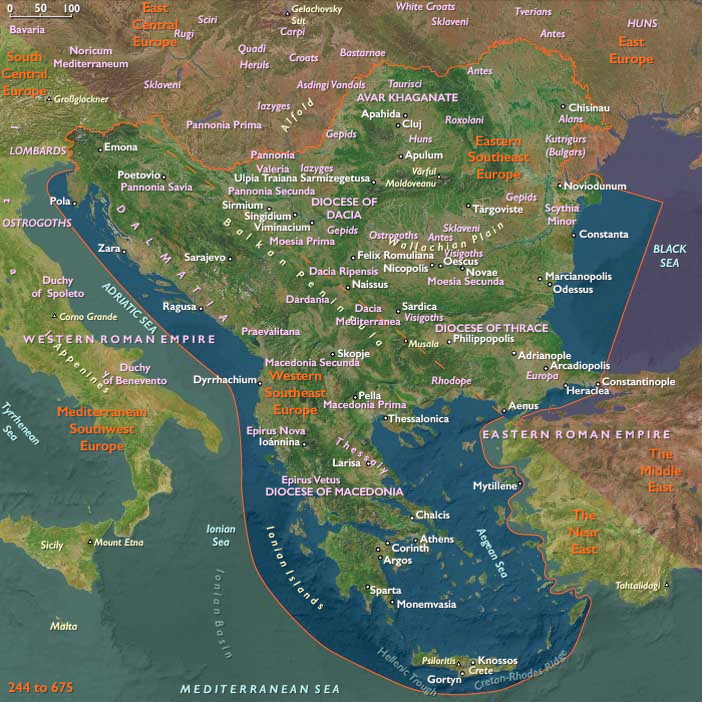
Subregions
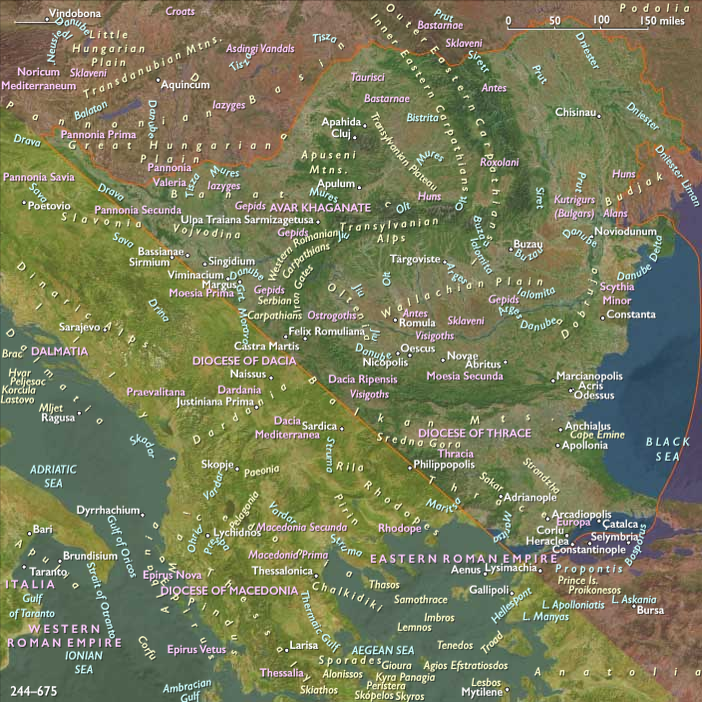
Related Events
Showing 2 events out of 2 total
Years: 340 - 351
People
Groups
- Dacians, or Getae, or Geto-Dacians
- Transylvania, region of
- Macedonia, Roman
- Thrace, Theme of
- Gepids (East Germanic tribe)
- Goths (East Germanic tribe)
- Thracia (Roman province)
- Moesia Inferior (Roman province)
- Dacia, Roman
- Roman Empire: Tetrarchy
- Christianity, Nicene
Topics
Commodoties
Subjects
Regions
Subregions