
East Central Europe (28,577 – 7,822 …
Years: 28577BCE - 7822BCE
East Central Europe (28,577 – 7,822 BCE) Upper Pleistocene II — Deglaciation, Pioneer Foragers, and Loess Landscapes
Geographic and Environmental Context
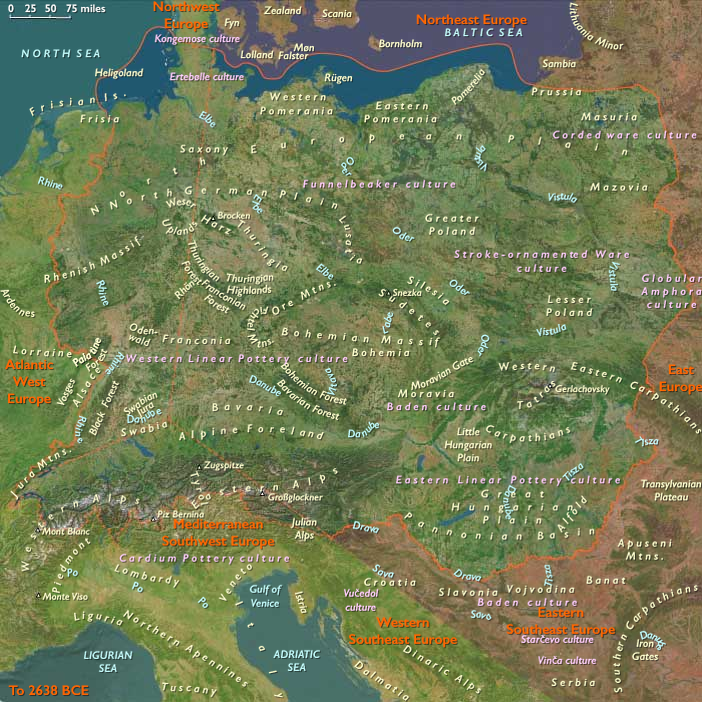
East Central Europe includes Turkey-in-Europe (Thrace); Greece’s Thrace; Bulgaria (except its southwest); Romania & Moldova; northeastern Serbia; northeastern Croatia; extreme northeastern Bosnia & Herzegovina.
-
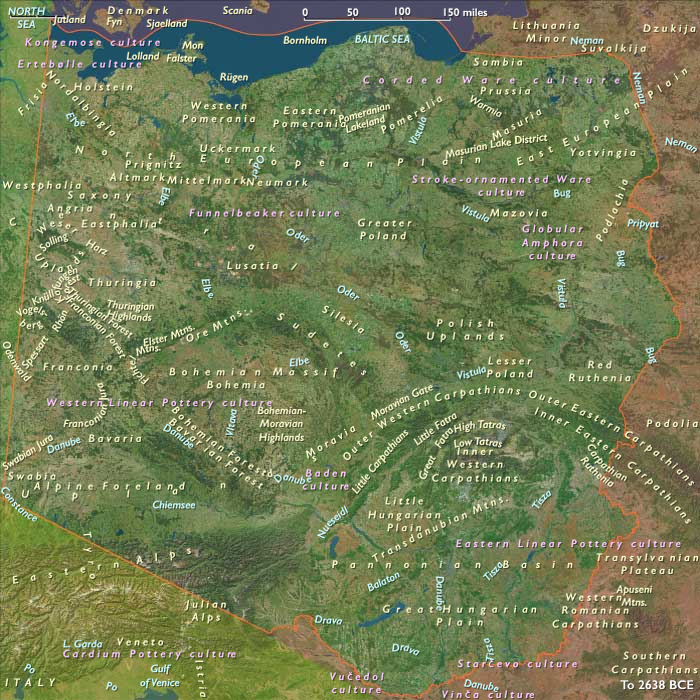
Anchors: Upper Danube–Vienna Basin, Moravian Gate, Bohemian Basin, Upper/Middle Elbe, Oder–Vistula plains, Carpathian Basin (Hungary/Slovakia), Polish uplands, German lowlands, Sudetes/Tatra forelands.
-
Retreating glaciers reshaped Danube–Morava–Vistula valleys.
-
Large proglacial lakes dotted southern Poland, Moravia, Slovakia.
Climate & Environmental Shifts
-
Bølling–Allerød: warmer, wetter, woodland expansion.
-
Younger Dryas: steppe returned briefly.
-
Early Holocene warmth advanced broadleaf forests.
Subsistence & Settlement
-
Broad-spectrum foragers hunted elk, red deer, aurochs; fished rivers; gathered nuts and berries.
-
Seasonal lakeside camps in Poland, Moravia, Danube basin.
Technology & Material Culture
-
Refined microliths; fishing gear (bone harpoons); ornamental amber/teeth pendants.
-
Ochre continued in burials.
Movement & Interaction Corridors
-
Vistula–Oder–Elbe routes integrated north–south mobility; Danube–Morava linked Balkans and Central Europe.
Cultural & Symbolic Expressions
-
Engraved antler, stone; ritualized hearths at campsites; rock shelters with engravings.
Groups
Topics
Commodoties
Subjects
Regions
Subregions
Years: 28577BCE - 7822BCE
Groups
Topics
Commodoties
Subjects
Regions
Subregions