
Eastern Southeast Europe (268–279 CE): Plague, Barbarian …
Years: 268 - 279
Eastern Southeast Europe (268–279 CE): Plague, Barbarian Incursions, and Imperial Struggles
Settlement and Migration Patterns
Continued Barbarian Pressure
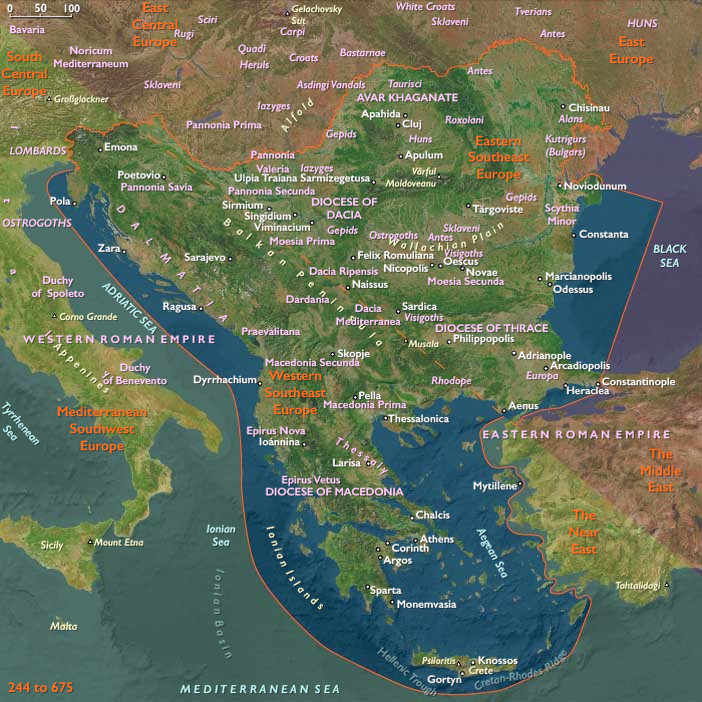
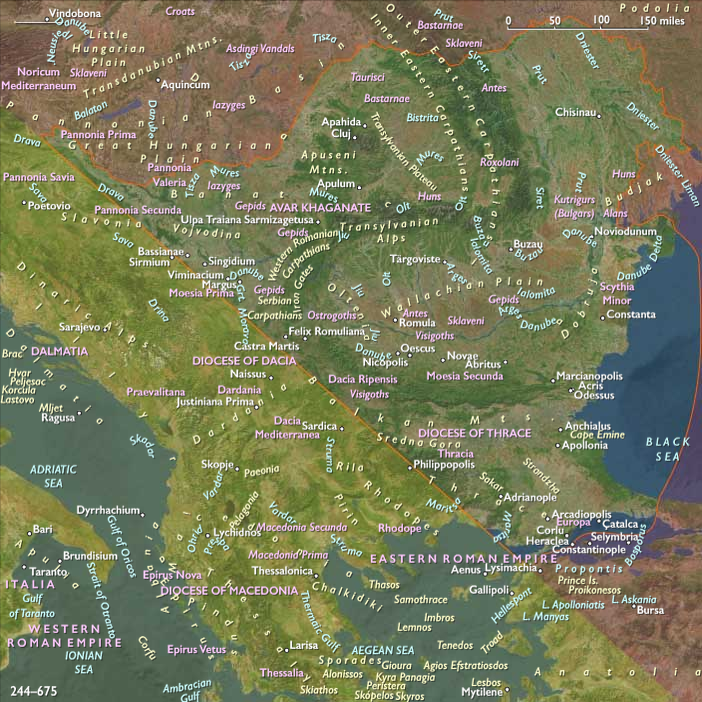
Between 268 and 279 CE, the region continued to experience frequent incursions from Gothic and other barbarian groups. These ongoing invasions disrupted existing settlements, particularly along the Danube frontier and within the provinces of Thrace and Moesia, causing significant demographic and social upheaval.
Political and Military Developments
Death of Emperor Claudius II Gothicus
In 270 CE, Emperor Claudius II Gothicus died due to an outbreak of plague—possibly linked to the earlier Plague of Cyprian—highlighting ongoing vulnerability within the empire. His death exacerbated political instability, leading to rapid shifts in leadership and continued internal discord.
Impact of Plague on Barbarian Invaders
Historical accounts, notably the Historia Augusta, describe how barbarian groups, including surviving Gothic tribes gathering in Haemimontum, were severely weakened by famine and disease around this period. These epidemics significantly reduced immediate barbarian threats, allowing temporary Roman reprieve from direct military confrontations.
Military Reorganization under Aurelian
In response to persistent invasions and internal instability, Emperor Aurelian (270–275 CE) initiated substantial military and administrative reforms, reinforcing frontier defenses and attempting to consolidate imperial authority. These measures provided a brief respite, stabilizing the empire's boundaries temporarily.
Economic and Technological Developments
Economic Struggles amid Epidemics and Conflict
The region's economy continued suffering under the combined impact of ongoing invasions, plague outbreaks, and imperial instability. Trade disruptions, agricultural decline, and reduced urban activity reflected the strain of continuous military conflict and internal upheaval.
Reinforced Military Infrastructure
Investment in infrastructure predominantly addressed military defense needs. Extensive fortification of frontier cities and repair of strategic road networks were prioritized to improve military responsiveness and regional security.
Cultural and Artistic Developments
Cultural Decline and Limited Production
Cultural activities significantly declined as resources and attention were overwhelmingly diverted to defense and survival. Public artistic commissions and monumental building projects became scarce, reflecting broader societal stress and economic limitations.
Social and Religious Developments
Increasing Local Autonomy
Persistent crises weakened central authority, compelling provincial cities and regional leaders to assume greater responsibility for local governance and defense. This trend toward decentralized power structures accelerated as communities adapted independently to ongoing threats.
Religious Continuity Amid Crisis
Despite widespread instability, religious life provided crucial social continuity. Traditional Roman worship persisted, and Christianity continued to expand gradually, offering spiritual and communal solace amid ongoing disruptions.
Long-Term Consequences and Historical Significance
The era from 268 to 279 CE marked a critical period of intensified crisis, characterized by persistent barbarian invasions, devastating plague outbreaks, and profound political instability. While Roman military reforms under emperors like Aurelian briefly restored imperial control, these events underscored the empire's vulnerability, setting the stage for deeper structural transformations in subsequent decades.
People
Groups
- Dacians, or Getae, or Geto-Dacians
- Macedonia, Roman
- Thrace, Theme of
- Goths (East Germanic tribe)
- Christians, Early
- Thracia (Roman province)
- Moesia Inferior (Roman province)
- Dacia, Roman
- Roman Empire (Rome): Non-dynastic
Topics
- Roman Age Optimum
- Crisis of the Third Century (Roman Civil “War” of 235-84)
- Plague of Cyprian
- Roman Gothic War, Second
- Roman Gothic War, Third
Commodoties
Subjects
Regions
Subregions
Years: 268 - 279
People
Groups
- Dacians, or Getae, or Geto-Dacians
- Macedonia, Roman
- Thrace, Theme of
- Goths (East Germanic tribe)
- Christians, Early
- Thracia (Roman province)
- Moesia Inferior (Roman province)
- Dacia, Roman
- Roman Empire (Rome): Non-dynastic
Topics
- Roman Age Optimum
- Crisis of the Third Century (Roman Civil “War” of 235-84)
- Plague of Cyprian
- Roman Gothic War, Second
- Roman Gothic War, Third
Commodoties
Subjects
Regions
Subregions