
Eastern Southeast Europe (388–531 CE): Transition, Division, …
Years: 388 - 531
Eastern Southeast Europe (388–531 CE): Transition, Division, and Byzantine Emergence
Settlement and Migration Patterns
Barbarian Invasions and Settlements
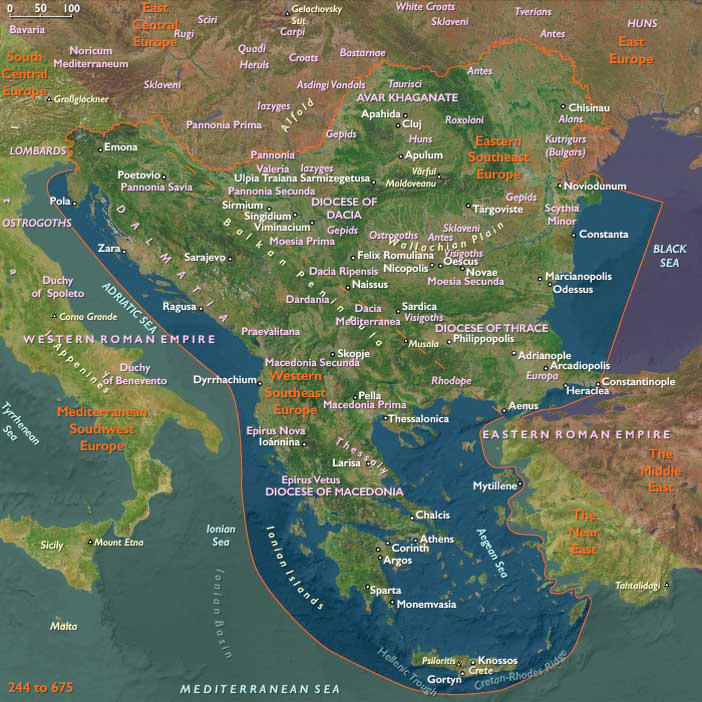
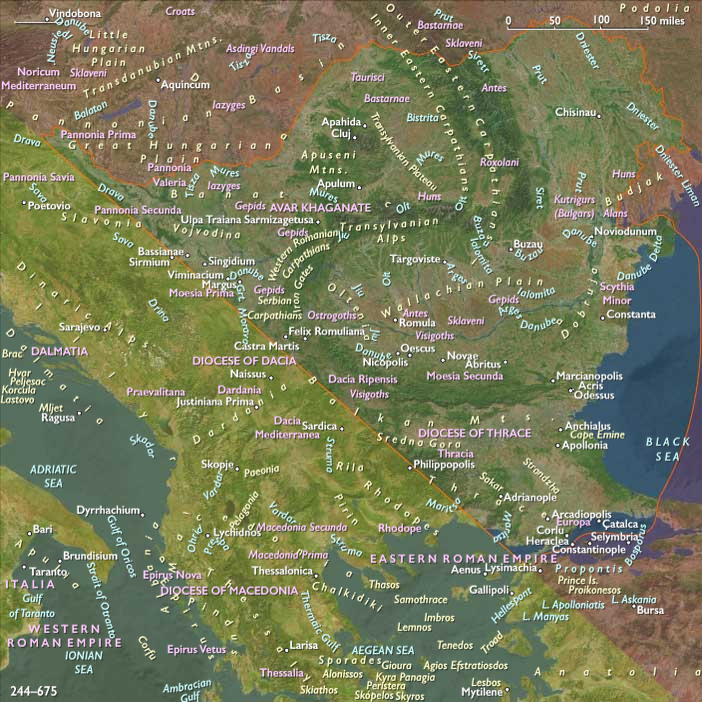
Between 388 and 531 CE, Eastern Southeast Europe experienced extensive migrations and invasions from groups including the Huns, Alans, Antes, Gepids, Visigoths, Ostrogoths, Iazyges, and later the Avars and Kutrigurs (Bulgars). These movements significantly affected regional stability, settlement patterns, and demographic composition. In 448, the Huns ravaged key cities such as Sirmium (modern-day Sremska Mitrovica), Singidunum (Belgrade), and Emona (Ljubljana). By 493, the Ostrogoths had established dominance over Dalmatia and other provinces, though later driven out by Emperor Justinian I in the sixth century.
Roman Provincial Reorganization
Significant Roman provincial reorganizations occurred, establishing provinces such as Pannonia Savia, Pannonia Secunda, Pannonia Valeria (modern Slavonia, Vojvodina, and the Banat), Moesia Prima, Moesia Secunda, Dacia Ripensis, Scythia Minor, and Europa. These administrative divisions enhanced governance, security, and economic integration.
Urban Adaptation and Transformation
Cities adapted through improved fortifications. Byzantium, renamed Constantinople by Emperor Constantine in 330 CE, emerged prominently as the Byzantine capital. After the catastrophic Battle of Adrianople (378), where the Visigoths defeated Emperor Valens, Constantinople's defenses were greatly enhanced. Theodosius II constructed the city's formidable eighteen-meter-tall triple-wall fortifications, impenetrable until the advent of gunpowder.
Economic and Technological Developments
Economic Realignment and Resilience
Despite disruptions from migrations and warfare, regional economies adapted effectively. Constantinople became a major economic hub, facilitating commerce between Europe, Asia Minor, and the broader Mediterranean. Wealth from the eastern Mediterranean and western Asia flowed into the city, establishing it as the largest urban center following the Western Roman Empire's fall.
Military and Defensive Innovations
Technological advancements emphasized defensive infrastructure, including enhanced fortifications, improved military equipment, and sophisticated logistics, sustaining military effectiveness amidst external threats and securing strategic locations.
Cultural and Artistic Developments
Byzantine Cultural Flourishing
Constantinople and major cities experienced a cultural renaissance, exemplified by sophisticated architecture, mosaics, and public art reflecting imperial grandeur and Christian spirituality. The founding of a university near the Forum of Taurus in 425 by Theodosius II exemplified significant cultural and intellectual investments.
Preservation of Classical Heritage
Classical Greek and Roman knowledge was preserved through educational institutions and libraries, ensuring continued influence of classical texts, philosophies, and scientific knowledge in regional education and culture.
Social and Religious Developments
Evolution of Byzantine Governance
Roman provincial governance evolved into the distinctive Byzantine administrative system with centralized bureaucracy and complex provincial structures. The division of the Roman Empire in 395 by Emperor Theodosius's sons permanently separated Greek-speaking Constantinople from Latin Rome, profoundly influencing cultural and political dynamics, especially among future Serbs and Croats.
Christianity’s Ascendancy and Theological Debates
Christianity became deeply intertwined with political authority and cultural identity. Theological debates surrounding Arianism and Christological doctrines significantly influenced religious practices and social dynamics. Constantinople established a patriarchate exercising ecclesiastical jurisdiction over much of the Greek East, reinforcing Christianity's regional prominence.
Long-Term Consequences and Historical Significance
The period from 388 to 531 CE was transformative, transitioning Eastern Southeast Europe from late Roman territories into the Byzantine Empire. Demographic shifts, economic realignments, cultural flourishing, and religious developments laid the foundations of Byzantine civilization, significantly shaping the region’s historical trajectory.
People
Groups
- Dacians, or Getae, or Geto-Dacians
- Iazyges, or Iazygians
- Alans (Sarmatian tribal grouping)
- Thrace, Theme of
- Gepids (East Germanic tribe)
- Goths (East Germanic tribe)
- Christians, Early
- Thracia (Roman province)
- Dacia Ripensis (Roman province)
- Dacia Mediterranea (Roman province)
- Scythia Minor (Roman province)
- Moesia I (Roman province)
- Moesia II (Roman province)
- Pannonia Savia (Roman province)
- Pannonia Secunda (Roman province)
- Pannonia Valeria (Roman province)
- Bulgars
- Christianity, Arian
- Europa (Roman province)
- Hunnic Empire
- Visigoths, Realm of the
- Ostrogoths, Realms of the
- Slavs, South
- Christianity, Chalcedonian
- Gepids, Kingdom of the
- Roman Empire, Eastern: Leonid dynasty
- Avars, Eurasian
- Antes (Slavic tribal confederation)
- Sclaveni (Slavic tribal confederation)
- Roman Empire, Eastern: Justinian dynasty
Topics
Commodoties
- Weapons
- Oils, gums, resins, and waxes
- Grains and produce
- Ceramics
- Strategic metals
- Slaves
- Beer, wine, and spirits
- Lumber
Subjects
Regions
Subregions
Years: 388 - 531
People
Groups
- Dacians, or Getae, or Geto-Dacians
- Iazyges, or Iazygians
- Alans (Sarmatian tribal grouping)
- Thrace, Theme of
- Gepids (East Germanic tribe)
- Goths (East Germanic tribe)
- Christians, Early
- Thracia (Roman province)
- Dacia Ripensis (Roman province)
- Dacia Mediterranea (Roman province)
- Scythia Minor (Roman province)
- Moesia I (Roman province)
- Moesia II (Roman province)
- Pannonia Savia (Roman province)
- Pannonia Secunda (Roman province)
- Pannonia Valeria (Roman province)
- Bulgars
- Christianity, Arian
- Europa (Roman province)
- Hunnic Empire
- Visigoths, Realm of the
- Ostrogoths, Realms of the
- Slavs, South
- Christianity, Chalcedonian
- Gepids, Kingdom of the
- Roman Empire, Eastern: Leonid dynasty
- Avars, Eurasian
- Antes (Slavic tribal confederation)
- Sclaveni (Slavic tribal confederation)
- Roman Empire, Eastern: Justinian dynasty
Topics
Commodoties
- Weapons
- Oils, gums, resins, and waxes
- Grains and produce
- Ceramics
- Strategic metals
- Slaves
- Beer, wine, and spirits
- Lumber
Subjects
Regions
Subregions