
Eastern Southeast Europe (1828–1971 CE): From Ottoman …
Years: 1828 - 1971
Eastern Southeast Europe (1828–1971 CE): From Ottoman Provinces to Socialist Republics and Cold War Faultlines
Geography & Environmental Context
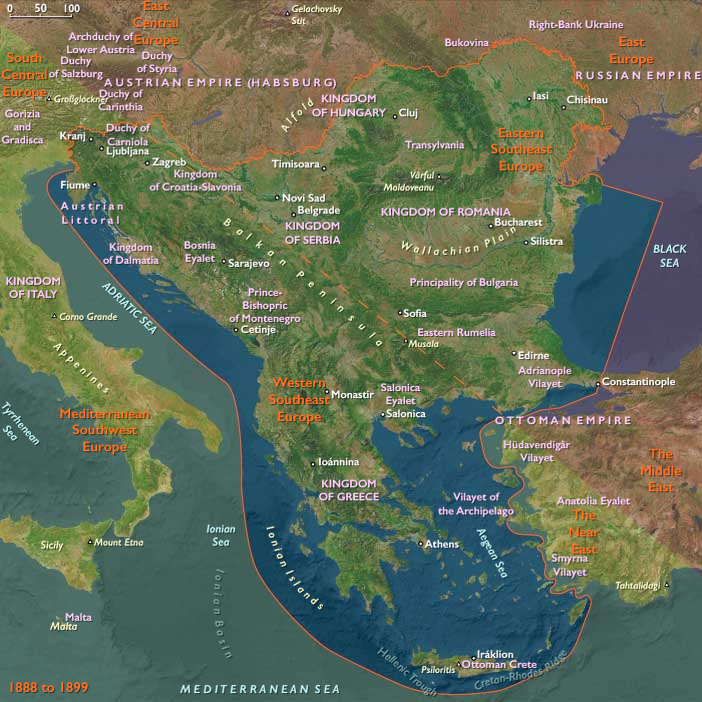
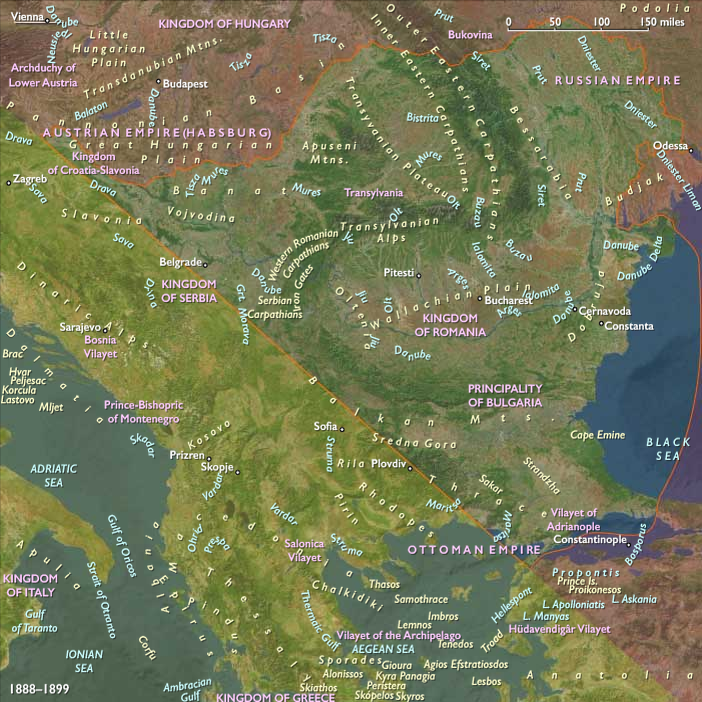
Eastern Southeast Europe includes Turkey-in-Europe (Istanbul/Constantinople and Thrace), Thrace-in-Greece, all of Bulgaria (except the southwest), northeastern Serbia, northeastern Croatia, extreme northeastern Bosnia and Herzegovina, and all of modern Moldova and Romania. Anchors include the Danube River corridor (Iron Gates, the Wallachian plain, the Delta), the Balkan Mountains (Stara Planina), the Rhodope foothills, the Dobrudja steppe, and the Black Sea ports (Constanța, Varna, Burgas). The region also encompasses major cities such as Istanbul, Bucharest, Sofia, Belgrade, Zagreb, Chișinău, and Iași.
Climate & Environmental Shifts
The region sits between continental and Mediterranean zones. Harsh winters in the Danube plain alternated with drought-prone summers, especially in Dobrudja and eastern Bulgaria. The Danube’s flooding cycles challenged settlements until large-scale river control projects in the 19th and 20th centuries. The 20th century brought irrigation, drainage of marshlands, and damming (e.g., the Iron Gates hydroelectric project, 1964–71). Agricultural collectivization after 1945 transformed landscapes, replacing small peasant plots with mechanized state farms.
Subsistence & Settlement
-
19th century:
-
The Danubian plains of Wallachia, Moldavia, and Bulgaria produced wheat, maize, and livestock for export through Black Sea ports.
-
Vineyards, orchards, and tobacco fields dotted Thrace and the Bulgarian lowlands.
-
Istanbul remained an imperial metropolis, provisioning itself from the Thracian hinterlands.
-
-
20th century:
-
Under socialism, collectivized farms in Romania and Bulgaria mechanized cereal, maize, and sunflower cultivation.
-
Industrialization accelerated in cities like Bucharest, Sofia, and Varna.
-
Black Sea fisheries and ports (Constanța, Varna, Burgas) expanded as hubs of trade, energy, and tourism.
-
Technology & Material Culture
-
Transport: 19th-century railways tied Bucharest, Sofia, and Constanța to Vienna and Istanbul. After WWII, highways, electrification, and hydro dams modernized the region.
-
Industry: From the late 19th century, oil in Romania (Ploiești), textiles in Bulgaria, and shipyards on the Black Sea were developed. By the 1960s, heavy industry (steel, chemicals, machinery) dominated socialist economies.
-
Everyday life: Villages retained traditional Orthodox churches, Ottoman-style houses, and folk crafts until mid-20th-century collectivization introduced apartment blocks and standardized housing. Radios and televisions spread after 1950.
Movement & Interaction Corridors
-
Danube River: The artery linking Vienna, Belgrade, and the Black Sea, carrying grain, timber, and later oil.
-
Caravan & rail: Ottoman caravan trails gave way to 19th-century railways (e.g., Bucharest–Giurgiu line, 1869).
-
Black Sea: Ports exported grain, oil, and industrial products to Mediterranean and global markets.
-
Labor and migration: Peasants moved to towns during industrialization; after WWII, rural depopulation accelerated as cities absorbed labor for factories.
Cultural & Symbolic Expressions
-
Religion: Orthodoxy dominated in Romania and Bulgaria; Islam retained influence in Thrace; Catholic enclaves persisted in Croatia and Bosnia. Churches and mosques coexisted uneasily, often politicized in nationalist discourse.
-
Nationalism:
-
Romanian and Bulgarian revivals in the 19th century emphasized language, folklore, and Orthodox faith.
-
Revolutionaries in 1848, independence fighters in the Russo-Turkish War (1877–78), and Balkan wars (1912–13) created heroic pantheons.
-
-
Modern culture: Interwar Bucharest earned the nickname “Paris of the East.” Socialist regimes after 1945 promoted workers’ culture, folk dance troupes, and monumental architecture while censoring dissent.
Environmental Adaptation & Resilience
-
Agrarian cycles: Crop rotation, terracing, and pastoralism provided resilience until collectivization.
-
River control: Drainage of the Danube marshes in Romania and Bulgaria reclaimed farmland and reduced malaria.
-
Social welfare: After WWII, socialist states subsidized food, housing, and education, cushioning shocks but reducing household autonomy.
Political & Military Shocks
-
1828–1878: Russo-Turkish Wars and nationalist uprisings freed Romania, Bulgaria, and Serbia from Ottoman rule.
-
1878 Berlin Congress: Established Romania, Serbia, and Bulgaria as independent or autonomous; left Thrace and Macedonia under Ottoman control.
-
Balkan Wars (1912–13): Bulgaria and Romania fought over Macedonia and Dobruja; territorial shifts embittered neighbors.
-
World War I: Romania and Bulgaria fought on opposing sides; Dobruja and Transylvania contested.
-
Interwar: Authoritarian monarchies and peasant movements shaped politics.
-
World War II: Romania allied with Axis, Bulgaria with Axis but resisted deporting Jews, while Yugoslav and Greek partisans fought German occupation.
-
1944–48 Soviet expansion: Romania and Bulgaria absorbed into the Soviet bloc, establishing one-party socialist states; purges, collectivization, and repression followed.
-
Cold War: Eastern Southeast Europe became a Warsaw Pact frontier with NATO’s Turkey and Greece; heavy militarization and ideological control lasted through 1971.
Transition
Between 1828 and 1971, Eastern Southeast Europe transformed from Ottoman provinces into independent kingdoms, then into Soviet-aligned socialist republics. The Danube and Black Sea tied the region into global grain and oil markets in the 19th century, while nationalism redrew maps through wars and uprisings. After 1945, industrialization, collectivization, and Soviet patronage reshaped economies and societies. By 1971, Romania and Bulgaria were deeply embedded in the socialist bloc, while Thrace and Istanbul marked the border between NATO and the Warsaw Pact—this subregion now firmly a faultline of the Cold War world.
People
- Alexander I of Serbia
- Alexander of Battenberg
- Alexandru Ioan Cuza
- Carol I of Romania
- Carol II of Romania
- Ferdinand I of Bulgaria
- Gheorghe Gheorghiu-Dej
- Josip Broz Tito
- Nicolae Ceaușescu
- Todor Zhivkov
Groups
- Transylvania, region of
- Bulgaria, Ottoman
- Ottoman Empire
- Moldavia (Ottoman vassal), Principality of
- Hungary, Kingdom of
- Wallachia (Ottoman vassal), Principality of
- Russian Empire
- Transylvania, (Austrian) Grand Principality of
- Serbia, (Ottoman vassal) Principality of
- Transylvania, (Austrian) Grand Principality of
- United Principalities of Moldavia and Wallachia (Romania)
- Romanian United Principalities
- Romania
- Bulgaria (Ottoman vassal), Principality of
- Serbia, Principality of
- Romania, Kingdom of
- Serbia, Kingdom of
- Bulgaria, Kingdom of
- Hungary, Democratic Republic of
- Serbs, Croats, and Slovenes, Kingdom of the
- Romania, Kingdom of Greater
- Turkey, provisional revolutionary
- Hungary, Kingdom of
- Union of Soviet Socialist Republics (USSR), or Soviet Union
- Turkey, Republic of
- Moldavian Autonomous Soviet Socialist Republic
- Yugoslavia, Kingdom of
- Moldavian Soviet Socialist Republic
- Yugoslavia, provisional government of
- Yugoslavia, Socialist Federal Republic of
- Bulgaria, Fatherland Front provisional government of
- Moldavian Soviet Socialist Republic
- Bulgaria, Republic of
- Serbia, Federated Republic of
- Hungary, Republic of
- Romanian People's Republic
- Hungary, Republic of
- Comecon (Council for Mutual Economic Assistance)
- Warsaw Pact (Treaty of Friendship, Co-operation and Mutual Assistance)
Topics
- Middle Subatlantic Period
- Russo-Turkish War of 1828-29
- 1848, Revolutions of
- April Uprising
- Russo-Turkish War (1877-78)
- Balkan War, First
- Balkan War, Second
- World War, First (World War I)
- World War, Second (World War II)
- Cold War
- Prague Spring
Commodoties
Subjects
- Commerce
- Language
- Labor and Service
- Decorative arts
- Conflict
- Mayhem
- Faith
- Government
- Scholarship
- Custom and Law
- Human Migration
Regions
Subregions
Years: 1828 - 1971
People
- Alexander I of Serbia
- Alexander of Battenberg
- Alexandru Ioan Cuza
- Carol I of Romania
- Carol II of Romania
- Ferdinand I of Bulgaria
- Gheorghe Gheorghiu-Dej
- Josip Broz Tito
- Nicolae Ceaușescu
- Todor Zhivkov
Groups
- Transylvania, region of
- Bulgaria, Ottoman
- Ottoman Empire
- Moldavia (Ottoman vassal), Principality of
- Hungary, Kingdom of
- Wallachia (Ottoman vassal), Principality of
- Russian Empire
- Transylvania, (Austrian) Grand Principality of
- Serbia, (Ottoman vassal) Principality of
- Transylvania, (Austrian) Grand Principality of
- United Principalities of Moldavia and Wallachia (Romania)
- Romanian United Principalities
- Romania
- Bulgaria (Ottoman vassal), Principality of
- Serbia, Principality of
- Romania, Kingdom of
- Serbia, Kingdom of
- Bulgaria, Kingdom of
- Hungary, Democratic Republic of
- Serbs, Croats, and Slovenes, Kingdom of the
- Romania, Kingdom of Greater
- Turkey, provisional revolutionary
- Hungary, Kingdom of
- Union of Soviet Socialist Republics (USSR), or Soviet Union
- Turkey, Republic of
- Moldavian Autonomous Soviet Socialist Republic
- Yugoslavia, Kingdom of
- Moldavian Soviet Socialist Republic
- Yugoslavia, provisional government of
- Yugoslavia, Socialist Federal Republic of
- Bulgaria, Fatherland Front provisional government of
- Moldavian Soviet Socialist Republic
- Bulgaria, Republic of
- Serbia, Federated Republic of
- Hungary, Republic of
- Romanian People's Republic
- Hungary, Republic of
- Comecon (Council for Mutual Economic Assistance)
- Warsaw Pact (Treaty of Friendship, Co-operation and Mutual Assistance)
Topics
- Middle Subatlantic Period
- Russo-Turkish War of 1828-29
- 1848, Revolutions of
- April Uprising
- Russo-Turkish War (1877-78)
- Balkan War, First
- Balkan War, Second
- World War, First (World War I)
- World War, Second (World War II)
- Cold War
- Prague Spring
Commodoties
Subjects
- Commerce
- Language
- Labor and Service
- Decorative arts
- Conflict
- Mayhem
- Faith
- Government
- Scholarship
- Custom and Law
- Human Migration
Regions
Subregions