
Eastern Southeast Europe (1888–1889 CE): Nationalism, Reform, …
Years: 1888 - 1899
Eastern Southeast Europe (1888–1889 CE): Nationalism, Reform, and Regional Tensions
Political Developments and Regional Realignments
Serbia: Turmoil and Autocratic Rule
A regency governed Serbia until 1893, following the abdication of King Milan Obrenović. His teenage son, Aleksandar Obrenović (1889–1903), then assumed authority, swiftly nullifying the existing constitution. Aleksandar's authoritarian style, scandals, and his pronounced alignment with Austria-Hungary significantly undermined his popularity and fostered political instability.
Romania: Secret Alliances and Diplomatic Tensions
In a climate of heightened distrust towards Russia, Romania’s King Carol I secretly aligned with the Central Powers—Austria-Hungary, Germany, and Italy—by signing a clandestine treaty in 1883, details of which only emerged publicly years later. This pact deeply influenced Romania's diplomatic posture, prompting the fortification of defenses along the Russian border, while strategically neglecting the vulnerable mountain passes into Hungarian-held Transylvania.
Bulgarian Autonomy and Governance Challenges
In Bulgaria, Prince Ferdinand of Saxe-Coburg-Gotha struggled for international recognition, achieving acceptance by Russia and other Great Powers only in 1896. The government's authoritarian stance under Prime Minister Stefan Stambolov included widespread voter intimidation and political patronage, aimed at suppressing extreme nationalism and stabilizing the nation’s political landscape. Stambolov's policies significantly enhanced Bulgaria's economic infrastructure, exemplified by the completion of the Vienna-to-Constantinople Railway through Bulgaria in 1888 and the Burgas-Yambol Railway in the early 1890s.
Social and Economic Dynamics
Land Reform and Social Unrest in Romania
Romania continued grappling with inequitable land distribution, which led to persistent rural unrest. By 1888, peasant discontent had escalated, culminating in agrarian disturbances and eventually forcing the government into limited land reforms. Despite these attempts, substantial inequalities persisted, maintaining tensions and widespread poverty among the rural populace.
Jewish Communities and Economic Frictions
The Jewish population in Romania, which had grown significantly due to immigration after the Treaty of Adrianople (1829), faced increased discrimination and exclusion from citizenship. Economic rivalry frequently escalated into violence and anti-Semitic attacks, severely restricting social integration and economic advancement opportunities for the Jewish communities, especially concentrated in urban areas such as Iași.
Industrialization and Socialism in Bulgaria
Bulgaria experienced rapid industrialization, which significantly reshaped its economic and social fabric. Numerous factories had opened since the nation's independence in 1878, creating a new urban working class. The harsh realities of industrial employment spurred the establishment of the Social Democratic Party in 1891, marking the beginnings of organized labor movements and socialist politics in Bulgaria.
Cultural and National Identity Movements
Bulgarian Nationalism and Macedonian Question
The issue of Macedonia continued to fuel Bulgarian nationalism, as revolutionary and secret liberation movements persisted in advocating for the unification of Macedonian territories with Bulgaria. Diplomatic maneuvers by Stambolov in 1890 successfully obtained Ottoman concessions, granting three major Macedonian dioceses to the Bulgarian Exarchate and thus reinforcing Bulgarian national sentiment and church authority.
Transylvanian Romanians and Magyarization
In Transylvania, Romanian nationalism intensified against Hungary's aggressive Magyarization policies. Calls from Bucharest for unification with Romanians in Transylvania, Bukovina, and Bessarabia became increasingly vocal, reflecting deepening ethnic tensions within the Austro-Hungarian Empire.
Key Historical Developments (1888–1889)
-
Secret treaty between Romania and the Central Powers (Austria-Hungary, Germany, Italy).
-
Limited land reform efforts in Romania after agrarian disturbances.
-
Completion of major railways (Vienna-Constantinople Railway, Burgas-Yambol Railway) in Bulgaria, significantly enhancing its economic infrastructure.
-
Continued political instability in Serbia under Aleksandar Obrenović's autocratic rule.
Long-Term Consequences and Historical Significance
The period marked critical developments in nationalistic fervor, political alliances, and economic transformations across Eastern Southeast Europe. Rising nationalism and ethnic tensions sowed seeds of future conflicts, while economic modernization introduced significant social changes, laying foundations for subsequent historical shifts in the region.
People
Groups
- Jews
- Bulgarians (South Slavs)
- Serbs (South Slavs)
- Bulgarian Orthodox Church
- Romanians
- Christians, Eastern Orthodox
- Serbian Orthodox Church
- Ottoman Empire
- Bulgaria, Ottoman
- Russian Empire
- Austria-Hungary
- German Empire (“Second Reich”)
- Italy, Kingdom of
- Bulgaria (Ottoman vassal), Principality of
- Romania, Kingdom of
- Serbia, Kingdom of
- BMARC (Bulgarian Macedonian-Adrianople Revolutionary Committees)
Topics
Commodoties
Subjects
- Commerce
- Language
- Labor and Service
- Decorative arts
- Conflict
- Mayhem
- Faith
- Government
- Scholarship
- Custom and Law
- Human Migration
Regions
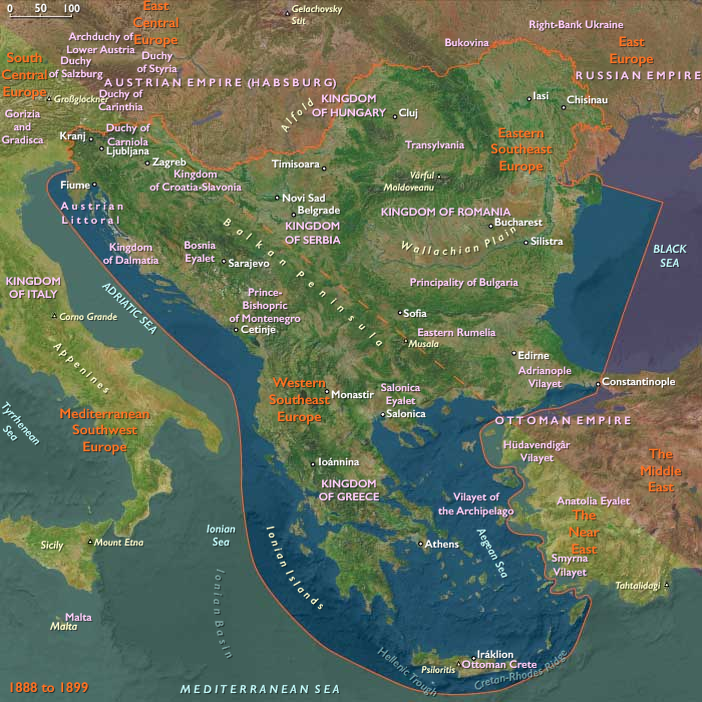
Subregions
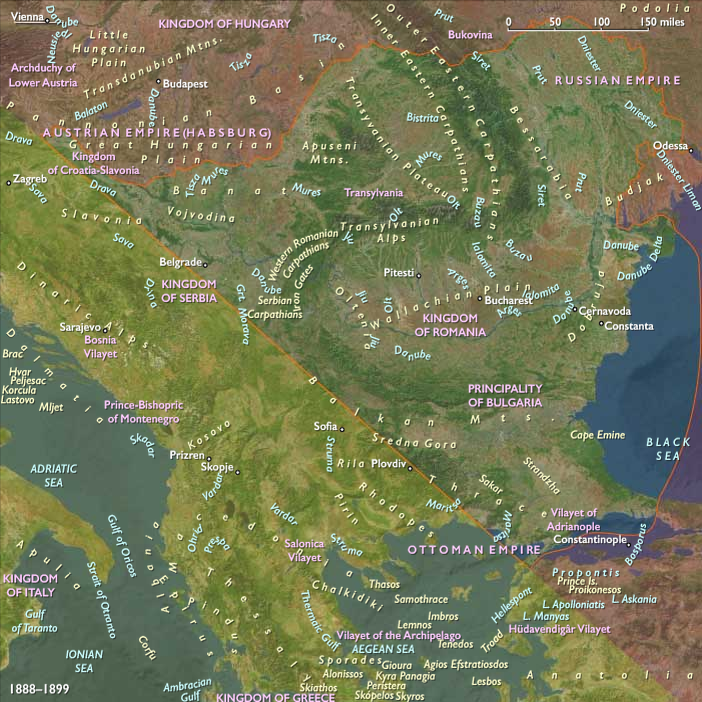
Related Events
Showing 10 events out of 10660 total
Years: 1888 - 1899
People
Groups
- Jews
- Bulgarians (South Slavs)
- Serbs (South Slavs)
- Bulgarian Orthodox Church
- Romanians
- Christians, Eastern Orthodox
- Serbian Orthodox Church
- Ottoman Empire
- Bulgaria, Ottoman
- Russian Empire
- Austria-Hungary
- German Empire (“Second Reich”)
- Italy, Kingdom of
- Bulgaria (Ottoman vassal), Principality of
- Romania, Kingdom of
- Serbia, Kingdom of
- BMARC (Bulgarian Macedonian-Adrianople Revolutionary Committees)
Topics
Commodoties
Subjects
- Commerce
- Language
- Labor and Service
- Decorative arts
- Conflict
- Mayhem
- Faith
- Government
- Scholarship
- Custom and Law
- Human Migration
Regions
Subregions