
Eastern Southeast Europe (1876–1887 CE): Independence, National …
Years: 1876 - 1887
Eastern Southeast Europe (1876–1887 CE): Independence, National Consolidation, and International Rivalries
Settlement and Migration Patterns
Bulgarian Independence and Territorial Changes
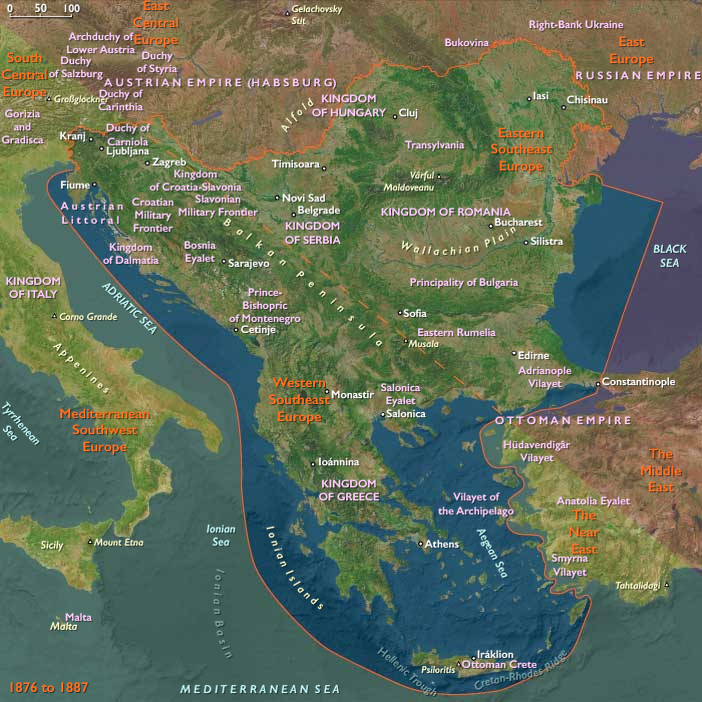
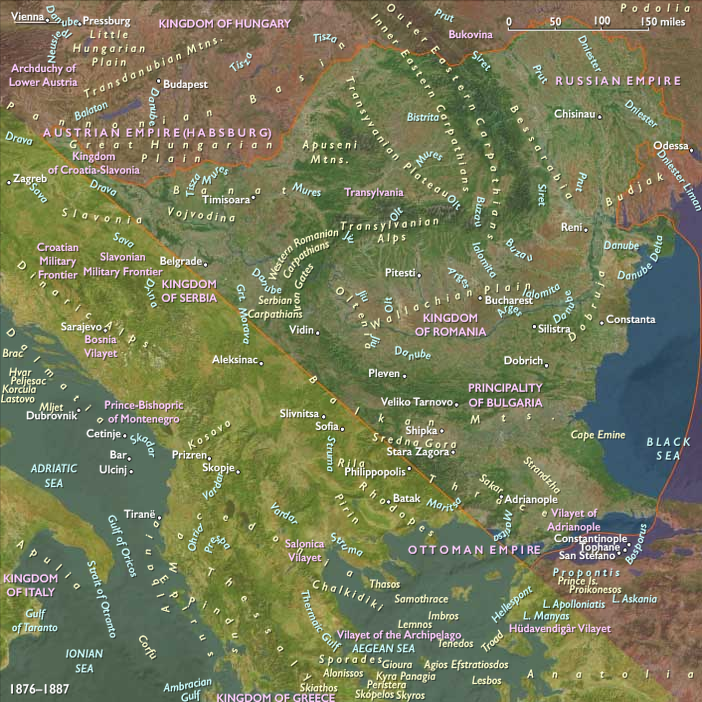
The Principality of Bulgaria was established following the Russo-Turkish War (1877–1878), dramatically altering settlement and administrative patterns in the region. However, the Congress of Berlin (1878) significantly reduced Bulgaria’s territory compared to initial Russian plans, leaving large Bulgarian populations in Macedonia, Eastern Rumelia, and Thrace outside its borders, which triggered significant migration and refugee movements.
Romanian Territorial Adjustments
Following its support for Russia during the war, Romania ceded southern Bessarabia to Russia but gained Dobruja from the Ottoman Empire. These territorial adjustments fostered demographic shifts, as Dobruja was inhabited by diverse groups, including Turks, Bulgarians, and Roma populations.
Economic and Social Developments
Ottoman Economic Crisis
The Ottoman Empire’s finances reached a crisis point by 1881, compelling the government to surrender administration of its public debt to a commission of European creditors. This arrangement significantly limited Ottoman economic sovereignty, reflecting the empire’s broader decline and vulnerability to European financial influence.
Romanian Economic Progress
In Romania, rapid economic development occurred, including infrastructure improvements such as oil wells in Wallachia, the construction of the Danube bridge at Cernavodă, and expansion of the port at Constanța. Despite these advances, heavy borrowing and uneven wealth distribution meant that most Romanians continued to live in poverty.
Cultural and Artistic Developments
Bulgarian Cultural Revival
The Bulgarian cultural revival reached new heights following independence. The establishment of cultural institutions like the chitalishte continued to foster education and national consciousness, while the adoption of the liberal Turnovo Constitution (1879) symbolized the intellectual aspirations of a newly independent Bulgaria.
Serbian Cultural Nationalism
Serbian national culture flourished during this period, significantly influenced by scholars like Vuk Karadžić and Dositej Obradović. These figures revitalized the Serbian literary language, promoted the publication of folk songs, and cultivated a national pride based on linguistic and historical identity.
Intellectual and Religious Developments
Bulgarian Ecclesiastical Independence
The Bulgarian Orthodox Church gained further autonomy, reducing Greek influence significantly. This ecclesiastical independence solidified national identity and underscored the political and cultural separation from Ottoman and Greek dominance.
Political Dynamics and Regional Rivalries
Russo-Turkish War and the Congress of Berlin
The Russo-Turkish War (1877–1878) ended with significant territorial adjustments at the Congress of Berlin (1878). While the congress limited Russian gains, it formally recognized the independence of Romania, Serbia, and Montenegro and created a smaller, autonomous Bulgaria under nominal Ottoman suzerainty, altering the political landscape profoundly.
Bulgarian Political Instability
Political instability marked early independent Bulgaria. Conflicts over constitutional authority between Prince Alexander of Battenberg and liberal factions led to tensions and Russian interference. Alexander’s forced abdication in 1886 led to further turmoil until the strong-handed rule of Stefan Stambolov restored a measure of stability.
Serbian National Consolidation
Serbia’s autonomy evolved into full independence in 1878, and the principality became a kingdom in 1882 under Milan Obrenović. Despite initial enthusiasm, Milan’s pro-Austrian orientation alienated many Serbs and created enduring political rifts.
Romanian National Consolidation
Romania’s full independence was internationally recognized in 1880 after initially tense diplomatic negotiations. The parliament proclaimed the nation a kingdom in 1881, crowning King Carol I in Bucharest, ushering in three decades of relative peace, economic growth, and national consolidation.
Key Historical Events and Developments
-
Russo-Turkish War (1877–1878) leading to Bulgarian and Serbian independence.
-
Congress of Berlin (1878) significantly reshaping Balkan national boundaries.
-
International recognition of Romanian independence and the establishment of the Romanian Kingdom (1881).
-
Political turmoil in Bulgaria and subsequent stabilization under Stefan Stambolov.
Long-Term Consequences and Historical Significance
This period marked a critical juncture in Eastern Southeast Europe, establishing the modern political landscape. The creation and recognition of independent nation-states significantly reduced Ottoman influence, intensified national rivalries, and set the stage for the region's complex geopolitical dynamics leading into the twentieth century.
People
Groups
- Bulgarians (South Slavs)
- Serbs (South Slavs)
- Bulgarian Orthodox Church
- Romanians
- Christians, Eastern Orthodox
- Serbian Orthodox Church
- Ottoman Empire
- Bulgaria, Ottoman
- Russian Empire
- Serbia, (Ottoman vassal) Principality of
- Bulgaria (Ottoman vassal), Principality of
- Serbia, Principality of
- Romania, Kingdom of
- Serbia, Kingdom of
Topics
Commodoties
Subjects
- Commerce
- Language
- Labor and Service
- Decorative arts
- Conflict
- Mayhem
- Faith
- Government
- Scholarship
- Custom and Law
- Human Migration
Regions
Subregions
Related Events
Showing 10 events out of 12322 total
Years: 1876 - 1887
People
Groups
- Bulgarians (South Slavs)
- Serbs (South Slavs)
- Bulgarian Orthodox Church
- Romanians
- Christians, Eastern Orthodox
- Serbian Orthodox Church
- Ottoman Empire
- Bulgaria, Ottoman
- Russian Empire
- Serbia, (Ottoman vassal) Principality of
- Bulgaria (Ottoman vassal), Principality of
- Serbia, Principality of
- Romania, Kingdom of
- Serbia, Kingdom of
Topics
Commodoties
Subjects
- Commerce
- Language
- Labor and Service
- Decorative arts
- Conflict
- Mayhem
- Faith
- Government
- Scholarship
- Custom and Law
- Human Migration
Regions
Subregions