
Eastern Southeast Europe (1852–1863 CE): Unification Efforts, …
Years: 1852 - 1863
Eastern Southeast Europe (1852–1863 CE): Unification Efforts, National Revival, and International Influence
Settlement and Migration Patterns
Romanian Political Unification
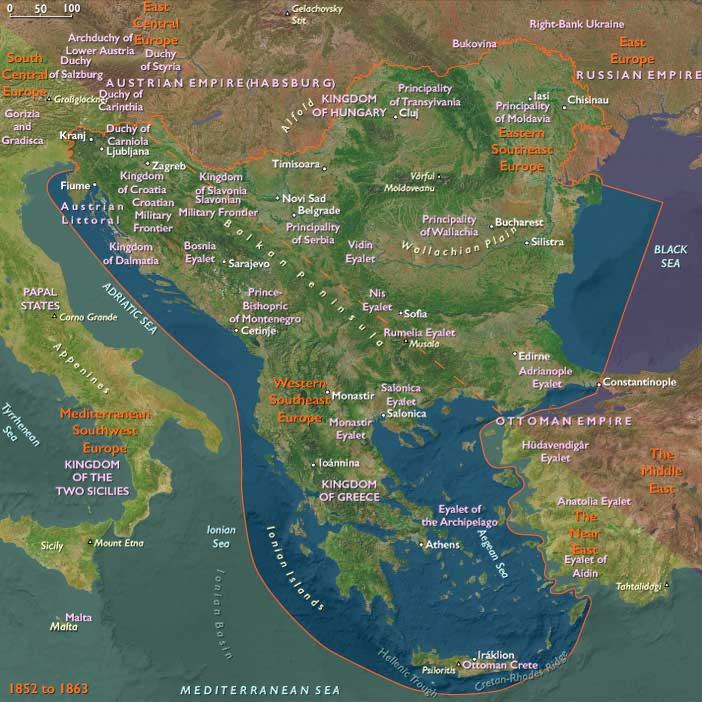
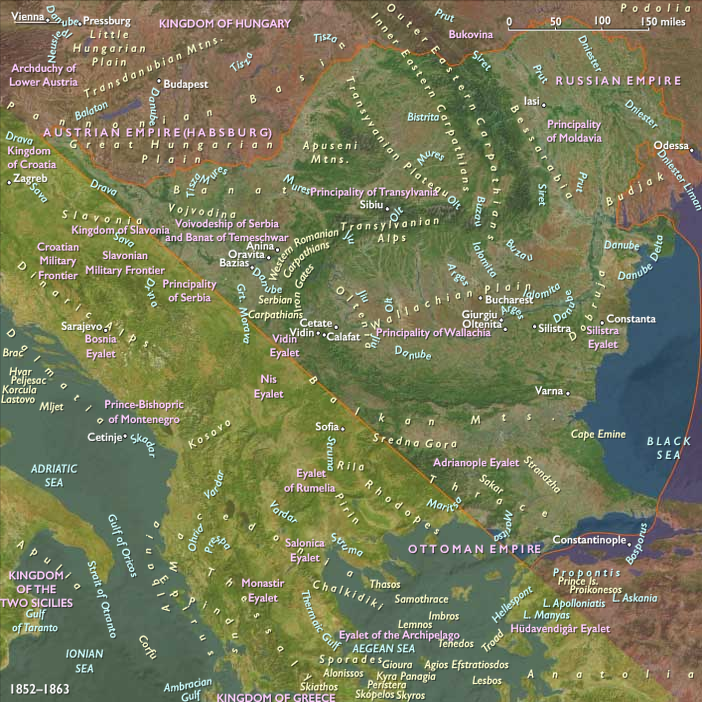
The movement to unify Wallachia and Moldavia gained significant momentum. Despite international opposition, the two principalities united politically under the leadership of Alexandru Ioan Cuza in 1859. This event laid the foundations for the establishment of modern Romania.
Economic and Social Developments
Economic Integration of the Principalities
Economic cooperation advanced notably during this era. The construction of significant roadways improved internal trade, and the removal of customs barriers between Wallachia and Moldavia, initiated by Princes Gheorghe Bibescu and Mihai Sturdza, marked a critical step towards economic integration.
Cultural and Artistic Developments
Bulgarian Cultural Institutions
The establishment of the chitalishte ("reading rooms") beginning in 1856 significantly enhanced Bulgarian cultural life. These centers became focal points for education, performances, lectures, and public discourse, thus playing a crucial role in spreading nationalist ideas among the broader population.
Printing and Intellectual Life
Bulgarian intellectual activities thrived, particularly through increased book printing and periodical publications. Most Bulgarian-language periodicals were printed in Romanian emigrant centers and Constantinople, reflecting the centrality of the city to the Bulgarian National Revival.
Intellectual and Religious Developments
Bulgarian Ecclesiastical Independence Movement
The campaign for Bulgarian ecclesiastical autonomy from the Greek Orthodox Patriarchate intensified. Bulgarian leaders successfully lobbied Ottoman authorities to permit Bulgarian liturgy and appoint national bishops, bolstering religious and national identity.
Romanian Educational Reforms
Educational reform accompanied political changes in the Romanian principalities. Prince Alexandru Ioan Cuza founded the universities of Bucharest and Iași, banned the use of Greek in churches, and secularized monastic properties, significantly influencing Romanian educational and religious practices.
Political Dynamics and Regional Rivalries
Crimean War and International Influence
The Crimean War (1853–1856) significantly impacted Eastern Southeast Europe. Russian defeat reduced its direct influence in the Romanian principalities, shifting to a joint European guarantee under the Treaty of Paris (1856). The treaty opened navigation on the Danube and ceded control of southern Bessarabia and the Danube's mouth to Moldavia.
Romanian Unification and Cuza's Reforms
The election of Alexandru Ioan Cuza as prince of both Wallachia and Moldavia led to unified governance by 1861, later officially recognized as the Romanian United Principalities in 1862. Cuza's significant reform agenda included abolishing serfdom, instituting public education, and introducing a new agrarian law, although these measures faced opposition from boyar elites.
Ottoman Reforms and the Eastern Question
The declining Ottoman Empire continued its Tanzimat reforms, but nationalist aspirations grew stronger across the Balkans. The international community remained wary, aiming to maintain the balance of power, which indirectly facilitated Romanian unification efforts.
Key Historical Events and Developments
-
Unification of Wallachia and Moldavia (1859) under Alexandru Ioan Cuza.
-
Crimean War (1853–1856) resulting in the Treaty of Paris (1856).
-
Establishment of chitalishte as centers of Bulgarian national culture.
-
Significant educational and religious reforms by Cuza in Romania.
Long-Term Consequences and Historical Significance
This era was pivotal, setting the stage for modern national states in Southeastern Europe. The unification of the Romanian principalities marked a significant shift in the region's political landscape, while cultural and educational reforms profoundly influenced national identities, preparing the groundwork for future independence movements and regional transformations.
People
Groups
- Bulgarians (South Slavs)
- Bulgarian Orthodox Church
- Romanians
- Christians, Eastern Orthodox
- Ottoman Empire
- Bulgaria, Ottoman
- Moldavia (Ottoman vassal), Principality of
- Wallachia (Ottoman vassal), Principality of
- Russian Empire
- United Principalities of Moldavia and Wallachia (Romania)
- Romanian United Principalities
Topics
Commodoties
Subjects
- Commerce
- Language
- Labor and Service
- Decorative arts
- Conflict
- Mayhem
- Faith
- Government
- Scholarship
- Custom and Law
- Human Migration
Regions
Subregions
Related Events
Showing 10 events out of 16184 total
Years: 1852 - 1863
People
Groups
- Bulgarians (South Slavs)
- Bulgarian Orthodox Church
- Romanians
- Christians, Eastern Orthodox
- Ottoman Empire
- Bulgaria, Ottoman
- Moldavia (Ottoman vassal), Principality of
- Wallachia (Ottoman vassal), Principality of
- Russian Empire
- United Principalities of Moldavia and Wallachia (Romania)
- Romanian United Principalities
Topics
Commodoties
Subjects
- Commerce
- Language
- Labor and Service
- Decorative arts
- Conflict
- Mayhem
- Faith
- Government
- Scholarship
- Custom and Law
- Human Migration
Regions
Subregions