
Eastern Southeast Europe (1864–1875 CE): Cultural Revival, …
Years: 1864 - 1875
Eastern Southeast Europe (1864–1875 CE): Cultural Revival, National Movements, and Pre-Independence Turmoil
Settlement and Migration Patterns
Hungarian and Serbian Territorial Realignments
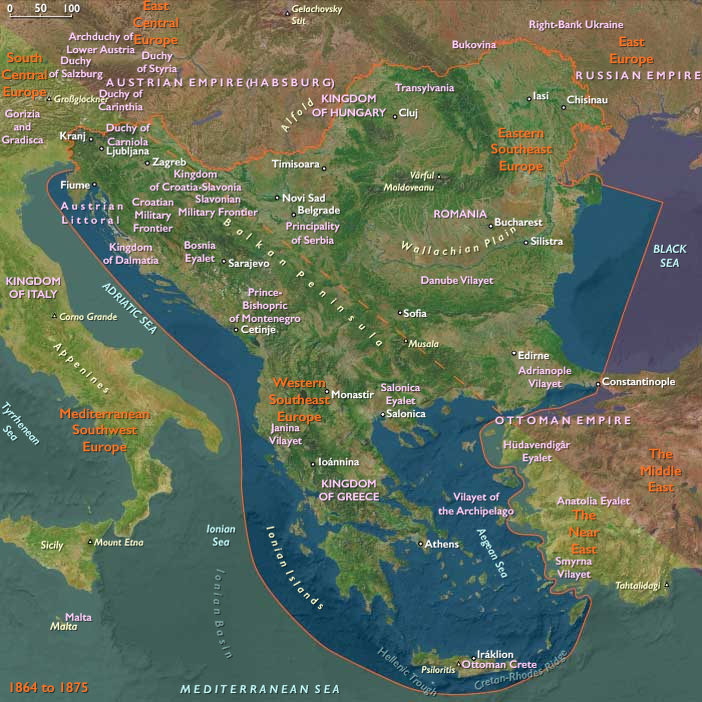
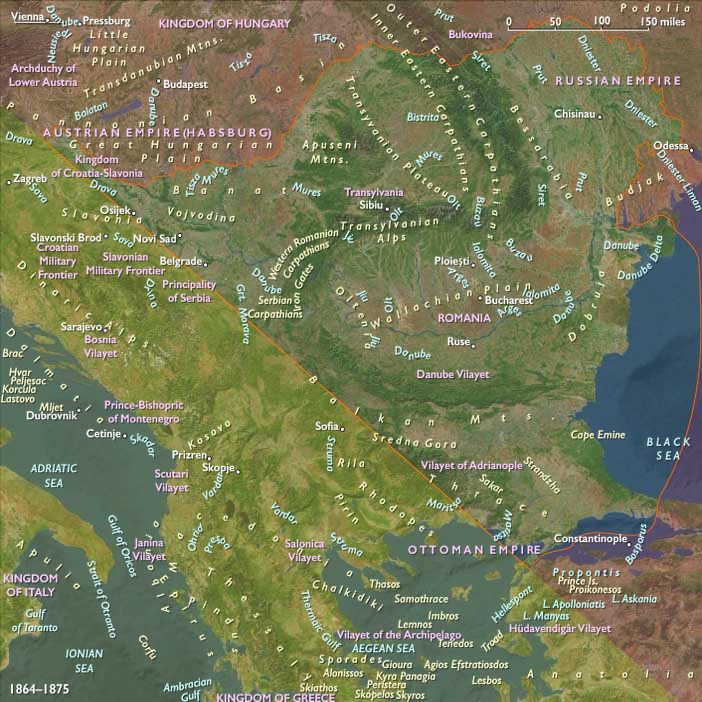
Austria-Hungary returned Vojvodina, home to a significant Serbian population, to Hungarian control following the establishment of the Dual Monarchy in 1867. This administrative shift stirred ethnic tensions and political instability, as Hungarian authority once again attempted to assert dominance over non-Magyar populations.
Economic and Social Developments
Infrastructure and Economic Growth in the Danubian Principalities
In Romania, significant strides were made toward economic unification and modernization. The dismantling of customs barriers between Wallachia and Moldavia in the late 1840s set the stage for deeper integration. Economic progress continued under Prince Alexandru Ioan Cuza, who implemented essential infrastructure projects and agrarian reforms, though these measures were only partially successful due to entrenched boyar interests.
Cultural and Artistic Developments
Bulgarian National Revival
The Bulgarian cultural renaissance accelerated dramatically during this period. Dobri Chintulov and other literary figures produced influential works in modern Bulgarian, fueling national consciousness. Education expanded rapidly with the establishment of schools teaching in Bulgarian, notably in Gabrovo under Neofit Rilski, and the opening of schools for girls in cities like Pleven. The growth of Bulgarian-language publications and the formation of cultural institutions such as the chitalishte greatly contributed to the rise of a distinct national identity.
Serbian Literary and Cultural Awakening
Serbian national identity was similarly invigorated by scholars such as Vuk Karadžić and Dositej Obradović, who revitalized the Serbian language, folklore, and literature. Their work significantly strengthened Serbian cultural nationalism and intellectual life, creating a foundation for future national aspirations.
Intellectual and Religious Developments
Bulgarian Ecclesiastical Autonomy
The struggle for ecclesiastical independence reached a climax in 1870 when the Ottoman Sultan officially declared the Bulgarian Orthodox Church a separate exarchate, ending centuries of Greek Patriarchate dominance. This ecclesiastical autonomy became a critical milestone in Bulgaria's national consolidation, symbolizing the political and cultural separation from Greek and Ottoman influences.
Emergence of the Young Ottoman Movement
The Young Ottoman movement gained prominence among Western-oriented Ottoman intellectuals who sought reform through adopting European political models. Their advocacy for constitutional government and national integration significantly influenced Ottoman reform efforts and the broader political discourse within the empire.
Political Dynamics and Regional Rivalries
Revolts and Revolutionary Activities in Bulgaria
Bulgarian revolutionary activities intensified, spearheaded by figures such as Georgi Rakovski, Vasil Levski, and Liuben Karavelov. Their efforts culminated in the formation of the Bulgarian Revolutionary Central Committee (BRCC), which coordinated revolts against Ottoman rule, notably the September Uprising of 1875. Although these revolts were initially unsuccessful, they drew international attention to Bulgaria's plight and set the stage for greater involvement by external powers.
Romanian Political Developments
Political turbulence marked Prince Alexandru Ioan Cuza’s final years due to his increasingly unpopular reforms and perceived corruption, culminating in his forced abdication in 1866. His successor, the German-born Prince Carol I, instituted a constitutional monarchy, modernized the administration, and significantly advanced infrastructure projects, including railway construction.
International Rivalries and the Eastern Question
The weakening Ottoman Empire continued to be a central concern in European diplomacy, with Britain and France intervening to counterbalance Russian influence. This geopolitical maneuvering intensified as nationalist movements within Ottoman territories grew stronger, setting the stage for the significant territorial and political rearrangements soon to come.
Key Historical Events and Developments
-
Establishment of the Dual Monarchy (Austria-Hungary) in 1867, returning Vojvodina to Hungarian control.
-
Official recognition of the Bulgarian Orthodox Church as a separate entity in 1870.
-
Revolutionary efforts in Bulgaria, particularly the BRCC and the September Uprising of 1875.
-
Forced abdication of Prince Alexandru Ioan Cuza (1866) and subsequent ascension of Prince Carol I.
Long-Term Consequences and Historical Significance
This era laid critical foundations for Eastern Southeast Europe's subsequent political and national transformations. Cultural and religious movements bolstered national identities, while revolutionary activities against Ottoman rule highlighted the region’s growing instability, directly influencing the dramatic territorial and political shifts that occurred in the following decades.
People
- Alexandru Ioan Cuza
- Carol I of Romania
- Dobri Chintulov
- Georgi Sava Rakovski
- Lyuben Karavelov
- Neofit Rilski
- Vasil Levski
- Vuk Karadžić
Groups
- Hungarian people
- Bulgarians (South Slavs)
- Bulgarian Orthodox Church
- Romanians
- Christians, Eastern Orthodox
- Austria, Archduchy of
- Ottoman Empire
- Bulgaria, Ottoman
- Moldavia (Ottoman vassal), Principality of
- Hungary, Kingdom of
- Wallachia (Ottoman vassal), Principality of
- Russian Empire
- Austrian Empire
- United Principalities of Moldavia and Wallachia (Romania)
- Romanian United Principalities
- Austria-Hungary
- BRCC (Bulgarian Revolutionary Central Committee)
Topics
Commodoties
Subjects
- Commerce
- Language
- Labor and Service
- Decorative arts
- Conflict
- Mayhem
- Faith
- Government
- Scholarship
- Custom and Law
- Human Migration
Regions
Subregions
Years: 1864 - 1875
People
- Alexandru Ioan Cuza
- Carol I of Romania
- Dobri Chintulov
- Georgi Sava Rakovski
- Lyuben Karavelov
- Neofit Rilski
- Vasil Levski
- Vuk Karadžić
Groups
- Hungarian people
- Bulgarians (South Slavs)
- Bulgarian Orthodox Church
- Romanians
- Christians, Eastern Orthodox
- Austria, Archduchy of
- Ottoman Empire
- Bulgaria, Ottoman
- Moldavia (Ottoman vassal), Principality of
- Hungary, Kingdom of
- Wallachia (Ottoman vassal), Principality of
- Russian Empire
- Austrian Empire
- United Principalities of Moldavia and Wallachia (Romania)
- Romanian United Principalities
- Austria-Hungary
- BRCC (Bulgarian Revolutionary Central Committee)
Topics
Commodoties
Subjects
- Commerce
- Language
- Labor and Service
- Decorative arts
- Conflict
- Mayhem
- Faith
- Government
- Scholarship
- Custom and Law
- Human Migration
Regions
Subregions