
Southeast Europe (1828–1971 CE) Empires in …
Years: 1828 - 1971
Southeast Europe (1828–1971 CE)
Empires in Retreat, Nations in Rebirth, and Frontiers Between Worlds
Geography & Environmental Context
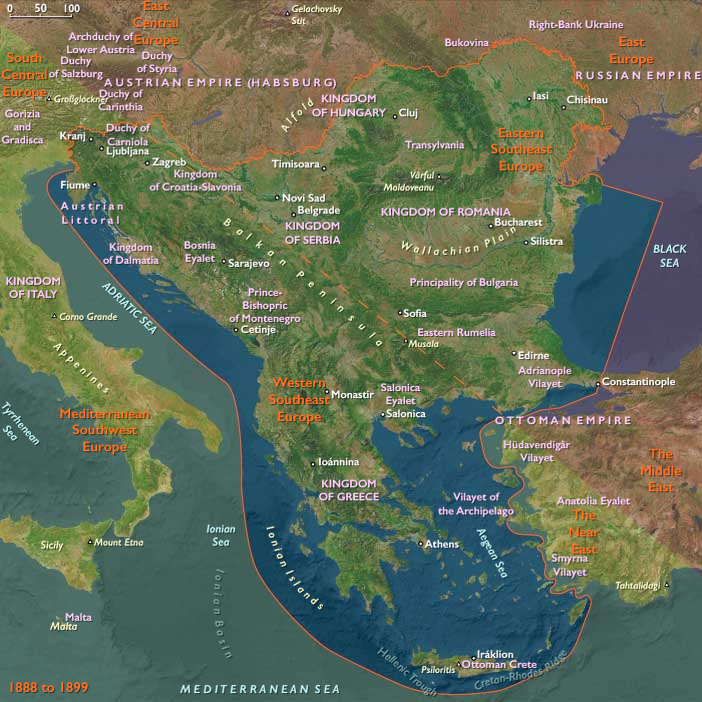
Southeast Europe includes two fixed subregions:
-
Eastern Southeast Europe — Romania, Moldova, Bulgaria (except the southwestern portion), northeastern Serbia, northeastern Croatia, extreme northeastern Bosnia and Herzegovina, modern-day Moldova, and the European side of Turkey, including Istanbul.
-
Western Southeast Europe — Greece, Albania, Montenegro, North Macedonia, Kosovo, most of Bosnia and Herzegovina, most of Croatia, southwestern Serbia, and the Adriatic and Aegean coasts facing the Mediterranean.
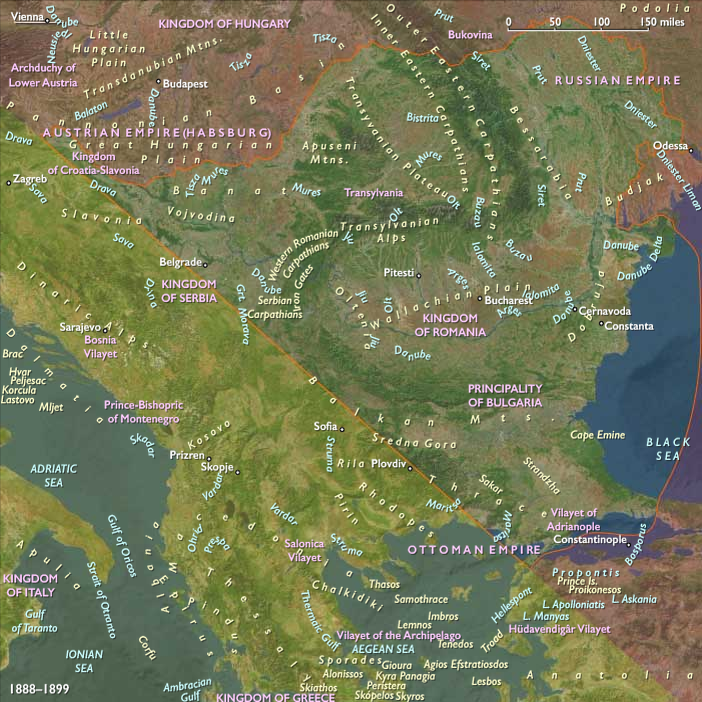
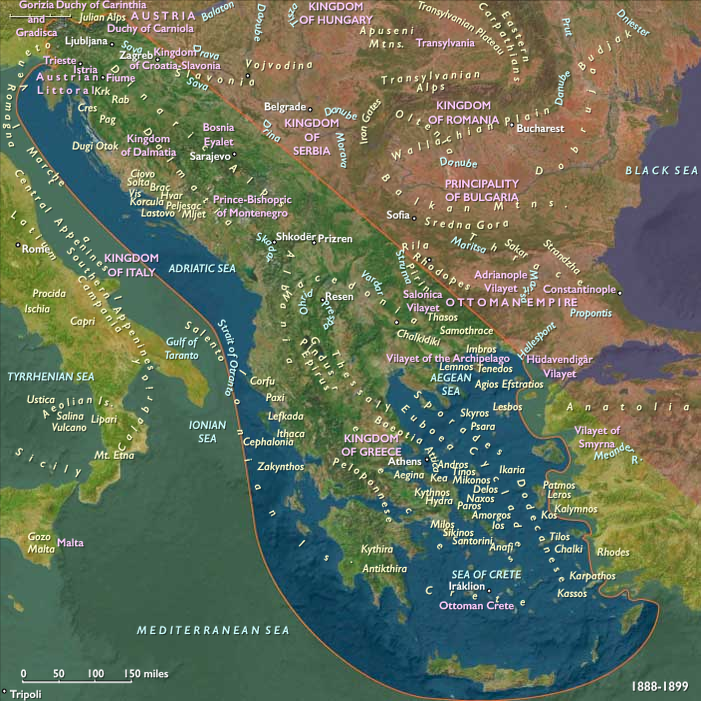
Anchors include the Balkan Mountains, Carpathians, Danube River, Aegean, Adriatic, and Black Sea coasts, as well as key cities such as Istanbul, Bucharest, Sofia, Athens, Belgrade, Sarajevo, and Thessaloniki. The subregion links central Europe to the eastern Mediterranean and Anatolia — a crossroads of empires, faiths, and ideologies.
Climate & Environmental Shifts
The region’s temperate continental and Mediterranean climates supported mixed agriculture and mountain pastoralism. Deforestation and erosion increased through the 19th century as railways and timber exports expanded. Flooding along the Danube and its tributaries required early engineering works. Twentieth-century industrialization and urbanization accelerated pollution but also brought reforestation and hydroelectric projects. Coastal areas remained vulnerable to earthquakes and drought, while inland winters could be severe.
Subsistence & Settlement
-
Agrarian life dominated until mid-20th century, with cereals, vines, olives, and livestock central to rural economies. Peasant communities balanced subsistence with market sales under Ottoman, Habsburg, and later national administrations.
-
Urban centers such as Athens, Belgrade, Sofia, Bucharest, and Istanbul expanded as administrative and industrial capitals. Port cities—Salonika (Thessaloniki), Constanța, Dubrovnik, and Trieste—thrived on Mediterranean and Black Sea trade.
-
After World War II, socialist land reforms and collectivization reshaped rural life; industrial towns multiplied along river corridors and mining basins (e.g., Nis, Ploiești, Varna).
-
Tourism and migration to Western Europe after 1950 introduced remittances and urban growth on the coasts.
Technology & Material Culture
Railways, bridges, and telegraphs of the 19th century tied the Balkans to European networks. Textile mills, shipyards, and munitions factories developed under both Ottoman and Habsburg influence. Twentieth-century modernization brought hydropower dams, concrete housing blocks, and expanding road systems. Material culture reflected blending: Ottoman bazaars stood beside neoclassical and socialist architecture; folk crafts, Orthodox icons, and Islamic calligraphy persisted as living art forms.
Movement & Interaction Corridors
-
Trade and migration followed the Danube, Adriatic, and Aegean routes linking inland markets to seaports.
-
Pilgrimage and faith networks connected Orthodox monasteries on Mount Athos with Slavic and Greek communities; Muslim routes linked Sarajevo and Istanbul.
-
Labor migrations carried Balkan workers to Vienna, Paris, and later Germany and Switzerland.
-
Military corridors—from the Crimean and Balkan Wars to both World Wars—crossed the peninsula repeatedly, leaving deep scars on settlements and memory.
Cultural & Symbolic Expressions
National revivals defined the century: Romantic historians, philologists, and poets reasserted Slavic, Greek, Albanian, and Romanian identities. Orthodox Christianity, Catholicism, and Islam coexisted, often in tension but also in hybrid traditions. Literature and art—Vuk Karadžić’s language reforms, Ion Luca Caragiale’s satires, Nikola Tesla’sinnovations, Nikos Kazantzakis’s epics—bridged folk and modernist sensibilities. Music and dance, from Byzantine chant to sevdah and rebetiko, expressed cultural resilience. After 1945, socialist realism and modernism merged in film, muralism, and architecture.
Environmental Adaptation & Resilience
Mountain terraces and transhumance persisted into the 20th century. Drainage projects reclaimed wetlands along the Danube and Thessaly Plain. Postwar collectivization altered traditional landholding but expanded irrigation. Coastal regions diversified into fishing and tourism; interior highlands relied on remittances and forest products. Hydroelectric and reforestation projects mitigated erosion, though industrial pollution rose near new mining and chemical centers.
Political & Military Shocks
-
Ottoman decline and independence: Greece (independence 1830), Serbia and Romania (recognized 1878), Bulgaria (autonomous 1878, independent 1908), and Albania (1912) emerged from imperial rule.
-
Balkan Wars (1912–13) redrew frontiers; Ottoman Europe contracted to Istanbul and Eastern Thrace.
-
World War I: Sparked by the assassination in Sarajevo (1914), it devastated the region and dissolved empires.
-
Interwar instability: Ethnic minorities, border disputes, and authoritarian monarchies dominated.
-
World War II: Axis occupation and resistance movements (notably Tito’s Partisans in Yugoslavia, the Greek Resistance) reshaped politics.
-
Postwar socialism and division: Yugoslavia under Josip Broz Tito pursued independent socialism; Bulgaria, Romania, and Albania aligned with the Soviet bloc; Greece experienced civil war (1946–49) and joined NATO (1952).
-
Cold War era: The Iron Curtain cut through the Balkans; Yugoslavia balanced East and West, hosting the Non-Aligned Movement (1961); Bulgaria and Romania industrialized under Soviet models; Greece rebuilt under Western alliances and endured military dictatorship (1967–74, partially beyond our range).
Transition
Between 1828 and 1971, Southeast Europe moved from imperial frontier to a complex patchwork of nation-states, socialist republics, and contested borderlands. Independence movements, world wars, and ideological divides repeatedly redrew its map. Ottoman bazaars and Byzantine monasteries gave way to factories, collective farms, and concrete housing blocks. Yet, amid wars and revolutions, cultural synthesis persisted: Orthodox chants, sevdah songs, and folk embroidery survived in socialist festivals and tourist markets alike. By 1971, the peninsula was once again at Europe’s fault line—its peoples navigating between memory and modernity, nationalism and integration, the Mediterranean and the East.
People
- Alexander I of Serbia
- Alexander of Battenberg
- Alexandru Ioan Cuza
- Carol I of Romania
- Carol II of Romania
- Ferdinand I of Bulgaria
- Gheorghe Gheorghiu-Dej
- Josip Broz Tito
- Nicolae Ceaușescu
- Todor Zhivkov
Groups
- Transylvania, region of
- Macedonia, Ottoman Vardar
- Bulgaria, Ottoman
- Greece, Ottoman
- Ottoman Empire
- Croatia, (Habsburg) Kingdom of
- Croatian Krajina (Military Frontier)
- Moldavia (Ottoman vassal), Principality of
- Hungary, Kingdom of
- Wallachia (Ottoman vassal), Principality of
- Russian Empire
- Transylvania, (Austrian) Grand Principality of
- Serbia, (Ottoman vassal) Principality of
- Greece, Kingdom of
- Transylvania, (Austrian) Grand Principality of
- United Principalities of Moldavia and Wallachia (Romania)
- Romanian United Principalities
- Romania
- Croatia-Slavonia, (Habsburg) Kingdom of
- Bulgaria (Ottoman vassal), Principality of
- Serbia, Principality of
- Romania, Kingdom of
- Serbia, Kingdom of
- Bulgaria, Kingdom of
- Albania, (First) Republic of
- Hungary, Democratic Republic of
- Serbs, Croats, and Slovenes, Kingdom of the
- Romania, Kingdom of Greater
- Turkey, provisional revolutionary
- Hungary, Kingdom of
- Union of Soviet Socialist Republics (USSR), or Soviet Union
- Turkey, Republic of
- Moldavian Autonomous Soviet Socialist Republic
- Albania, (Second) Kingdom of
- Yugoslavia, Kingdom of
- Croatia, Banovina of
- Albania, Italian-occupied
- Moldavian Soviet Socialist Republic
- Croatia, Independent State of (Nezavisne Drzave Hrvatske, or NDH)
- Albania, German-occupied
- Albania, provisional communist government of
- Moldavian Soviet Socialist Republic
- Yugoslavia, Socialist Federal Republic of
- Bulgaria, Fatherland Front provisional government of
- Yugoslavia, provisional government of
- Albania, People's Republic of
- Serbia, Federated Republic of
- Croatia, Federated Republic of
- Hungary, Republic of
- Bulgaria, Republic of
- Macedonia, Federated Republic of
- Romanian People's Republic
- Comecon (Council for Mutual Economic Assistance)
- Hungary, Republic of
- Warsaw Pact (Treaty of Friendship, Co-operation and Mutual Assistance)
Topics
- Middle Subatlantic Period
- Russo-Turkish War of 1828-29
- 1848, Revolutions of
- April Uprising
- Russo-Turkish War (1877-78)
- Balkan War, First
- Balkan War, Second
- World War, First (World War I)
- World War, Second (World War II)
- Cold War
- Prague Spring
Commodoties
Subjects
- Commerce
- Language
- Labor and Service
- Decorative arts
- Conflict
- Mayhem
- Faith
- Government
- Scholarship
- Custom and Law
- Human Migration
Regions
Subregions
Years: 1828 - 1971
People
- Alexander I of Serbia
- Alexander of Battenberg
- Alexandru Ioan Cuza
- Carol I of Romania
- Carol II of Romania
- Ferdinand I of Bulgaria
- Gheorghe Gheorghiu-Dej
- Josip Broz Tito
- Nicolae Ceaușescu
- Todor Zhivkov
Groups
- Transylvania, region of
- Macedonia, Ottoman Vardar
- Bulgaria, Ottoman
- Greece, Ottoman
- Ottoman Empire
- Croatia, (Habsburg) Kingdom of
- Croatian Krajina (Military Frontier)
- Moldavia (Ottoman vassal), Principality of
- Hungary, Kingdom of
- Wallachia (Ottoman vassal), Principality of
- Russian Empire
- Transylvania, (Austrian) Grand Principality of
- Serbia, (Ottoman vassal) Principality of
- Greece, Kingdom of
- Transylvania, (Austrian) Grand Principality of
- United Principalities of Moldavia and Wallachia (Romania)
- Romanian United Principalities
- Romania
- Croatia-Slavonia, (Habsburg) Kingdom of
- Bulgaria (Ottoman vassal), Principality of
- Serbia, Principality of
- Romania, Kingdom of
- Serbia, Kingdom of
- Bulgaria, Kingdom of
- Albania, (First) Republic of
- Hungary, Democratic Republic of
- Serbs, Croats, and Slovenes, Kingdom of the
- Romania, Kingdom of Greater
- Turkey, provisional revolutionary
- Hungary, Kingdom of
- Union of Soviet Socialist Republics (USSR), or Soviet Union
- Turkey, Republic of
- Moldavian Autonomous Soviet Socialist Republic
- Albania, (Second) Kingdom of
- Yugoslavia, Kingdom of
- Croatia, Banovina of
- Albania, Italian-occupied
- Moldavian Soviet Socialist Republic
- Croatia, Independent State of (Nezavisne Drzave Hrvatske, or NDH)
- Albania, German-occupied
- Albania, provisional communist government of
- Moldavian Soviet Socialist Republic
- Yugoslavia, Socialist Federal Republic of
- Bulgaria, Fatherland Front provisional government of
- Yugoslavia, provisional government of
- Albania, People's Republic of
- Serbia, Federated Republic of
- Croatia, Federated Republic of
- Hungary, Republic of
- Bulgaria, Republic of
- Macedonia, Federated Republic of
- Romanian People's Republic
- Comecon (Council for Mutual Economic Assistance)
- Hungary, Republic of
- Warsaw Pact (Treaty of Friendship, Co-operation and Mutual Assistance)
Topics
- Middle Subatlantic Period
- Russo-Turkish War of 1828-29
- 1848, Revolutions of
- April Uprising
- Russo-Turkish War (1877-78)
- Balkan War, First
- Balkan War, Second
- World War, First (World War I)
- World War, Second (World War II)
- Cold War
- Prague Spring
Commodoties
Subjects
- Commerce
- Language
- Labor and Service
- Decorative arts
- Conflict
- Mayhem
- Faith
- Government
- Scholarship
- Custom and Law
- Human Migration
Regions
Subregions