
Eastern Southeast Europe (1828–1839 CE): National Revival, …
Years: 1828 - 1839
Eastern Southeast Europe (1828–1839 CE): National Revival, Diplomatic Realignments, and Emerging Autonomies
Settlement and Migration Patterns
Russian Occupation and Romanian Autonomy
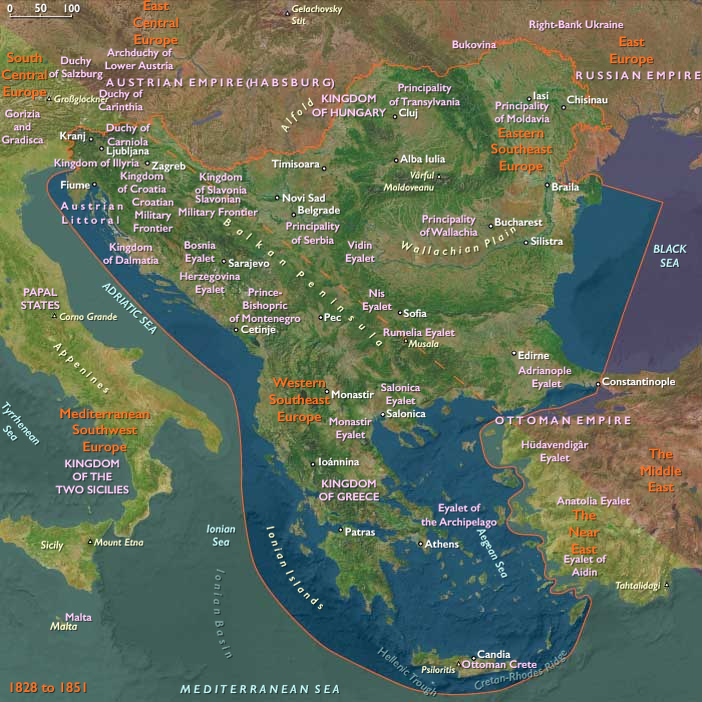
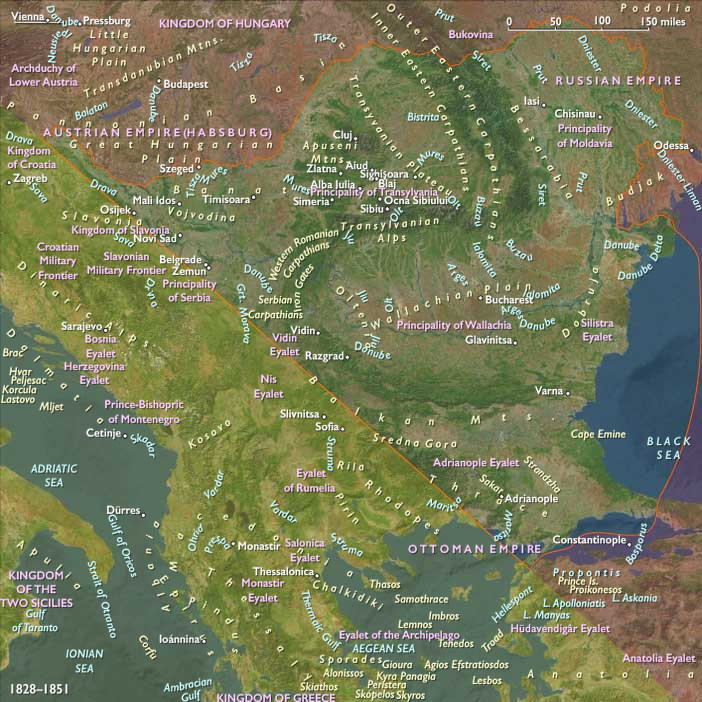
During the Russo-Turkish War of 1828–1829, Russia again invaded the Danubian Principalities of Wallachia and Moldavia, resulting in the Treaty of Adrianople (1829). This treaty established Russian occupation until the Ottomans fully paid an indemnity, allowed native Romanian princes elected for life, and introduced independent national administration under Russian protection. Although nominally still under Ottoman suzerainty, these principalities enjoyed increased autonomy with Russia's diplomatic oversight.
Economic and Social Developments
Economic Hardship in Wallachia
The Danubian Principalities experienced severe economic hardship, notably described by a traveler in 1835 who found Wallachia devoid of manor houses, bridges, windmills, inns, or even basic furniture and utensils in peasant homes. This economic stagnation was exacerbated by administrative mismanagement and heavy taxation.
Cultural and Artistic Developments
Bulgarian National Revival
Throughout the 1830s, the Bulgarian national revival accelerated, driven by intensified cultural and literary activities within monasteries and rural communities. Bulgarian national consciousness strengthened significantly, influenced by the broader Christian resistance against Ottoman rule and intellectual exchanges facilitated through the Danube trade and cultural links with Russia.
Croatian-Hungarian Linguistic and Cultural Conflict
The Croatian-Hungarian language conflict reemerged in the 1830s amid Hungarian efforts to assert linguistic and political dominance. Croatian intellectuals, influenced by French education, began promoting Croatian language and culture vigorously, advocating for the creation of a Slavic kingdom within the Austrian Empire.
Intellectual and Religious Developments
Ottoman Tanzimat Reforms
In 1839, the Ottoman Empire initiated the Tanzimat (Reorganization) reforms, aiming to stabilize the empire by curbing regional autonomy, modernizing the military, establishing Turkish-language schools, and promoting loyalty to the empire through an Islamic education system. These reforms significantly impacted governance and social structures in the Balkan territories.
Political Dynamics and Regional Rivalries
Greek Independence and its Regional Impact
The establishment of an independent Greek kingdom following the Greek War of Independence (1821–1832)reshaped Balkan political dynamics, influencing nationalist aspirations throughout Eastern Southeast Europe. The subsequent treaties not only secured Greek autonomy but also confirmed increased autonomy for the Danubian Principalities, guaranteed Russian oversight, and maintained European access to strategic waterways like the Danube and Turkish straits.
Serbian Autonomy and Internal Struggles
By 1830, the Ottoman Empire formally recognized Serbia as a hereditary principality under Turkish suzerainty, appointing Miloš Obrenović as prince. This recognition included autonomy for the Serbian Orthodox Church and reinforced Russia’s protective role over Serbian affairs. Despite economic growth and educational advancements under Miloš, Serbian political life was marred by internal corruption, family rivalries, and external diplomatic interventions, culminating in a constitution imposed by the Ottoman authorities in 1838 to limit princely power.
Russian Diplomatic Dominance
Russian diplomatic and military influence became predominant in Wallachia and Moldavia, particularly through the actions of Count Pavel Kiselev, who improved local governance, public health, education, and legal systems. The Reglement Organique, the first constitutional document of the principalities, was drafted under his oversight, securing Russian diplomatic control by safeguarding the privileges of the Romanian boyars.
Key Historical Events and Developments
-
The Russo-Turkish War (1828–1829) and the resulting Treaty of Adrianople established Russian oversight in Wallachia and Moldavia.
-
The Greek War of Independence concluded in 1832, significantly influencing Balkan nationalist movements.
-
Implementation of the Tanzimat reforms (1839) by the Ottoman Empire to modernize and stabilize its territories.
-
Recognition of Serbian autonomy by the Ottoman Empire in 1830, initiating modern Serbian statehood.
Long-Term Consequences and Historical Significance
The period from 1828 to 1839 was critical in reshaping Eastern Southeast Europe's geopolitical landscape, fueling nationalist aspirations and redefining diplomatic relationships. Russian diplomatic influence and Ottoman reform attempts laid foundational structures for future independence movements and state-building throughout the region.
People
Groups
- Bulgarians (South Slavs)
- Croats (South Slavs)
- Serbs (South Slavs)
- Bulgarian Orthodox Church
- Romanians
- Christians, Eastern Orthodox
- Serbian Orthodox Church
- Ottoman Empire
- Bulgaria, Ottoman
- Turkish people
- Moldavia (Ottoman vassal), Principality of
- Wallachia (Ottoman vassal), Principality of
- Russian Empire
- Slavonia, (Habsburg) Kingdom of
- Serbia, (Ottoman vassal) Principality of
Topics
Commodoties
Subjects
- Commerce
- Language
- Labor and Service
- Decorative arts
- Conflict
- Mayhem
- Faith
- Government
- Scholarship
- Custom and Law
- Human Migration
Regions
Subregions
Years: 1828 - 1839
People
Groups
- Bulgarians (South Slavs)
- Croats (South Slavs)
- Serbs (South Slavs)
- Bulgarian Orthodox Church
- Romanians
- Christians, Eastern Orthodox
- Serbian Orthodox Church
- Ottoman Empire
- Bulgaria, Ottoman
- Turkish people
- Moldavia (Ottoman vassal), Principality of
- Wallachia (Ottoman vassal), Principality of
- Russian Empire
- Slavonia, (Habsburg) Kingdom of
- Serbia, (Ottoman vassal) Principality of
Topics
Commodoties
Subjects
- Commerce
- Language
- Labor and Service
- Decorative arts
- Conflict
- Mayhem
- Faith
- Government
- Scholarship
- Custom and Law
- Human Migration
Regions
Subregions