
Eastern Southeast Europe (1732–1743 CE): Cultural Enlightenment …
Years: 1732 - 1743
Eastern Southeast Europe (1732–1743 CE): Cultural Enlightenment and Social Struggles
Settlement and Migration Patterns
Continuing Serb Settlements and Frontier Life
Between 1732 and 1743 CE, the Serb communities settled within the Austrian Military Frontier in southern Hungary and Slavonia continued to thrive, further strengthening their demographic presence. These Serb populations maintained a distinctive cultural identity through Orthodox religious practices and customs, reinforcing the ethnic complexity of the Habsburg domains.
Economic and Social Developments
Increasing Hardship under Ottoman Administration
In the Ottoman-controlled territories, especially in Serbia, Bulgaria, and the Danubian Principalities (Wallachia and Moldavia), the period was marked by economic difficulties and intensifying exploitation. Heavy taxation, corrupt administration, and oppressive feudal obligations intensified social tensions, leading to periodic local unrest.
Agrarian Distress in Wallachia and Moldavia
The agrarian system in Wallachia and Moldavia remained harsh, with most peasants subject to increasingly oppressive serfdom and taxation. Wealthy boyars expanded their control over land, limiting peasants' freedoms and exacerbating rural poverty. The Phanariot princes, appointed by the Ottoman Porte, heavily taxed their subjects, enriching themselves while diminishing local autonomy.
Cultural and Artistic Developments
Phanariot Cultural Patronage
Under the continuing Phanariot rule in Wallachia and Moldavia, cultural life experienced notable enrichment. Princes such as Constantine Mavrocordatos (who repeatedly ruled both principalities during this period) sponsored artistic and literary endeavors, supported the establishment of printing presses, and promoted the translation and dissemination of religious and philosophical texts, reflecting broader European Enlightenment influences.
Monastic and Architectural Flourishing
Monastic and ecclesiastical architecture continued to prosper, exemplified by the completion and embellishment of important monasteries and churches. Religious institutions remained vital centers of literacy, artistic production, and education, contributing to the preservation of national cultural identity amidst foreign rule.
Intellectual and Religious Developments
Continuing Enlightenment Influence
The intellectual currents of the European Enlightenment persisted in shaping the cultural landscape of the Danubian Principalities, particularly through scholarly endeavors, literary production, and the spread of Enlightenment ideas among educated elites. The vibrant intellectual milieu fostered greater interaction with Western Europe, introducing progressive concepts in philosophy, governance, and social organization.
Tensions between Orthodoxy and Catholic Influence
In Austrian-controlled territories, the forced Catholicization policies and aggressive missionary activities continued to fuel tensions and resistance among the Orthodox Serbian populations. Orthodox Serbs viewed these activities as threats to their religious traditions and cultural autonomy, further deepening their resistance to Habsburg rule. The Orthodox Serbs increasingly looked to the Russian tsar for support, as well as to the Serbian Church in southern Hungary, seeking spiritual and political aid against religious and cultural pressures.
Political Dynamics and Regional Rivalries
Continued Phanariot Governance
Ottoman-appointed Phanariot rulers, especially the influential Constantine Mavrocordatos, maintained their dominance over Wallachia and Moldavia, employing strategies of diplomacy, bribery, and administrative efficiency to manage their precarious positions between Ottoman overlords and local boyar elites. Their rule, despite its cultural patronage, was widely resented for its heavy taxation and corrupt administration.
Habsburg-Ottoman Rivalries
The Austro-Ottoman frontier remained politically sensitive, with ongoing tensions despite the temporary peace established by the Treaty of Passarowitz (1718). Both empires maintained significant military presences along their frontiers, and Austria continued to rely on the Serb frontier guards in its Military Frontier as a strategic buffer against potential Ottoman incursions.
Key Historical Events and Developments
-
Continued patronage and cultural contributions of Constantine Mavrocordatos as Prince of Wallachia and Moldavia.
-
Ongoing cultural and educational investments by Phanariot rulers, fostering Enlightenment-inspired intellectual growth.
-
Increased resistance to Catholicization among Serbian populations within Habsburg territories, prompting appeals to Russian support and reliance on the Serbian Church in Hungary.
Long-Term Consequences and Historical Significance
The period from 1732 to 1743 CE further highlighted the cultural tensions, economic disparities, and political rivalries shaping Eastern Southeast Europe. Despite harsh administrative conditions under Ottoman and Habsburg rule, intellectual and cultural life flourished, laying foundations for future nationalist movements. The resistance to forced religious conversions solidified Serbian and Romanian Orthodox identities, which would later play a critical role in regional nationalist awakenings.
People
Groups
- Slavonia region
- Bulgarians (South Slavs)
- Serbs (South Slavs)
- Bulgarian Orthodox Church
- Romanians
- Albanians
- Christians, Roman Catholic
- Christians, Eastern Catholic (Uniate)
- Austria, Archduchy of
- Serbian Orthodox Church
- Ottoman Empire
- Bulgaria, Ottoman
- Wallachia (Ottoman vassal), Principality of
- Turkish people
- Serbia, Ottoman
- Cossacks, Zaporozhian
- Calvinists
- Jesuits, or Order of the Society of Jesus
- Russia, Tsardom of
- Slavonian Krajina (Military Frontier)
- Moldavia (Ottoman vassal), Principality of
- Polish-Lithuanian Commonwealth (Commonwealth of the Two Nations)
- Habsburg Monarchy, or Empire
- Transylvania, (Austrian) Principality of
Topics
Commodoties
Subjects
- Commerce
- Language
- Labor and Service
- Decorative arts
- Conflict
- Faith
- Government
- Scholarship
- Custom and Law
- Human Migration
Regions
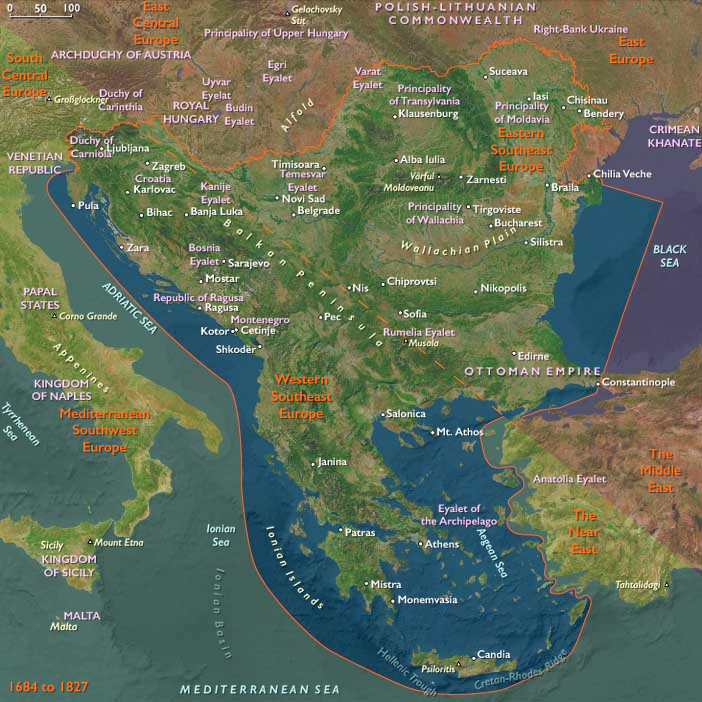
Subregions
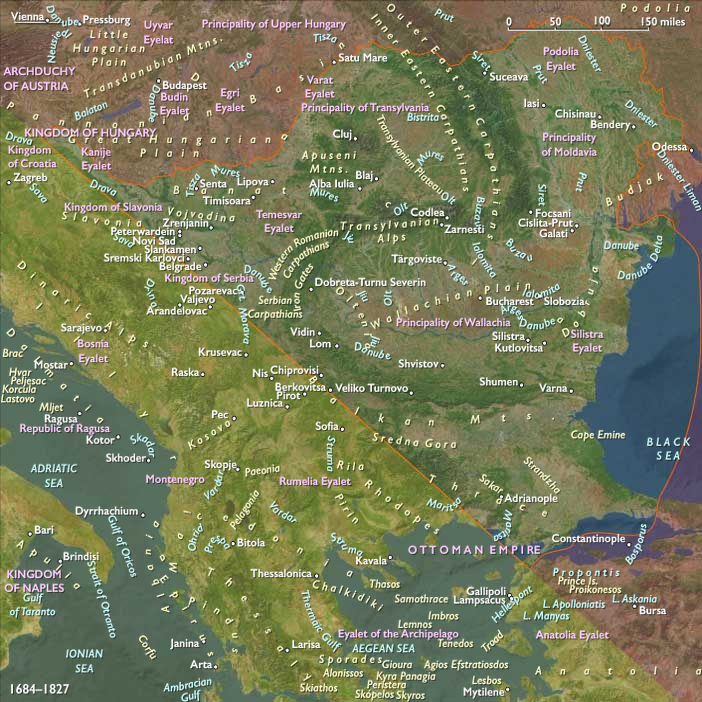
Years: 1732 - 1743
People
Groups
- Slavonia region
- Bulgarians (South Slavs)
- Serbs (South Slavs)
- Bulgarian Orthodox Church
- Romanians
- Albanians
- Christians, Roman Catholic
- Christians, Eastern Catholic (Uniate)
- Austria, Archduchy of
- Serbian Orthodox Church
- Ottoman Empire
- Bulgaria, Ottoman
- Wallachia (Ottoman vassal), Principality of
- Turkish people
- Serbia, Ottoman
- Cossacks, Zaporozhian
- Calvinists
- Jesuits, or Order of the Society of Jesus
- Russia, Tsardom of
- Slavonian Krajina (Military Frontier)
- Moldavia (Ottoman vassal), Principality of
- Polish-Lithuanian Commonwealth (Commonwealth of the Two Nations)
- Habsburg Monarchy, or Empire
- Transylvania, (Austrian) Principality of
Topics
Commodoties
Subjects
- Commerce
- Language
- Labor and Service
- Decorative arts
- Conflict
- Faith
- Government
- Scholarship
- Custom and Law
- Human Migration
Regions
Subregions