
Eastern Southeast Europe (1720–1731 CE): Cultural Tensions, …
Years: 1720 - 1731
Eastern Southeast Europe (1720–1731 CE): Cultural Tensions, Migration, and Enlightenment Influence
Settlement and Migration Patterns
Serb Migration into the Habsburg Military Frontier
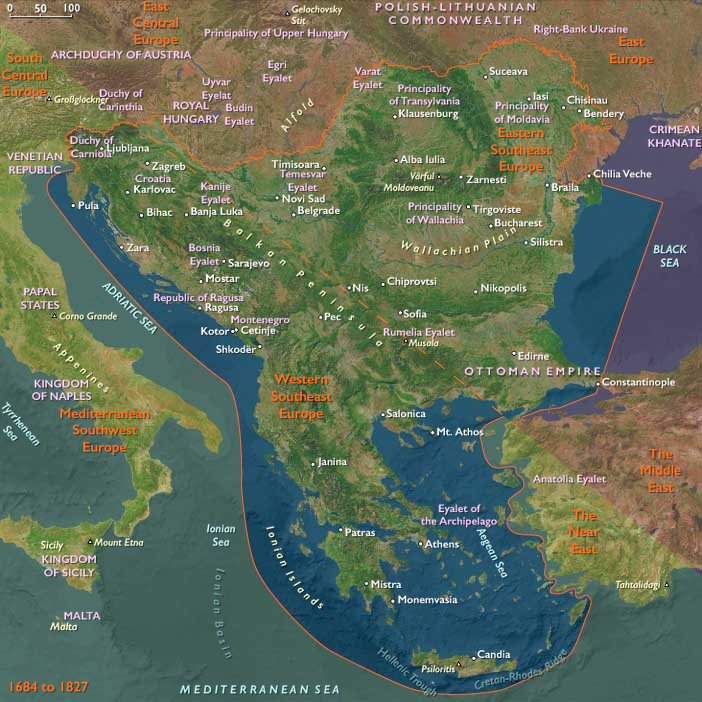
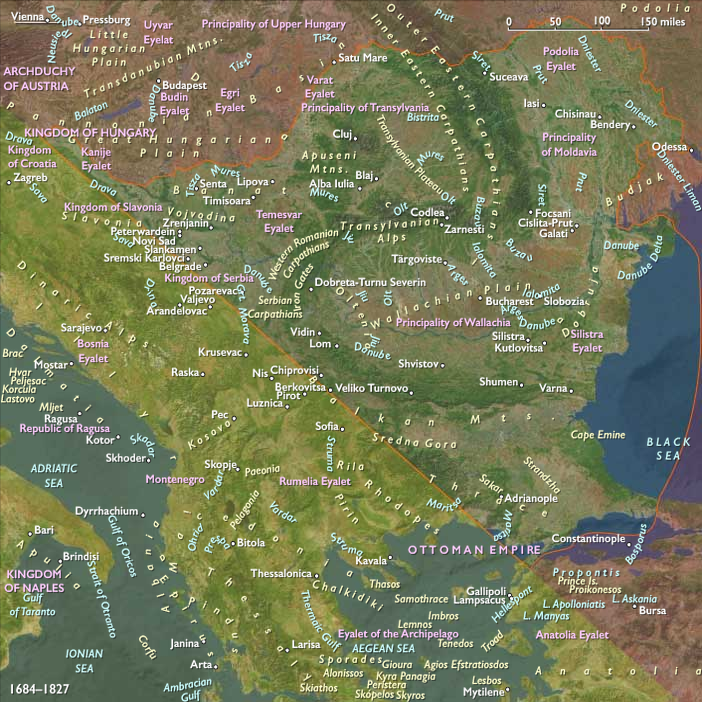
Continuing throughout the early eighteenth century, thousands of Serbs fleeing Ottoman persecution settled in the Austrian-controlled Military Frontier (Militärgrenze) in Slavonia and southern Hungary. This settlement introduced a large Orthodox Serb population into traditionally Catholic Croatian and Hungarian regions, significantly transforming the demographic and cultural landscape. Despite pressures from Croatian nobles to reincorporate these territories, Austria retained control, using the Serb guards as a cost-effective standing military force. The guards themselves resisted reintegration, valuing their unique privileges under Habsburg protection.
Economic and Social Developments
Serbian Prosperity in Southern Hungary
The Serbs who settled in southern Hungary prospered economically, benefiting from fertile agricultural lands along the Danubian plain. This stability allowed a Serbian middle class to emerge, bolstered by monasteries that became key centers of education and cultural renewal, fostering national pride and identity even among the broader, often illiterate Serbian population.
Ottoman Deterioration and Serbian Hardship
Conversely, the Serbs remaining within Ottoman-controlled territories continued to face deteriorating social and economic conditions. The weakening of centralized Ottoman authority led to increased attacks from rogue soldiers and heightened corruption, exacerbated by the sultan's replacement of local Serbian clergy with exploitative Greek priests.
Cultural and Artistic Developments
Greek Cultural Flourishing in Wallachia under Nicholas Mavrocordatos
Under the Phanariot ruler Nicholas Mavrocordatos—who served multiple terms as prince of Wallachia and was reinstated after the Peace of Passarowitz (1718)—significant cultural transformations took place. Nicholas established a lavish Byzantine-inspired court in Bucharest, actively introducing Greek manners, language, and dress to Wallachian society.
Architectural and Intellectual Patronage
Nicholas Mavrocordatos founded important libraries and commissioned notable architectural projects, including the monumental Văcăreşti Monastery and the elegant Stavropoleos Church (1724), constructed by Archimandrite Ioanichie Stratonikeas in central Bucharest. The monastery complex was economically sustained by revenues from a nearby inn, reflecting a prevalent economic model of the era.
Intellectual and Religious Developments
Enlightenment Influence in Wallachia
Nicholas Mavrocordatos was deeply influenced by the European Enlightenment, reflected in his scholarly endeavors and patronage of intellectual figures from across Europe, including Daniel de Fonseca and Stephan Bergler. His private library became one of Europe's most esteemed collections, and he maintained active correspondence with renowned religious and intellectual figures such as Jean Leclerc, William Wake, Archbishop of Canterbury, and Chrysanthus, Orthodox Patriarch of Jerusalem.
Literary Contributions
Nicholas himself authored influential literary and philosophical works, notably the original Greek text Peri kathekonton (Liber de Officiis, published in Bucharest, 1719), and the pioneering Greek novel Philotheou Parerga (The Leisures of Philotheos). His scholarly activities and publications fostered increased Western European awareness of Wallachia, marking significant cultural exchange, exemplified by local chronicler Radu Popescu, who recorded contemporary events in Great Britain, including the ascension of King George II.
Political Dynamics and Regional Rivalries
Austro-Ottoman Struggles and Religious Tensions
Although Austria had taken control of Serbian regions south of the Sava River following the treaty of Passarowitz, Austrian Jesuit missionaries aggressively promoted Catholicism, leading to widespread resentment among Orthodox Serbs, who thus experienced tensions and antagonism toward both their Ottoman and Austrian overlords.
Continuity of Phanariot Rule in Wallachia
Upon Nicholas Mavrocordatos's death in 1730, his son Constantine Mavrocordatos succeeded him as prince of Wallachia, continuing the practice of Greek Phanariot appointments made directly by the Ottoman Porte. Constantine would notably serve multiple terms as prince of both Wallachia and Moldavia until 1769, reinforcing Phanariot influence over these principalities.
Key Historical Events and Developments
-
1724: Construction of the Stavropoleos Church in central Bucharest.
-
1730: Death of Nicholas Mavrocordatos, succeeded by his son Constantine Mavrocordatos as prince of Wallachia, continuing the Phanariot governance established by Ottoman authority.
Long-Term Consequences and Historical Significance
The era from 1720 to 1731 CE significantly shaped Eastern Southeast Europe's cultural, religious, and social landscapes. The migration and establishment of Serbian communities within the Austrian Military Frontier transformed regional demographics and cultural identity. Simultaneously, Wallachia's intellectual flourishing under Phanariot rule introduced Enlightenment ideas, fostering stronger cultural exchanges between Eastern Europe and the West. Despite political instability and religious tensions, these developments laid the groundwork for future nationalist movements and cultural renaissances in the Balkans.
People
- Chrysanthus Notaras
- Constantine Mavrocordatos
- Daniel de Fonseca
- George II of Great Britain
- Jean Le Clerc (theologian)
- Nicholas Mavrocordatos
- Stephan Bergler
- William Wake
Groups
- Slavonia region
- Bulgarians (South Slavs)
- Serbs (South Slavs)
- Bulgarian Orthodox Church
- Romanians
- Albanians
- Christians, Roman Catholic
- Christians, Eastern Catholic (Uniate)
- Austria, Archduchy of
- Serbian Orthodox Church
- Ottoman Empire
- Bulgaria, Ottoman
- Wallachia (Ottoman vassal), Principality of
- Turkish people
- Serbia, Ottoman
- Cossacks, Zaporozhian
- Calvinists
- Jesuits, or Order of the Society of Jesus
- Russia, Tsardom of
- Slavonian Krajina (Military Frontier)
- Moldavia (Ottoman vassal), Principality of
- Polish-Lithuanian Commonwealth (Commonwealth of the Two Nations)
- Habsburg Monarchy, or Empire
- Transylvania, (Austrian) Principality of
Topics
Commodoties
Subjects
- Commerce
- Language
- Labor and Service
- Decorative arts
- Conflict
- Faith
- Government
- Scholarship
- Custom and Law
- Human Migration
Regions
Subregions
Years: 1720 - 1731
People
- Chrysanthus Notaras
- Constantine Mavrocordatos
- Daniel de Fonseca
- George II of Great Britain
- Jean Le Clerc (theologian)
- Nicholas Mavrocordatos
- Stephan Bergler
- William Wake
Groups
- Slavonia region
- Bulgarians (South Slavs)
- Serbs (South Slavs)
- Bulgarian Orthodox Church
- Romanians
- Albanians
- Christians, Roman Catholic
- Christians, Eastern Catholic (Uniate)
- Austria, Archduchy of
- Serbian Orthodox Church
- Ottoman Empire
- Bulgaria, Ottoman
- Wallachia (Ottoman vassal), Principality of
- Turkish people
- Serbia, Ottoman
- Cossacks, Zaporozhian
- Calvinists
- Jesuits, or Order of the Society of Jesus
- Russia, Tsardom of
- Slavonian Krajina (Military Frontier)
- Moldavia (Ottoman vassal), Principality of
- Polish-Lithuanian Commonwealth (Commonwealth of the Two Nations)
- Habsburg Monarchy, or Empire
- Transylvania, (Austrian) Principality of
Topics
Commodoties
Subjects
- Commerce
- Language
- Labor and Service
- Decorative arts
- Conflict
- Faith
- Government
- Scholarship
- Custom and Law
- Human Migration
Regions
Subregions