
Eastern Southeast Europe (1708–1719 CE): Constitutional Developments …
Years: 1708 - 1719
Eastern Southeast Europe (1708–1719 CE): Constitutional Developments and Shifting Alliances
Settlement and Migration Patterns
Serb Migrations and Military Border Expansion
Between 1708 and 1719 CE, large numbers of Serbs fleeing Ottoman oppression settled within the expanded Austrian military frontier (Vojna Krajina) in Slavonia and southern Hungary. These Serbs served as border guards for the Habsburg monarchy, establishing vibrant frontier communities that would later assert unique political rights and resist Croatian attempts to reincorporate the military border region.
Economic and Technological Developments
Ottoman Economic Exploitation under Phanariot Rule
With Ottoman authority reasserted after the failed Russian attempt to control Moldavia in 1711, the Ottoman Empire implemented a system of Greek Phanariot rule in both Wallachia and Moldavia. These Phanariot princes, who purchased their positions from the Ottoman court, aggressively extracted local wealth through heavy taxation and monopolistic practices, severely weakening the economic conditions in both principalities.
Cultural and Artistic Developments
Increased Western and Russian Influence
The period witnessed increased cultural exchanges and influences from Western Europe and Russia. In territories under Habsburg control, Western Baroque styles continued to shape architecture and art, while Russian influence increased Orthodox cultural and religious connections in Wallachia and Moldavia, fostering a sense of shared Orthodox identity.
Social and Religious Developments
Orthodox Alliances and Russian Influence
Orthodox communities in the Ottoman-controlled principalities of Wallachia and Moldavia increasingly turned to the Orthodox Russian Empire under Tsar Peter the Great, hoping to secure assistance against Ottoman domination. This alignment reflected growing religious and cultural solidarity across Orthodox populations in Eastern Europe, fueled by Russia’s declared support for Orthodox communities within Ottoman territories.
Political Dynamics and Regional Rivalries
Phanariot Regime in Wallachia and Moldavia
Following Peter the Great’s failed military campaign in 1711, the Ottoman Sultan tightened control by installing Greek Phanariot princes from Constantinople in Wallachia and Moldavia. These rulers were effectively Ottoman administrators, fully dependent on their Turkish overlords, and administered their territories with ruthless efficiency aimed at maximizing short-term economic extraction.
Habsburg-Ottoman Territorial Adjustments
The 1699 Treaty of Karlowitz, reinforced by subsequent developments, led to significant territorial shifts. By 1718, Austrian victories had decisively ended Ottoman threats in regions such as Dalmatia, Croatia, and Hungary, leaving the Habsburg monarchy firmly in control and redefining political borders across Eastern Southeast Europe.
Constitutional and Legal Developments
The Constitution of Pylyp Orlyk (1710)
A landmark constitutional development occurred in 1710 with the Constitution of Pylyp Orlyk, drafted by Ukrainian Hetman Pylyp Orlyk. Though Ukraine at this time lay largely within the Polish–Lithuanian Commonwealth, this document established a groundbreaking separation of powers among legislative, executive, and judiciary branches. It curtailed executive authority and called for a democratically elected Cossack parliament, the General Council, significantly predating similar constitutional ideas later popularized in Western Europe by thinkers like Montesquieu.
Key Historical Events and Developments
-
1710: Adoption of Pylyp Orlyk’s Constitution, an early European example of a modern constitutional framework emphasizing separation of powers.
-
1711: Peter the Great’s unsuccessful attempt to seize Moldavia ends in failure, prompting Ottoman installation of Phanariot princes in Wallachia and Moldavia.
-
1718: Ottoman threat to Dalmatia ends as Austria firmly secures territories formerly held by the Ottoman Empire.
Long-Term Consequences and Historical Significance
The era from 1708 to 1719 CE reshaped Eastern Southeast Europe through significant constitutional innovation, demographic shifts, and strategic alliances. The introduction of Phanariot rule deeply impacted political and economic life in Romanian territories, while growing Russian influence hinted at future geopolitical alignments. The era’s constitutional developments, especially Orlyk’s innovative governance framework, established precedents of democratic and constitutional thought within the broader Eastern European context.
People
Groups
- Slavonia region
- Bulgarians (South Slavs)
- Serbs (South Slavs)
- Bulgarian Orthodox Church
- Romanians
- Albanians
- Christians, Roman Catholic
- Christians, Eastern Catholic (Uniate)
- Austria, Archduchy of
- Serbian Orthodox Church
- Ottoman Empire
- Bulgaria, Ottoman
- Wallachia (Ottoman vassal), Principality of
- Turkish people
- Serbia, Ottoman
- Cossacks, Zaporozhian
- Calvinists
- Jesuits, or Order of the Society of Jesus
- Russia, Tsardom of
- Slavonian Krajina (Military Frontier)
- Moldavia (Ottoman vassal), Principality of
- Polish-Lithuanian Commonwealth (Commonwealth of the Two Nations)
- Habsburg Monarchy, or Empire
- Holy League (Great Turkish War)
- Transylvania, (Austrian) Principality of
Topics
Commodoties
Subjects
- Commerce
- Language
- Labor and Service
- Decorative arts
- Conflict
- Faith
- Government
- Scholarship
- Custom and Law
- Human Migration
Regions
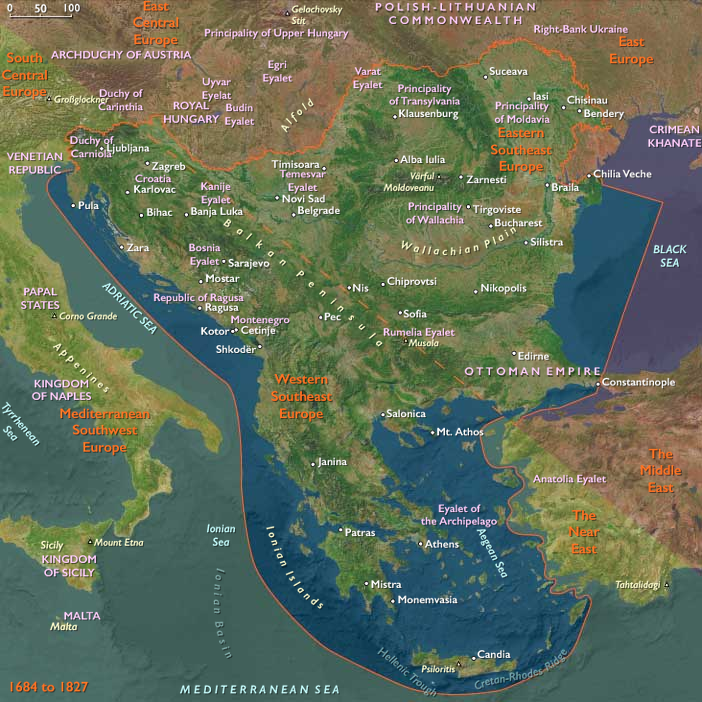
Subregions
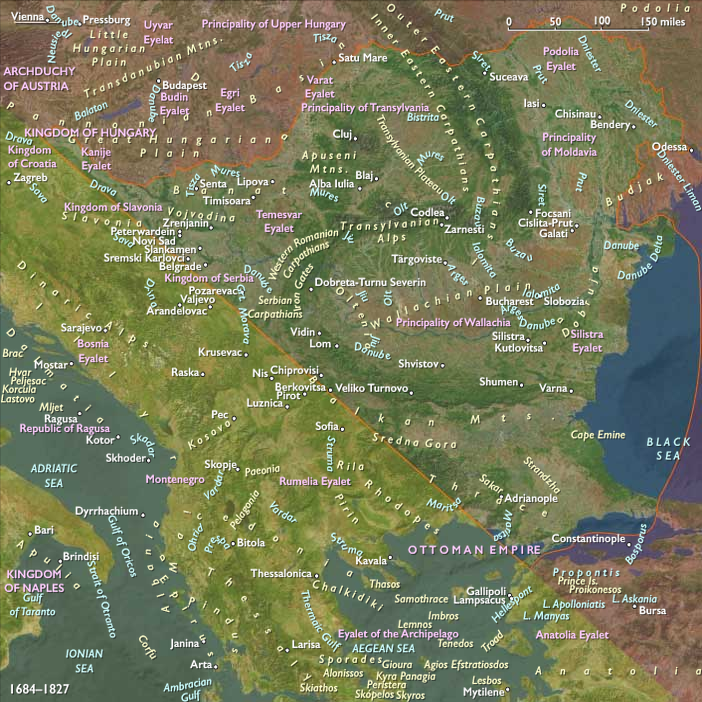
Related Events
Showing 10 events out of 28695 total
Years: 1708 - 1719
People
Groups
- Slavonia region
- Bulgarians (South Slavs)
- Serbs (South Slavs)
- Bulgarian Orthodox Church
- Romanians
- Albanians
- Christians, Roman Catholic
- Christians, Eastern Catholic (Uniate)
- Austria, Archduchy of
- Serbian Orthodox Church
- Ottoman Empire
- Bulgaria, Ottoman
- Wallachia (Ottoman vassal), Principality of
- Turkish people
- Serbia, Ottoman
- Cossacks, Zaporozhian
- Calvinists
- Jesuits, or Order of the Society of Jesus
- Russia, Tsardom of
- Slavonian Krajina (Military Frontier)
- Moldavia (Ottoman vassal), Principality of
- Polish-Lithuanian Commonwealth (Commonwealth of the Two Nations)
- Habsburg Monarchy, or Empire
- Holy League (Great Turkish War)
- Transylvania, (Austrian) Principality of
Topics
Commodoties
Subjects
- Commerce
- Language
- Labor and Service
- Decorative arts
- Conflict
- Faith
- Government
- Scholarship
- Custom and Law
- Human Migration
Regions
Subregions