
Eastern Southeast Europe (1696–1707 CE): Religious Tensions …
Years: 1696 - 1707
Eastern Southeast Europe (1696–1707 CE): Religious Tensions and Emerging Russian Influence
Settlement and Migration Patterns
Consolidation Under Habsburg Rule
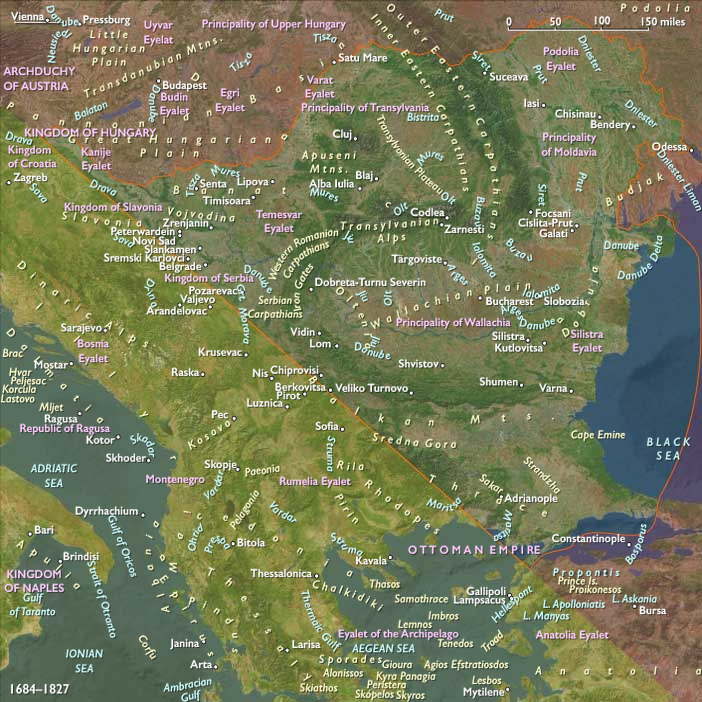
Between 1696 and 1707, the Habsburg monarchy intensified efforts to consolidate its rule in Transylvania, imposing tighter administrative control. This included demographic policies aimed at strengthening the position of Roman Catholic settlers while marginalizing Protestant and Orthodox populations, contributing to internal tensions and demographic shifts.
Economic and Technological Developments
Economic Stability Under Habsburg Administration
Habsburg rule brought relative economic stability to regions like Transylvania, though rural populations—particularly Orthodox Romanians—continued to suffer under heavy feudal obligations and restricted freedoms. Trade networks with Central Europe strengthened, facilitated by imperial infrastructure projects and administrative integration.
Cultural and Artistic Developments
Baroque Influence and Catholic Cultural Expansion
The period saw an increase in Catholic cultural and artistic patronage under Habsburg influence. In Transylvania, baroque architecture flourished, visible in churches and public buildings newly acquired by Catholic authorities, often appropriated from Protestant communities.
Social and Religious Developments
Forced Catholicization and the Uniate Church
The Habsburgs aggressively promoted Catholicism in predominantly Protestant and Orthodox regions of Transylvania, forcibly transferring many Protestant churches to Catholic authorities. A campaign emerged to establish the Uniate Church, which maintained Orthodox rituals but recognized papal authority. Emperor Leopold I issued decrees in 1699 and 1701, officially merging Transylvania's Orthodox Church into the Catholic fold. Despite material incentives and promises of improved social standing offered by Jesuit missionaries, widespread resistance persisted among Orthodox clergy and laypeople, creating lasting religious divisions.
Orthodox Resistance and Persistence
Despite official decrees and some Orthodox clergy accepting the union, the broader Orthodox community strongly resisted incorporation into the Catholic hierarchy. This resistance reinforced religious identity among Orthodox Romanians, laying the groundwork for future national consciousness and opposition to Habsburg religious policy.
Political Dynamics and Regional Rivalries
Rising Russian Influence
This period marked the emergence of Russia as a significant power in Eastern Europe, eclipsing Polish influence and increasingly shaping events in the Ottoman Balkans. Tsar Peter I (Peter the Great) articulated a policy of supporting fellow Orthodox Christians living under Ottoman rule, making Russia an attractive ally for Romanian leaders in Wallachia and Moldavia, who sought Russian assistance to resist Ottoman domination.
Habsburg-Ottoman-Russian Rivalries
Intensified rivalries emerged between the Ottoman Empire, the Habsburg monarchy, and an increasingly assertive Russian Empire. Romanian principalities found themselves at the intersection of these great-power ambitions, carefully navigating alliances to protect their autonomy and exploit these rivalries.
Key Historical Events and Developments
-
1699, 1701: Emperor Leopold I issues decrees mandating the union of Transylvania's Orthodox Church with the Roman Catholic Church, sparking resistance.
-
1700s: Tsar Peter the Great declares official support for Orthodox communities under Ottoman rule, marking the start of increased Russian involvement in Wallachia and Moldavia.
Long-Term Consequences and Historical Significance
The years 1696–1707 CE significantly altered the religious landscape of Eastern Southeast Europe, intensifying Catholic-Orthodox tensions within Habsburg territories and introducing the Russian Empire as a critical external influence. These developments had lasting implications for regional identity, religious practices, and political alignments, shaping the region’s trajectory into the modern era.
People
Groups
- Slavonia region
- Bulgarians (South Slavs)
- Serbs (South Slavs)
- Bulgarian Orthodox Church
- Romanians
- Albanians
- Christians, Roman Catholic
- Christians, Eastern Catholic (Uniate)
- Austria, Archduchy of
- Serbian Orthodox Church
- Ottoman Empire
- Bulgaria, Ottoman
- Wallachia (Ottoman vassal), Principality of
- Turkish people
- Serbia, Ottoman
- Calvinists
- Jesuits, or Order of the Society of Jesus
- Russia, Tsardom of
- Moldavia (Ottoman vassal), Principality of
- Polish-Lithuanian Commonwealth (Commonwealth of the Two Nations)
- Habsburg Monarchy, or Empire
- Holy League (Great Turkish War)
- Transylvania, (Austrian) Principality of
Topics
Commodoties
Subjects
- Commerce
- Language
- Labor and Service
- Decorative arts
- Conflict
- Faith
- Government
- Scholarship
- Custom and Law
- Human Migration
Regions

Subregions
Years: 1696 - 1707
People
Groups
- Slavonia region
- Bulgarians (South Slavs)
- Serbs (South Slavs)
- Bulgarian Orthodox Church
- Romanians
- Albanians
- Christians, Roman Catholic
- Christians, Eastern Catholic (Uniate)
- Austria, Archduchy of
- Serbian Orthodox Church
- Ottoman Empire
- Bulgaria, Ottoman
- Wallachia (Ottoman vassal), Principality of
- Turkish people
- Serbia, Ottoman
- Calvinists
- Jesuits, or Order of the Society of Jesus
- Russia, Tsardom of
- Moldavia (Ottoman vassal), Principality of
- Polish-Lithuanian Commonwealth (Commonwealth of the Two Nations)
- Habsburg Monarchy, or Empire
- Holy League (Great Turkish War)
- Transylvania, (Austrian) Principality of
Topics
Commodoties
Subjects
- Commerce
- Language
- Labor and Service
- Decorative arts
- Conflict
- Faith
- Government
- Scholarship
- Custom and Law
- Human Migration
Regions
Subregions