
Eastern Southeast Europe (1684–1695 CE): The Holy …
Years: 1684 - 1695
Eastern Southeast Europe (1684–1695 CE): The Holy League and Ottoman Retrenchment
Settlement and Migration Patterns
Serbian Migration and the Great Exodus
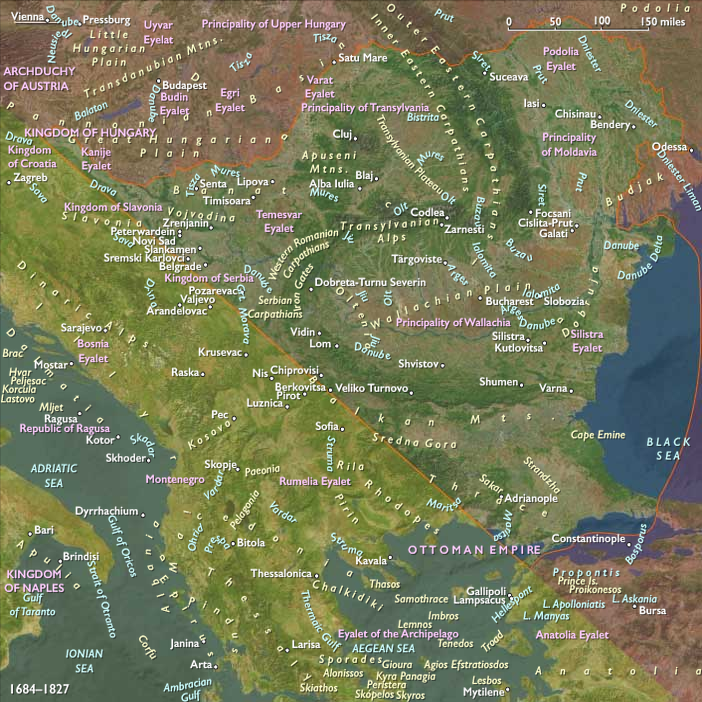
From 1684 to 1695 CE, Christian offensives against Ottoman territories triggered significant demographic shifts. Serbian populations, fearing Ottoman reprisals after failed rebellions, experienced substantial migrations. In 1690, Serbian Patriarch Arsenije III Čarnojević led an exodus of approximately thirty-six thousand Serbian families into Austrian-held southern Hungary, notably into what would become known as Vojvodina. The Austrian emperor offered religious freedom, autonomous governance, and military oversight to these refugees, laying the foundation for Serbian cultural and political identity in the region.
Political Dynamics and Regional Conflicts
The Holy League's Offensive
This era marked a significant military effort by Christian European powers—Austria, Poland, Venice, and Russia—to drive the Ottoman Empire out of Southeast Europe following the decisive relief of Vienna in 1683 by Polish forces under King Jan Sobieski. From 1687 to 1690, the Holy League successfully expelled Ottoman forces from significant portions of southern Hungary, including Transylvania, temporarily capturing Belgrade and large parts of Serbia.
Ottoman Retrenchment and Reprisals
Despite initial successes by the Holy League, Ottoman forces regrouped and recaptured territories, notably retaking Belgrade. The failure of the Serbian rebellions in Ottoman-controlled territories led to severe reprisals and a reinforced Ottoman presence south of the Sava River. Simultaneously, the Albanian Catholic revolt against Ottoman rule ended tragically, resulting in forced conversions to Islam and intensified Ottoman control.
Austro-Habsburg Dominance in Transylvania
In 1688, the Transylvanian Diet formally renounced Ottoman suzerainty and accepted Habsburg protection. By 1699, the Porte officially recognized Austrian control over Transylvania. Although local privileges of the nobility and the rights of "recognized" religions (Roman Catholicism, Lutheranism, Calvinism, and Unitarianism) were confirmed, direct Austrian administrative control significantly altered the region's political landscape.
Economic and Social Developments
Intensified Serfdom and Religious Oppression
Under Austrian authority, Transylvania’s Romanian majority faced extreme hardship. Romanians were systematically excluded from political participation, tightly bound by serfdom restrictions, and economically exploited. Orthodox Romanians suffered additional religious oppression, compelled to pay tithes to either Roman Catholic or Protestant institutions, causing widespread impoverishment among Orthodox clergy.
Cultural and Religious Dynamics
Serbian Cultural Resilience
The Serbian migration to Vojvodina led to the establishment of new monasteries, which rapidly became significant centers for Serbian cultural and religious preservation. These institutions not only reinforced Serbian Orthodox identity but also became centers for education and literature, profoundly influencing Serbian national consciousness.
Albanian and Bulgarian Resistance
The period saw desperate revolts by Albanian Catholics and Bulgarian Christians against Ottoman oppression. Despite their failure and the harsh repercussions, these revolts underscored enduring resistance and dissatisfaction with Ottoman rule, setting the stage for future nationalist sentiments.
Key Historical Events and Developments
-
1687-1690: Holy League's counteroffensive against the Ottoman Empire.
-
1690: Serbian Patriarch Arsenije III Čarnojević leads mass migration to Austrian-held territories.
-
1688: Transylvanian Diet accepts Austrian protection, formally breaking from Ottoman suzerainty.
-
1689: Temporary Austrian capture and subsequent Ottoman recapture of Belgrade, inciting reprisals.
-
1695: Russian assault on the Ottoman-held fortress city of Azov, signaling a broader regional struggle for control of strategic Black Sea access.
Long-Term Consequences and Historical Significance
The era from 1684 to 1695 CE dramatically reshaped Eastern Southeast Europe's political, cultural, and demographic landscapes. The Holy League's initial successes and subsequent setbacks highlighted the complex power dynamics between Ottoman resilience and European ambitions. Serbian migration, Austrian control of Transylvania, and regional revolts laid essential foundations for future nationalist movements and cultural resilience against external dominance.
People
Groups
- Slavonia region
- Bulgarians (South Slavs)
- Serbs (South Slavs)
- Bulgarian Orthodox Church
- Romanians
- Albanians
- Christians, Roman Catholic
- Austria, Archduchy of
- Serbian Orthodox Church
- Ottoman Empire
- Bulgaria, Ottoman
- Wallachia (Ottoman vassal), Principality of
- Turkish people
- Serbia, Ottoman
- Calvinists
- Russia, Tsardom of
- Moldavia (Ottoman vassal), Principality of
- Transylvania (Ottoman vassal), Principality of
- Polish-Lithuanian Commonwealth (Commonwealth of the Two Nations)
- Habsburg Monarchy, or Empire
- Holy League (Great Turkish War)
- Transylvania, (Austrian) Principality of
Topics
Commodoties
Subjects
- Commerce
- Language
- Labor and Service
- Decorative arts
- Conflict
- Faith
- Government
- Scholarship
- Custom and Law
- Human Migration
Regions

Subregions
Years: 1684 - 1695
People
Groups
- Slavonia region
- Bulgarians (South Slavs)
- Serbs (South Slavs)
- Bulgarian Orthodox Church
- Romanians
- Albanians
- Christians, Roman Catholic
- Austria, Archduchy of
- Serbian Orthodox Church
- Ottoman Empire
- Bulgaria, Ottoman
- Wallachia (Ottoman vassal), Principality of
- Turkish people
- Serbia, Ottoman
- Calvinists
- Russia, Tsardom of
- Moldavia (Ottoman vassal), Principality of
- Transylvania (Ottoman vassal), Principality of
- Polish-Lithuanian Commonwealth (Commonwealth of the Two Nations)
- Habsburg Monarchy, or Empire
- Holy League (Great Turkish War)
- Transylvania, (Austrian) Principality of
Topics
Commodoties
Subjects
- Commerce
- Language
- Labor and Service
- Decorative arts
- Conflict
- Faith
- Government
- Scholarship
- Custom and Law
- Human Migration
Regions
Subregions