
Eastern Southeast Europe (1576–1587 CE): Consolidation, Conflict, …
Years: 1576 - 1587
Eastern Southeast Europe (1576–1587 CE): Consolidation, Conflict, and Cultural Shifts
Settlement and Migration Patterns
Stabilization of Ottoman Control
From 1576 to 1587, Eastern Southeast Europe continued to see Ottoman administrative stabilization. The Ottomans further entrenched their governance by reinforcing settlements with populations from Anatolia and other Muslim territories. Cities such as Constantinople, Adrianople, and Philippopolis expanded, serving as key administrative, economic, and cultural centers, thus solidifying the empire's demographic presence.
Economic and Technological Developments
Expansion of Trade and Commerce
Trade within Eastern Southeast Europe remained robust, sustained by Ottoman infrastructure investments such as enhanced caravan routes, bridges, and regional markets. Economic integration deepened, with Constantinople remaining a vital nexus for trade linking Europe, Asia, and Africa. Markets in Adrianople and other provincial cities flourished, benefiting from stable governance and expanded trade routes.
Cultural and Artistic Developments
Cultural Flourishing Under Ottoman Patronage
Ottoman patronage supported substantial cultural activity, including architectural projects, manuscript production, and the arts. Construction of mosques, educational institutions (medreses), libraries, and public baths continued, blending Islamic artistic styles with local Byzantine and Balkan traditions. This period witnessed a rich synthesis of cultural and artistic influences across the region.
Social and Religious Developments
Continued Religious Pluralism
The Ottoman millet system facilitated religious coexistence by granting substantial autonomy to Christian (Orthodox, Catholic, Protestant) and Jewish communities. Communities managed their own religious affairs and courts, thus maintaining social cohesion while allowing diverse religious practices. Protestant communities, especially in areas such as Transylvania, continued to grow, although Orthodox Christianity remained dominant among Romanians and Bulgarians.
Political Dynamics and Regional Rivalries
Administrative Efficiency and Internal Control
Ottoman provincial governance was consolidated, emphasizing centralization and bureaucratic efficiency. Local governors (pashas) were closely supervised by the imperial center in Constantinople, strengthening administrative control and regional stability.
Conflict and Diplomacy with European Powers
Eastern Southeast Europe continued to witness tensions and periodic conflict between Ottoman and European powers, notably the Habsburgs and Poland. The Ottomans undertook diplomatic efforts to stabilize frontiers while maintaining a formidable military presence along contested borders. Smaller-scale conflicts and local uprisings were quickly suppressed to maintain Ottoman control.
Key Historical Events and Developments
-
1576: Ascension of Sultan Murad III brings internal consolidation but renewed tensions with European neighbors.
-
1583: A truce with the Habsburg Empire temporarily stabilizes the northern Ottoman frontier, enabling a focus on internal governance and cultural patronage.
Long-Term Consequences and Historical Significance
The era from 1576 to 1587 CE solidified Ottoman dominance in Eastern Southeast Europe through effective governance, economic expansion, and cultural patronage. This consolidation established enduring patterns of Ottoman administration and cultural synthesis, significantly influencing the region's subsequent historical trajectory.
People
Groups
- Jews
- Hungarian people
- Islam
- Romanians
- Christians, Roman Catholic
- Christians, Eastern Orthodox
- Christians, Eastern Catholic (Uniate)
- Saxons, Transylvanian
- Székelys
- Ottoman Empire
- Poland of the Jagiellonians, Kingdom of
- Lutheranism
- Calvinists
- Hungary (Transylvania), Ottoman vassal Kingdom of
- Transylvania (Ottoman vassal), Principality of
Topics
Commodoties
Subjects
Regions
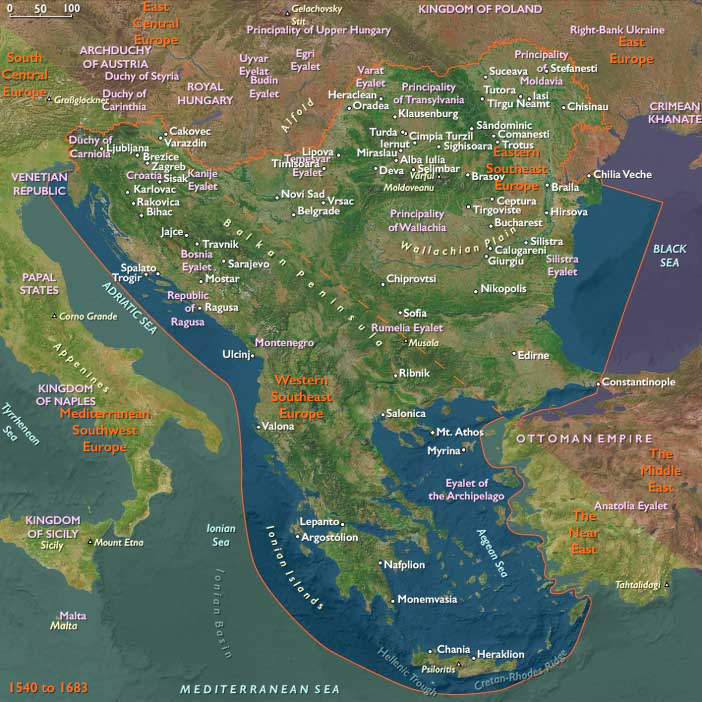
Subregions
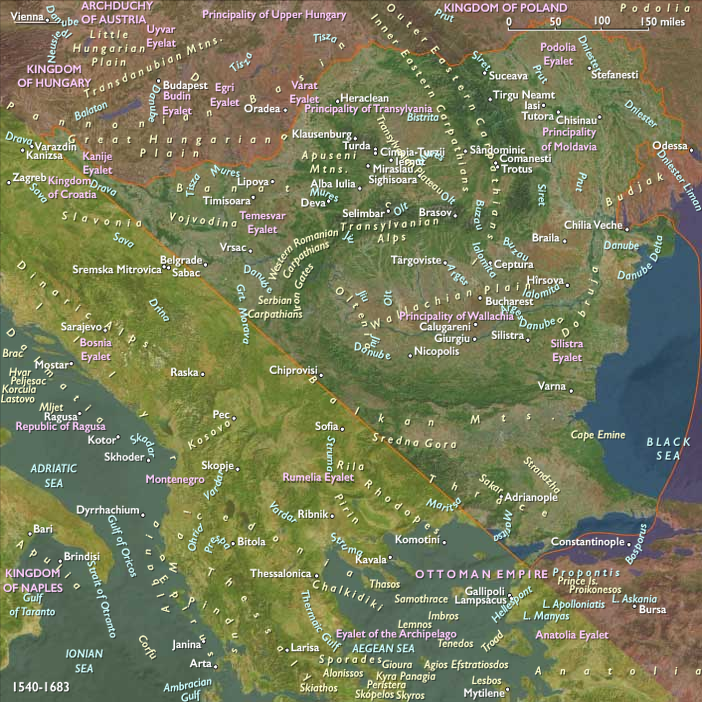
Years: 1576 - 1587
People
Groups
- Jews
- Hungarian people
- Islam
- Romanians
- Christians, Roman Catholic
- Christians, Eastern Orthodox
- Christians, Eastern Catholic (Uniate)
- Saxons, Transylvanian
- Székelys
- Ottoman Empire
- Poland of the Jagiellonians, Kingdom of
- Lutheranism
- Calvinists
- Hungary (Transylvania), Ottoman vassal Kingdom of
- Transylvania (Ottoman vassal), Principality of
Topics
Commodoties
Subjects
Regions
Subregions