
Eastern Southeast Europe (1396–1539 CE): Ottoman Ascendancy, …
Years: 1396 - 1539
Eastern Southeast Europe (1396–1539 CE): Ottoman Ascendancy, Danubian Principalities, and Balkan Crossroads
Geographic & Environmental Context
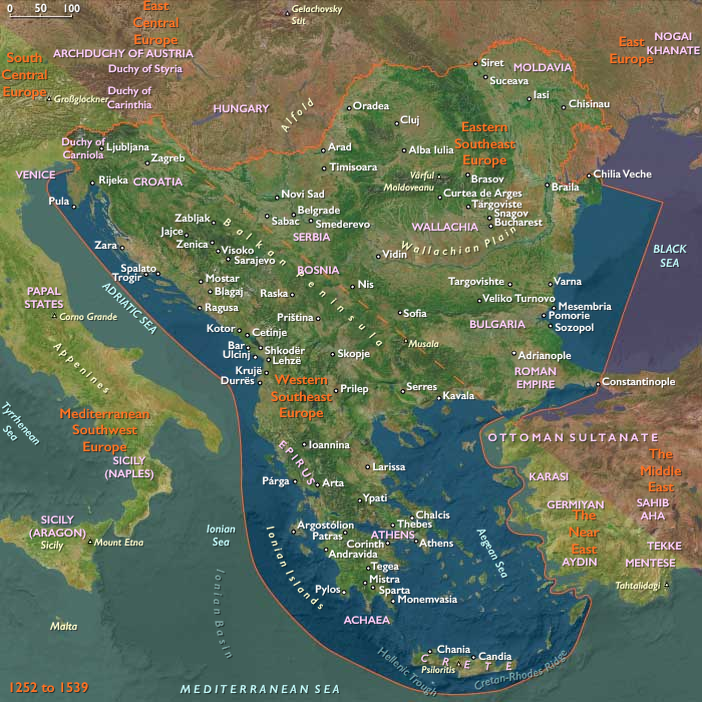
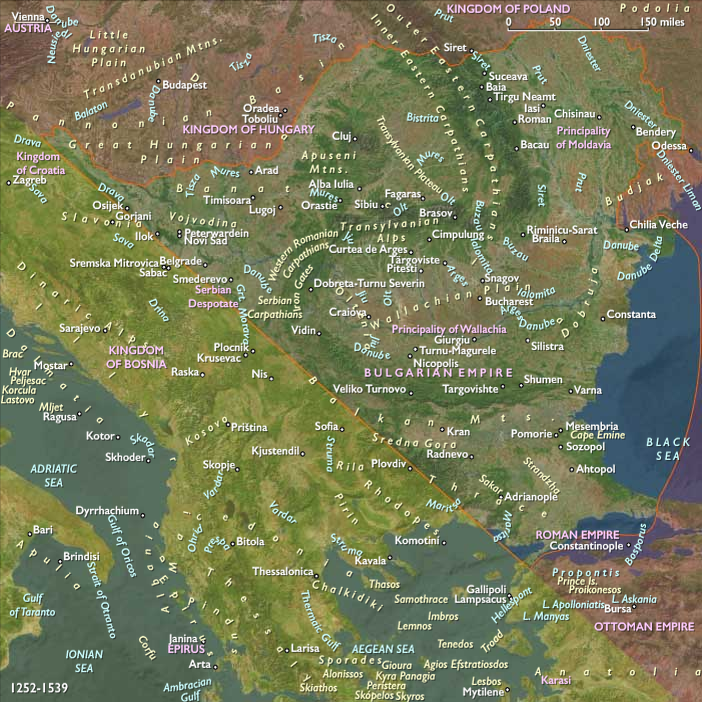
The subregion of Eastern Southeast Europe includes Turkey-in-Europe, Thrace-in-Greece, Bulgaria (except the southwest), Moldova, Romania, northeastern Serbia, northeastern Croatia, and extreme northeastern Bosnia and Herzegovina. Anchors included the Danube from the Iron Gates to its delta, the Wallachian and Moldavian plains, the Transylvanian and Carpathian margins, the Balkan and Rhodope ranges, and the Thracian plain leading to Constantinople/Istanbul. This was a meeting ground of steppe and forest, mountain fortresses and river valleys, bound by the Danube corridor and the Bosporus straits.
Climate & Environmental Shifts
The Little Ice Age cooled winters and shortened growing seasons.
-
Danube basin: spring floods inundated floodplains; summer droughts alternated with wet years, affecting grain surpluses.
-
Carpathian foothills & Balkan uplands: heavy snowpack fed torrents; pastoralists shifted grazing with snowmelt.
-
Thrace & Marmara lowlands: Mediterranean crops of vines and olives endured but suffered frost in severe winters.
Subsistence & Settlement
-
Rural farming: Wheat, barley, millet, and rye across Wallachia, Moldavia, and Thrace; vineyards in Bulgaria and Thrace; maize only arrived later.
-
Pastoralism: Sheep, cattle, and horses grazed on plains and upland meadows; transhumance between Carpathians and lowlands.
-
Towns & trade nodes: Constantinople/Istanbul, Sofia, Târgu Jiu, Bucharest (emerging), Iași, and Brașov; fortified citadels guarded Danube crossings.
-
Fishing & forests: Danube, Prut, and Dniester supplied sturgeon and carp; forests yielded honey, wax, and timber.
Technology & Material Culture
-
Agriculture: Wooden plows, iron-tipped tools, watermills; peasant strips and manorial estates persisted under Ottoman timar and local boyar systems.
-
Military: Cavalry and fortresses dominated warfare; Ottomans refined siege artillery; Moldavian and Wallachian hosts combined light cavalry with war wagons.
-
Crafts & architecture: Orthodox monasteries in Moldavia and Wallachia (Voroneț, Humor) painted with vivid frescoes; Ottoman mosques and baths began reshaping Balkan towns.
Movement & Interaction Corridors
-
Danube corridor: Lifeline for grain, salt, and armies; Brașov and Belgrade were major crossings.
-
Black Sea–steppe routes: Moldavia and Dobruja linked to Genoese colonies (until Ottoman conquest in 1475) and later Ottoman trade.
-
Balkan passes: Shipka and Iron Gates moved caravans between plains and coastal zones.
-
Ottoman expansion: After Battle of Nicopolis (1396) and Varna (1444), Ottomans pressed north; 1453 capture of Constantinople secured the Bosporus; Belgrade resisted until 1521.
Cultural & Symbolic Expressions
-
Orthodoxy: Wallachia, Moldavia, and Bulgaria maintained Orthodox liturgy, monasteries, and saints’ cults as centers of identity under Ottoman suzerainty.
-
Ottoman Islam: Spread in towns via mosques, markets, and administrative complexes; janissary garrisons became cultural nodes.
-
Humanism: Latin and Greek scholars fled Constantinople (1453), carrying manuscripts to Italy; Balkan literacy endured in monasteries.
-
Epic & folklore: Songs of resistance (Hunyadi, Skanderbeg) circulated; Moldavian chronicles preserved local memory.
Environmental Adaptation & Resilience
-
Farmers: Diversified between cereals, vineyards, and pastoralism; stored grain in earth cellars.
-
Pastoralists: Practiced flexible transhumance, moving flocks between Carpathian pastures and Danubian lowlands.
-
Villages: Rebuilt after raids with timber palisades; forests offered refuge.
-
Markets: Redistributed surpluses; Ottoman provisioning drew resources toward Istanbul and military roads.
Technology & Power Shifts (Conflict Dynamics)
-
Ottoman victories: Nicopolis (1396), Varna (1444), Kosovo (1448), Constantinople (1453), Belgrade (1521), Mohács (1526).
-
Danubian principalities: Wallachia and Moldavia maintained tributary autonomy, resisting at times (Mircea the Elder, Stephen the Great of Moldavia defeated Ottomans at Vaslui, 1475).
-
Hungary & Habsburgs: Held the northern frontier until Mohács (1526), after which Ottomans partitioned Hungary and pressed into the Carpathian basin.
-
Crimean Tatars: Allied to Ottomans, raided Moldavia, Poland, and Ukraine through Black Sea steppes.
Transition
By 1539 CE, Eastern Southeast Europe had become an Ottoman marchland. Constantinople was the Ottoman capital, Bulgaria and Thrace integrated into the timar system, and Belgrade secured. Wallachia and Moldavia remained tributary but strategically vital; Transylvania, now semi-independent, stood between Ottoman and Habsburg spheres. The Danube and Carpathian arc had become Europe’s central fault line between Christendom and the expanding Ottoman world.
People
Groups
- Jews
- Islam
- Muslims, Sunni
- Christians, Eastern Orthodox
- Bulgarian Empire (Second), or Empire of Vlachs and Bulgars
- Hungary, Kingdom of
- Wallachia, Principality of
- Ottoman Empire
- Moldavia, Principality of
- Serbia, Moravian
- Egypt and Syria, Mamluk Burji Sultanate of
- Bulgaria, Ottoman
- Wallachia, Principality of
- Serbian Despotate
- Wallachia (Ottoman vassal), Principality of
- Serbian Despotate
- Transylvania (Hungarian governate)
- Serbia, Ottoman
- Qizilbash or Kizilbash, (Ottoman Turkish for "Crimson/Red Heads")
- Spanish Empire
- Persia, Safavid Kingdom of
- Egypt, Ottoman eyalet of
- Habsburg Monarchy, or Empire
Topics
- Reconquista, the
- Middle Subatlantic Period
- Nicopolis, Battle of
- Kosovo, Battle of (1448)
- Constantinople, Fall of
- Ottoman-Mamluk War of 1516-17
- Mohács, Battle of
Commodoties
Subjects
Regions
Subregions
Related Events
Showing 10 events out of 43406 total
Years: 1396 - 1539
People
Groups
- Jews
- Islam
- Muslims, Sunni
- Christians, Eastern Orthodox
- Bulgarian Empire (Second), or Empire of Vlachs and Bulgars
- Hungary, Kingdom of
- Wallachia, Principality of
- Ottoman Empire
- Moldavia, Principality of
- Serbia, Moravian
- Egypt and Syria, Mamluk Burji Sultanate of
- Bulgaria, Ottoman
- Wallachia, Principality of
- Serbian Despotate
- Wallachia (Ottoman vassal), Principality of
- Serbian Despotate
- Transylvania (Hungarian governate)
- Serbia, Ottoman
- Qizilbash or Kizilbash, (Ottoman Turkish for "Crimson/Red Heads")
- Spanish Empire
- Persia, Safavid Kingdom of
- Egypt, Ottoman eyalet of
- Habsburg Monarchy, or Empire
Topics
- Reconquista, the
- Middle Subatlantic Period
- Nicopolis, Battle of
- Kosovo, Battle of (1448)
- Constantinople, Fall of
- Ottoman-Mamluk War of 1516-17
- Mohács, Battle of
Commodoties
Subjects
Regions
Subregions