
Eastern Southeast Europe (1456–1467 CE): Ottoman Consolidation …
Years: 1456 - 1467
Eastern Southeast Europe (1456–1467 CE): Ottoman Consolidation and Regional Resistance
Settlement and Migration Patterns
Ottoman Expansion in Serbia and Bosnia
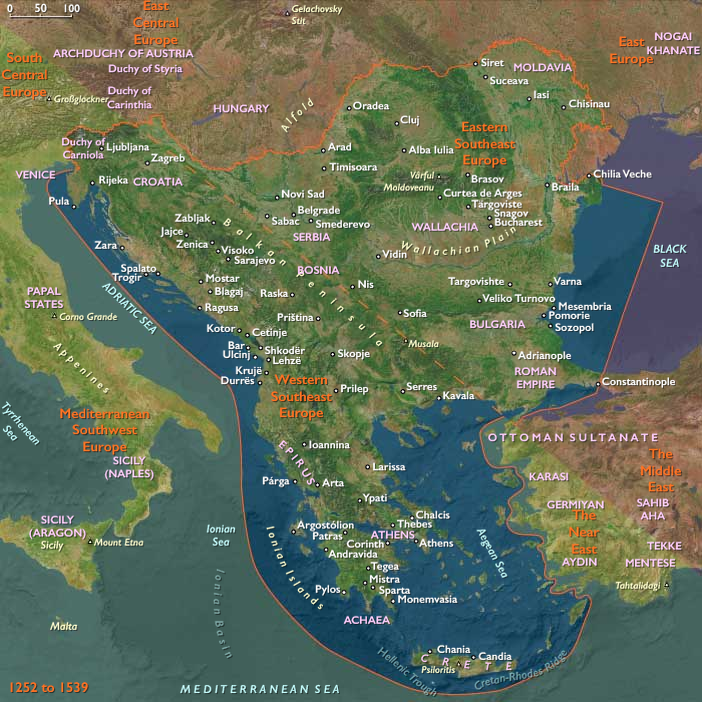
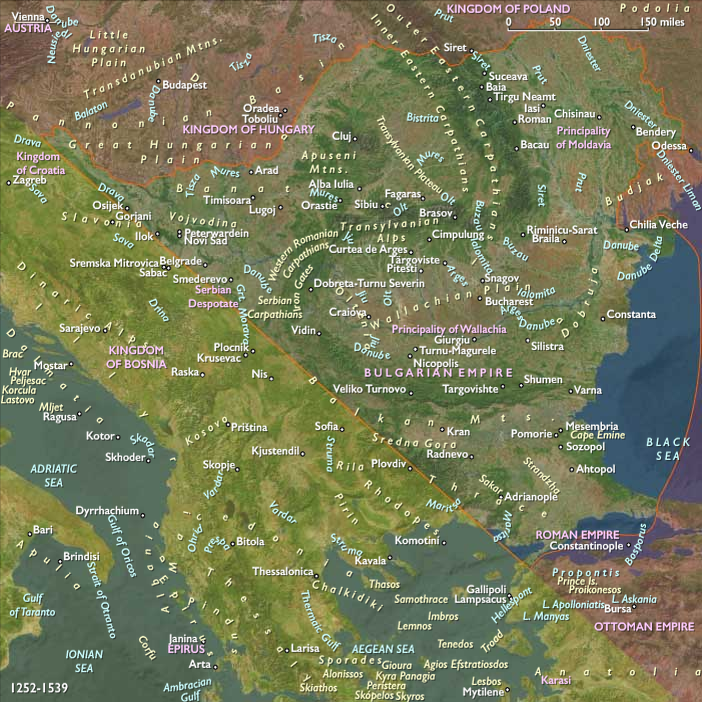
From 1456 to 1467, the Ottoman Empire continued its consolidation over significant territories in Eastern Southeast Europe, particularly in Serbia and Bosnia. The Siege of Belgrade (1456) was a major event, temporarily checking Ottoman expansion. Led by Hungarian regent John Hunyadi, Hungarian and Serbian defenders secured a significant victory, delaying Ottoman advancement and allowing these northern regions temporary autonomy.
Stabilization of Ottoman Rule in Bulgaria
The Ottoman administrative system further entrenched itself in Bulgaria, with settlements increasingly managed by Ottoman officials. Urban areas, including the former Bulgarian capital of Veliko Tărnovo, adapted to Ottoman administrative frameworks, while rural populations faced adjustments under new timar (land-grant) structures.
Economic and Technological Developments
Integration into Ottoman Economic Networks
Eastern Southeast European regions were increasingly integrated into the Ottoman Empire’s expansive economic networks. Towns such as Adrianople (Edirne) thrived as administrative and commercial hubs, linking trade from Anatolia to central European markets. Agriculture and artisanal production remained robust, facilitating the flow of Balkan goods throughout the empire.
Military Infrastructure and Fortifications
Following the difficulties at Belgrade, the Ottoman military enhanced infrastructure across Eastern Southeast Europe. Strategic fortifications, roads, bridges, and military supply lines improved, enabling more efficient control and rapid military responses within the region.
Cultural and Artistic Developments
Ottoman Cultural Expansion in Adrianople
Adrianople (Edirne) flourished culturally as one of the empire’s major provincial centers. The Ottomans erected mosques, madrasas, public baths, and marketplaces that symbolized the Islamic character of their rule while integrating local architectural influences.
Persistence of Orthodox Traditions
Despite Ottoman rule, Orthodox Christianity continued to thrive across the region, particularly in Serbia, Bosnia, and Bulgaria. Orthodox monasteries and religious communities preserved their traditions, contributing to the continuity of cultural and religious identities under Ottoman governance.
Social and Religious Developments
Ottoman Administrative and Social Structures
The Ottoman devshirme (child-levy) system became fully institutionalized, drafting Christian youths from the Balkan provinces for conversion to Islam and lifetime service to the sultan, often in the prestigious Janissary corps. This social and military institution significantly shaped regional society, integrating local populations into the imperial framework.
Orthodox Church under Ottoman Authority
The Orthodox Church, particularly in Serbian and Bulgarian territories, retained a degree of autonomy through the millet system, allowing the preservation of religious leadership and social organization. These Orthodox institutions became crucial for maintaining local communal identity amid Ottoman dominance.
Political Dynamics and Regional Rivalries
Hungarian-Ottoman Rivalries
The defense of Belgrade (1456) under Hungarian leadership was significant for shaping regional power dynamics, marking the boundary of effective Ottoman control. Hungarian influence in northern Serbia persisted, creating ongoing friction and military tension in the region.
Fragmentation and Resistance in Serbia and Bosnia
Serbia, following its defeat at Kosovo (1389) and subsequent battles, fragmented into smaller, often competing principalities and despotates, such as the Serbian Despotate. This internal fragmentation made unified resistance challenging but allowed localized centers of autonomy to occasionally resist full Ottoman integration.
Long-Term Consequences and Historical Significance
From 1456 to 1467 CE, Eastern Southeast Europe underwent decisive changes under continued Ottoman expansion and regional resistance. While Ottoman dominance became increasingly entrenched, episodes like the Siege of Belgrade demonstrated that local powers, notably Hungarian-influenced Serbian territories, could effectively resist, shaping long-term cultural resilience and national identities in the region. The period laid significant foundations for subsequent Ottoman governance structures, setting the stage for centuries of complex interaction between Ottoman authorities and the diverse cultures of Eastern Southeast Europe.
People
Groups
- Jews
- Islam
- Romanians
- Christians, Eastern Orthodox
- Venice, (Most Serene) Republic of
- Serbian Orthodox Church
- Hungary, Kingdom of
- Wallachia, Principality of
- Ottoman Empire
- Moldavia, Principality of
- Bulgaria, Ottoman
- Serbian Despotate
Topics
Commodoties
Subjects
Regions
Subregions
Related Events
Showing 5 events out of 5 total
Years: 1456 - 1467
People
Groups
- Jews
- Islam
- Romanians
- Christians, Eastern Orthodox
- Venice, (Most Serene) Republic of
- Serbian Orthodox Church
- Hungary, Kingdom of
- Wallachia, Principality of
- Ottoman Empire
- Moldavia, Principality of
- Bulgaria, Ottoman
- Serbian Despotate
Topics
Commodoties
Subjects
Regions
Subregions