
Eastern Southeast Europe (1408–1419 CE): Ottoman Interregnum …
Years: 1408 - 1419
Eastern Southeast Europe (1408–1419 CE): Ottoman Interregnum and Regional Reassertion
Settlement and Migration Patterns
Ottoman Interregnum and Political Fragmentation
Following the defeat of Ottoman Sultan Bayezid I by Timur (Tamerlane) at the Battle of Ankara (1402), the Ottoman Empire entered a prolonged interregnum (1402–1413), known as the Ottoman Civil War. The resulting fragmentation temporarily weakened Ottoman control in Eastern Southeast Europe, as various Ottoman princes vied for power, causing instability and population displacement throughout Thrace and Macedonia.
Regional Powers Reassert Authority
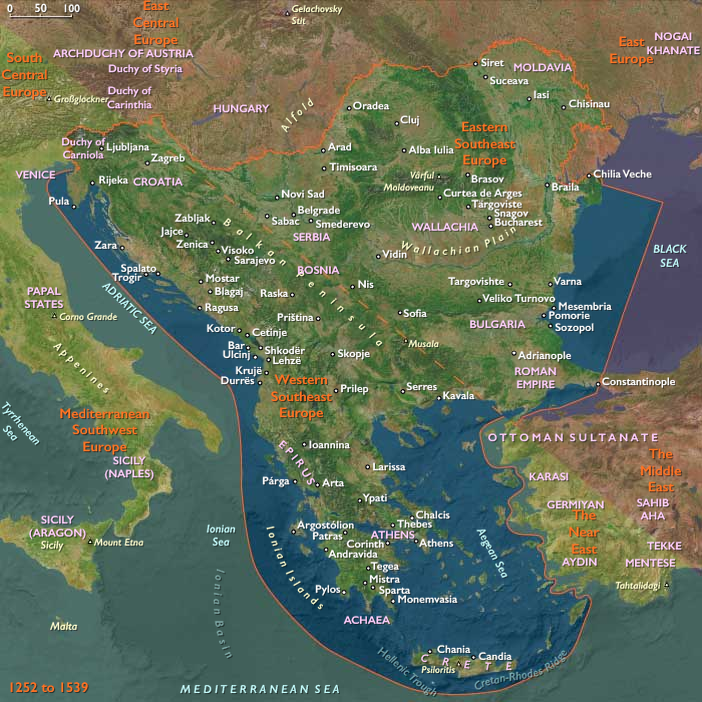
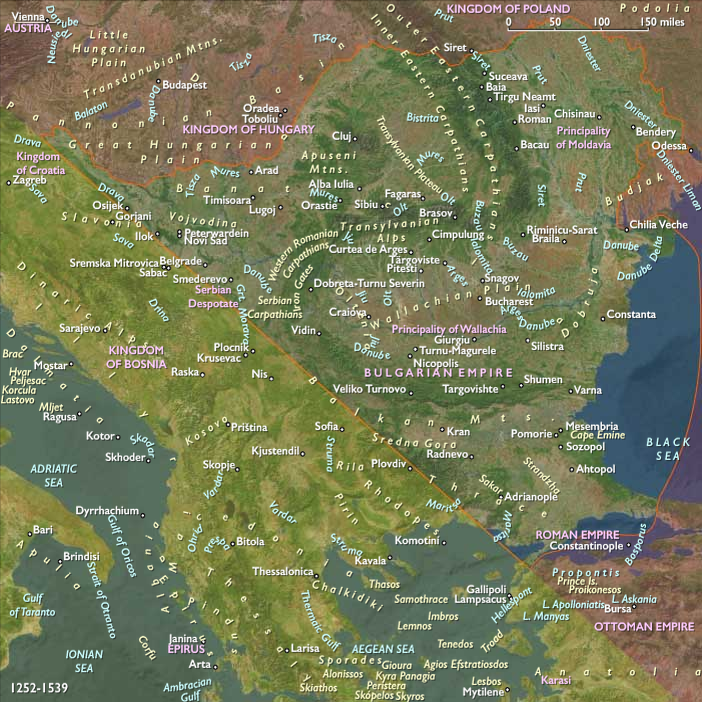
The Ottoman interregnum enabled regional powers—including Serbia, Wallachia, and Hungarian-influenced Bulgaria—to regain a degree of autonomy. Serbian despot Stefan Lazarević notably expanded and solidified control over central and northern Serbia, revitalizing Belgrade as a prominent cultural and economic center. Wallachia under Mircea the Elder strengthened its autonomy, carefully balancing diplomatic relationships between Hungary and the fractured Ottoman domains.
Economic and Technological Developments
Renewed Economic Activity and Trade Revival
The temporary weakening of Ottoman dominance allowed regional trade and commerce, particularly along the Danube and through the Black Sea ports, to briefly flourish independent of centralized Ottoman control. Cities such as Belgrade, Smederevo, and Vidin experienced revived economic activities, becoming critical commercial hubs for regional trade between Central Europe and the Black Sea basin.
Fortification Efforts and Military Readiness
In response to the uncertain political landscape, regional leaders, particularly the Serbian despotate under Stefan Lazarević and Wallachian authorities, significantly enhanced military defenses. Belgrade, heavily fortified during this period, emerged as a key military stronghold and an influential economic center along the Hungarian frontier.
Cultural and Artistic Developments
Serbian Cultural Renaissance
Under Stefan Lazarević, the Serbian despotate experienced a remarkable cultural renaissance. Belgrade became a vibrant cultural and intellectual center, attracting scholars, artists, and architects from Byzantium and Western Europe. Lavish manuscripts, frescoes, and new church architecture demonstrated a sophisticated blending of Byzantine traditions with local Serbian innovations.
Preservation and Revival of Orthodox Traditions
Throughout the region, particularly in Serbia, Wallachia, and Bulgarian territories, Orthodox Christian traditions enjoyed a period of renewed vigor. Monastic centers and churches underwent renovation and expansion, producing illuminated manuscripts and religious artworks that helped reinforce regional identity amidst the shifting political dynamics.
Social and Religious Developments
Temporary Restoration of Local Autonomies
The Ottoman civil war significantly altered local governance structures, enabling the restoration and enhancement of local autonomies. Serbian, Wallachian, and Bulgarian rulers used this opportunity to assert authority, strengthening regional political cohesion and fostering greater cultural and religious autonomy under Orthodox Christian frameworks.
Increased Influence of Orthodox Christianity
Orthodox Christianity's social and cultural prominence grew significantly during this era, especially under Serbian despot Stefan Lazarević. Ecclesiastical centers flourished as religious institutions played pivotal roles in community life, governance, and education, solidifying the social cohesion of Orthodox populations.
Political Dynamics and Regional Rivalries
Reemergence of Hungarian Influence
Hungary, under King Sigismund of Luxembourg, capitalized on Ottoman fragmentation, strengthening political influence across Wallachia, Moldavia, and the northern Serbian territories. Hungarian diplomatic and military initiatives sought to counterbalance the Ottomans, actively promoting regional alliances aimed at containing future Ottoman resurgence.
Ottoman Reconsolidation under Mehmed I (1413–1421)
By the end of this era, Mehmed I successfully emerged as Ottoman Sultan, ending the Ottoman civil war by reuniting disparate Ottoman territories. His consolidation efforts began the reassertion of Ottoman authority in Eastern Southeast Europe, setting the stage for renewed Ottoman expansion in subsequent decades.
Long-Term Consequences and Historical Significance
The era from 1408 to 1419 CE represented a pivotal interlude during which regional powers temporarily regained autonomy amid Ottoman fragmentation. The period witnessed notable cultural flourishing, especially in Serbia, alongside revived regional trade networks and reinforced military fortifications. Ultimately, this period of relative independence and cultural revival laid important foundations for subsequent historical developments, significantly influencing Eastern Southeast Europe's socio-political and cultural resilience in the face of renewed Ottoman expansion.
People
Groups
- Jews
- Islam
- Romanians
- Christians, Eastern Orthodox
- Hungary, Kingdom of
- Roman Empire, Eastern: Palaiologan dynasty
- Wallachia, Principality of
- Ottoman Empire
- Moldavia, Principality of
- Serbian Despotate
Topics
Commodoties
Subjects
Regions
Subregions
Related Events
Showing 10 events out of 42493 total
Years: 1408 - 1419
People
Groups
- Jews
- Islam
- Romanians
- Christians, Eastern Orthodox
- Hungary, Kingdom of
- Roman Empire, Eastern: Palaiologan dynasty
- Wallachia, Principality of
- Ottoman Empire
- Moldavia, Principality of
- Serbian Despotate
Topics
Commodoties
Subjects
Regions
Subregions