
Eastern Southeast Europe (1384–1395 CE): Ottoman Dominance …
Years: 1384 - 1395
Eastern Southeast Europe (1384–1395 CE): Ottoman Dominance and Christian Fragmentation
Settlement and Migration Patterns
Ottoman Consolidation and Balkan Fragmentation
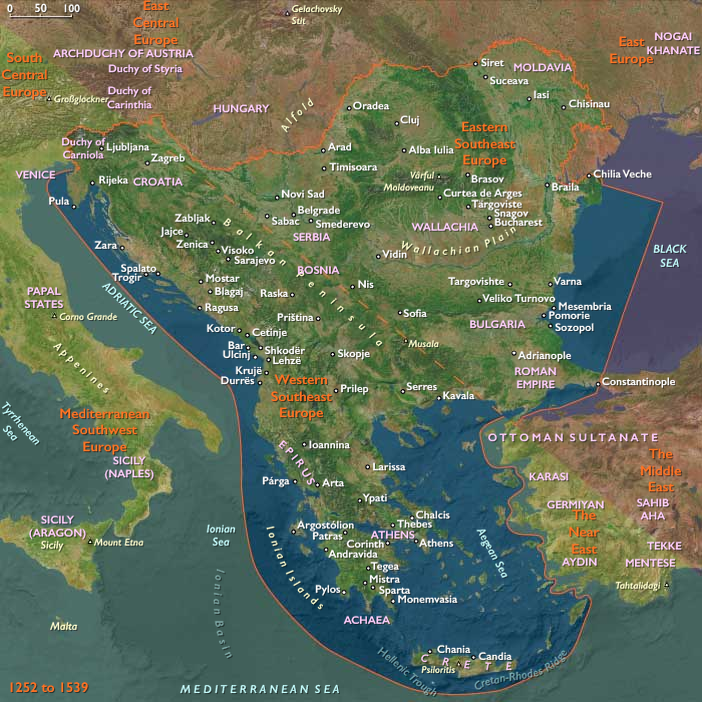
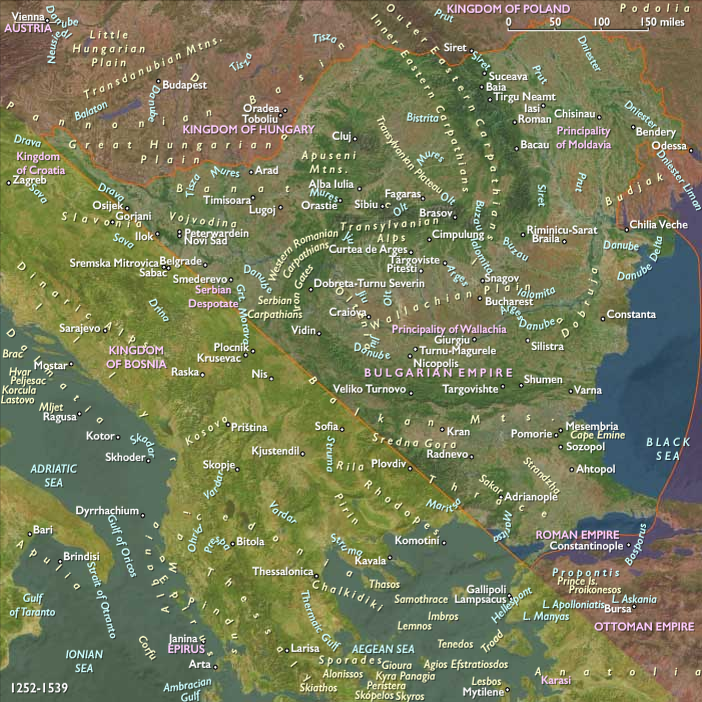
From 1384 to 1395, Ottoman dominance in the Balkans significantly accelerated. The Serbian state, already weakened, effectively disintegrated after the Battle of Kosovo Polje in 1389, in which the combined Serbian, Albanian, Hungarian, and Bosnian forces under Prince Lazar Hrebeljanović suffered a catastrophic defeat. This battle, although costly for the Ottomans—Sultan Murad I himself was assassinated—decisively ended organized Serbian resistance. The Serbian territories fragmented into smaller principalities ruled by local despots under Ottoman vassalage.
Economic and Technological Developments
Ottoman Military and Administrative Innovations
The Ottomans institutionalized key military and administrative practices, solidifying their governance and military capabilities. Under Murad I, critical Ottoman institutions emerged clearly, including the positions of kaziasker (military judge), beylerbeyi (commander-in-chief), and grand vizier (chief minister). The famed Janissary corps (Yeniçeri, meaning "New Force") and the devshirme system, which involved the conscription of Christian youths into Ottoman military service, became fully operational. The establishment of the Kapikulu corps ("Palace Guards") by Grand Vizier Chandarli Kara Halil further consolidated Ottoman military strength.
Cultural and Artistic Developments
Continued Byzantine Decline
Byzantine cultural influence and autonomy significantly declined during this era. Constantinople’s emperor, Manuel II Palaiologos, was forced into humiliating vassalage under Ottoman sultan Bayezid I after being compelled to reside at the Ottoman court. Upon learning of his father's death in 1391, Manuel escaped to Constantinople to inherit a severely diminished and impoverished empire. Ottoman blockades further isolated the Byzantine capital, weakening its economy and cultural vitality.
Social and Religious Developments
Fragmentation of Christian Alliances
Christian unity in the Balkans deteriorated significantly. Albania was divided between Venetian and Ottoman control, while the Bulgarian tsar Ivan Shishman abandoned alliances with fellow Christian Slavic states, submitting instead to Ottoman suzerainty. Bulgarian resistance collapsed, leading to partial Ottoman annexation. Bosnia, Venetian-held Albania, parts of Greece, and the Serbian fortress city of Belgrade became isolated holdouts against full Ottoman control.
Emergence of Independent Montenegro
Montenegro asserted independence from Serbia during this period, maintaining relative autonomy as a small but enduring regional entity amidst widespread Balkan fragmentation and Ottoman expansion.
Political Dynamics and Regional Rivalries
Hungary's Strategic Resistance
With the fall of most Balkan states, Hungary emerged as the primary Christian power capable of resisting Ottoman advances. Hungarian influence expanded in Wallachia and parts of Danubian Bulgaria, creating strategic counterbalances to Ottoman power. However, these efforts were insufficient to prevent Ottoman encroachment entirely.
Wallachian Vassalage and Moldavian Shifts
South of the Danube, Wallachia submitted to Ottoman vassalage. To the northeast, Moldavia fell under increasing Polish influence, adding complexity to regional geopolitics as local rulers sought external support to counterbalance Ottoman pressure.
Long-Term Consequences and Historical Significance
The years 1384–1395 were decisive in solidifying Ottoman ascendancy across Eastern Southeast Europe. The collapse of Serbia, fragmentation of Bulgaria, Byzantine subjugation, and Christian disunity dramatically reshaped regional dynamics. These developments established the groundwork for comprehensive Ottoman domination, significantly influencing the cultural, political, and social landscapes of the Balkans for centuries.
People
- Bayezid I
- Ivan Shishman of Bulgaria
- Lazar of Serbia
- Manuel II Palaiologos
- Murad I
- Çandarli Halil Pasha
Groups
- Slavonia region
- Islam
- Bulgarian Orthodox Church
- Romanians
- Christians, Eastern Orthodox
- Christians, Roman Catholic
- Croatia, Kingdom of
- Bulgarian Empire (Second), or Empire of Vlachs and Bulgars
- Serbia, Kingdom of
- Serbian Orthodox Church
- Hungary, Kingdom of
- Roman Empire, Eastern: Palaiologan dynasty
- Moldavia, Hungarian province of
- Wallachia, Principality of
- Ottoman Empire
- Moldavia, Principality of
- Poland of the Jagiellonians, Kingdom of
Topics
Commodoties
Subjects
Regions
Subregions
Years: 1384 - 1395
People
- Bayezid I
- Ivan Shishman of Bulgaria
- Lazar of Serbia
- Manuel II Palaiologos
- Murad I
- Çandarli Halil Pasha
Groups
- Slavonia region
- Islam
- Bulgarian Orthodox Church
- Romanians
- Christians, Eastern Orthodox
- Christians, Roman Catholic
- Croatia, Kingdom of
- Bulgarian Empire (Second), or Empire of Vlachs and Bulgars
- Serbia, Kingdom of
- Serbian Orthodox Church
- Hungary, Kingdom of
- Roman Empire, Eastern: Palaiologan dynasty
- Moldavia, Hungarian province of
- Wallachia, Principality of
- Ottoman Empire
- Moldavia, Principality of
- Poland of the Jagiellonians, Kingdom of
Topics
Commodoties
Subjects
Regions
Subregions