
Eastern Southeast Europe (1197–1054 BCE): Thracian Expansion …
Years: 1197BCE - 1054BCE
Eastern Southeast Europe (1197–1054 BCE): Thracian Expansion and Early Iron Age
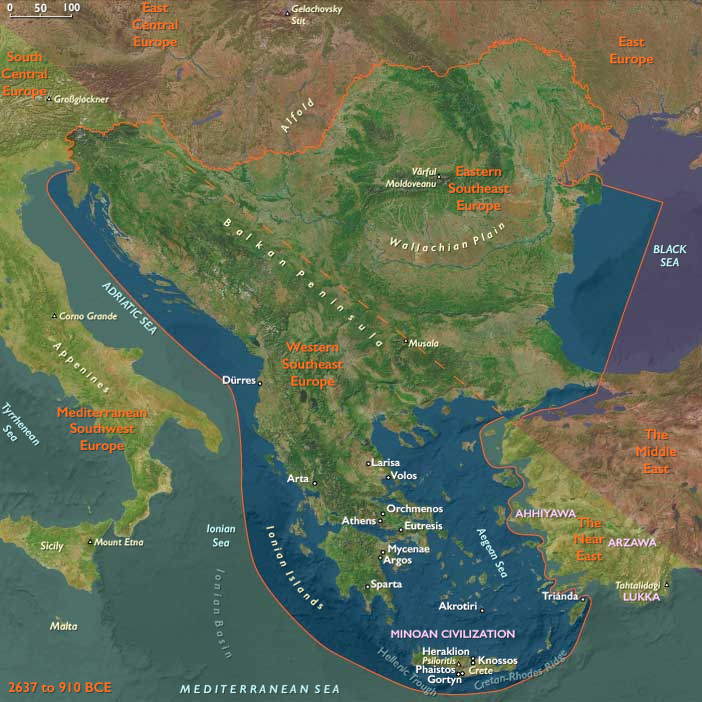
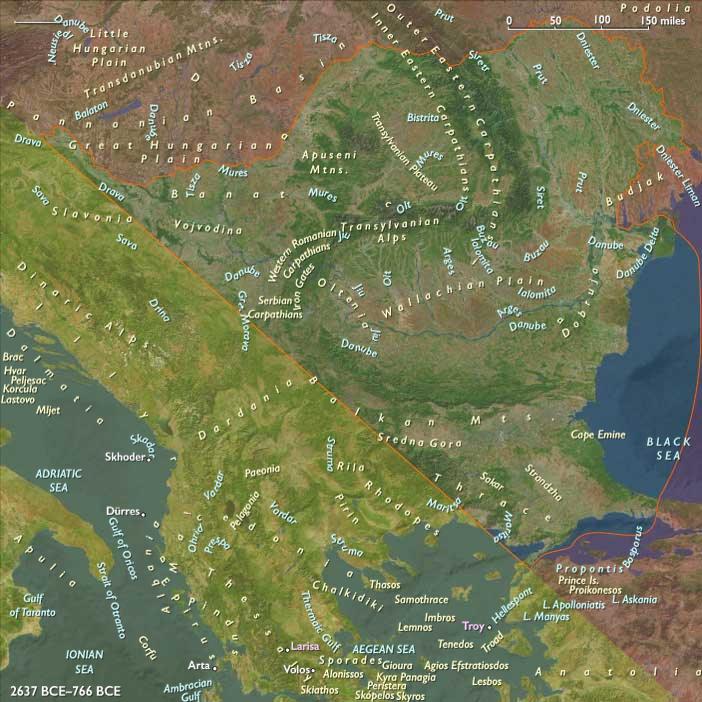
Pastoral activities began to dominate Thracian economic life around 1200 BCE, coinciding with the onset of the Iron Age. Villages grew in size and density, with up to one hundred small, rectangular dwellings constructed from wood or reeds with straw roofs. The first historical record about the Thracians appears in Homer's Iliad, where they are described as allies of the Trojans against the Greeks. Thracian tribes, known for their advanced metalworking and horsemanship, engaged in agriculture, stock raising, and trade along the Aegean coast. The Balkan region was dominated by two Indo-European groups—the Illyrians to the west and the Thracians to the east. Iron metallurgy began to spread into the southern Balkans, marking the transition from the Bronze to the Iron Age.
Groups
Topics
Commodoties
Subjects
Regions
Subregions
Years: 1197BCE - 1054BCE
Groups
Topics
Commodoties
Subjects
Regions
Subregions