
Eastern Southeast Europe (1312–1323 CE): Political Fragmentation …
Years: 1312 - 1323
Eastern Southeast Europe (1312–1323 CE): Political Fragmentation and Shifting Alliances
Settlement and Migration Patterns
Continued Consolidation in Bulgaria
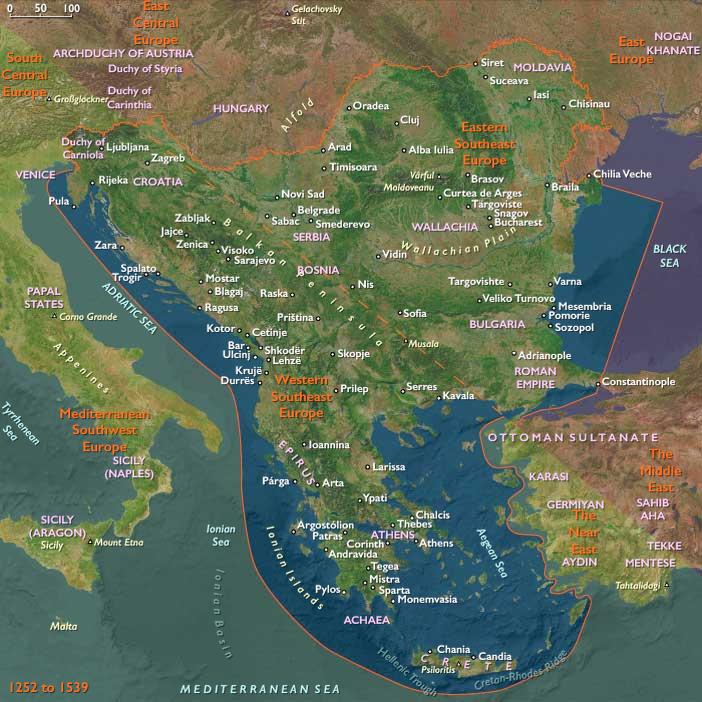
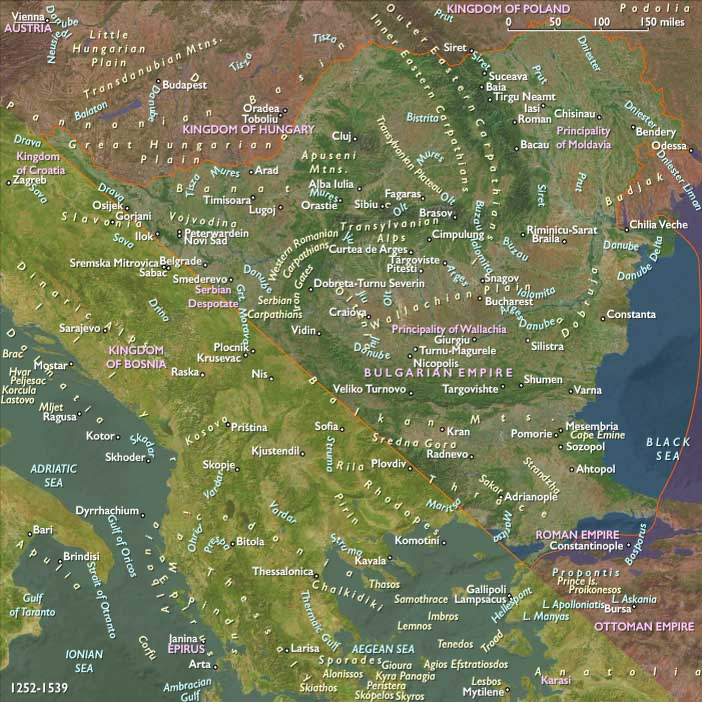
Under Tsar Theodore Svetoslav (1300–1321), Bulgaria maintained internal stability, consolidating territories along the Lower Danube and the Black Sea coast. Following his death in 1321, however, Bulgaria began experiencing renewed internal challenges, as power transitioned to his son, George Terter II, whose brief reign (1321–1322) did little to halt looming internal divisions.
Byzantine Decline and Territorial Pressure
The Byzantine Empire, under Emperor Andronikos II Palaiologos (1282–1328), increasingly faced territorial pressures from neighboring powers, notably the rising Serbian Kingdom under King Stefan Uroš II Milutin (1282–1321), who continued expanding southward into traditional Byzantine territories, significantly altering settlement patterns and population distributions.
Political Dynamics and Regional Rivalries
Bulgarian Stability Under Theodore Svetoslav
Throughout Theodore Svetoslav’s reign, Bulgaria experienced stable governance, partly due to improved relations and cautious diplomacy with neighboring Serbia and Byzantium. After his death, however, the empire's political stability quickly eroded, weakening Bulgaria's regional influence.
Byzantine-Serbian Rivalries
Stefan Milutin’s aggressive policy toward Byzantine-held territories intensified Serbian-Byzantine rivalry. His territorial conquests deepened Byzantine vulnerability, further fragmenting the region politically and contributing to increased regional competition and shifting alliances.
Economic and Technological Developments
Regional Trade Networks
Despite the turbulent political climate, trade networks in Eastern Southeast Europe remained resilient. Key cities like Constantinople and Adrianople maintained economic importance, engaging actively with Venetian and Genoese merchants who dominated maritime commerce in the Aegean and Black Sea regions.
Military and Defensive Developments
Frequent border conflicts and territorial disputes led to heightened investments in fortifications, notably in northern Byzantine cities, Bulgarian strongholds, and Serbian fortresses. These defensive enhancements marked significant regional militarization, reflecting ongoing geopolitical instability.
Cultural and Artistic Developments
Byzantine Cultural Patronage
Emperor Andronikos II Palaiologos continued patronizing cultural and artistic endeavors, supporting scholars and artists such as Theodore Metochites. This era saw the flourishing of Byzantine literature, philosophy, and religious art, particularly in illuminated manuscripts and frescoes, emphasizing Orthodox Christian themes.
Bulgarian Literary and Religious Traditions
Bulgaria maintained robust cultural traditions despite emerging political challenges. Literary production and religious art flourished in monastic centers like Turnovo, reinforcing Bulgarian national identity through Orthodox spirituality and manuscript illumination.
Social and Religious Developments
Orthodox Christianity’s Central Role
Orthodox Christianity remained integral to societal cohesion, underpinning cultural identity in Bulgaria and Byzantium. Church authorities retained substantial influence, mediating political disputes, providing social services, and reinforcing moral and social order amidst regional instability.
Ecclesiastical Diplomacy and Influence
Bulgarian and Byzantine ecclesiastical leaders actively engaged in regional diplomacy, navigating complex relationships between Orthodox and Western Christian powers. This ecclesiastical diplomacy helped stabilize communities and maintain a degree of continuity amid political fragmentation.
Long-Term Consequences and Historical Significance
The era from 1312 to 1323 was marked by continuing Byzantine decline, fluctuating Bulgarian stability, and the assertive expansion of the Serbian Kingdom. These developments significantly influenced regional dynamics, setting the stage for further fragmentation and the eventual ascendance of Serbia as a leading Balkan power, profoundly reshaping the geopolitical landscape of Eastern Southeast Europe.
People
- Andronikos II Palaiologos
- Georgi Terter II
- Stefan Uroš II Milutin of Serbia
- Theodore Metochites
- Theodore Svetoslav of Bulgaria
Groups
- Bulgarian Orthodox Church
- Genoa, (Most Serene) Republic of
- Christians, Eastern Orthodox
- Venice, (Most Serene) Republic of
- Bulgarian Empire (Second), or Empire of Vlachs and Bulgars
- Serbia, Kingdom of
- Serbian Orthodox Church
Topics
Commodoties
Subjects
Regions
Subregions
Years: 1312 - 1323
People
- Andronikos II Palaiologos
- Georgi Terter II
- Stefan Uroš II Milutin of Serbia
- Theodore Metochites
- Theodore Svetoslav of Bulgaria
Groups
- Bulgarian Orthodox Church
- Genoa, (Most Serene) Republic of
- Christians, Eastern Orthodox
- Venice, (Most Serene) Republic of
- Bulgarian Empire (Second), or Empire of Vlachs and Bulgars
- Serbia, Kingdom of
- Serbian Orthodox Church
Topics
Commodoties
Subjects
Regions
Subregions