
Eastern Southeast Europe (1300–1311 CE): Byzantine Cultural …
Years: 1300 - 1311
Eastern Southeast Europe (1300–1311 CE): Byzantine Cultural Revival and Regional Fragmentation
Settlement and Migration Patterns
Stabilization of Byzantine Territories
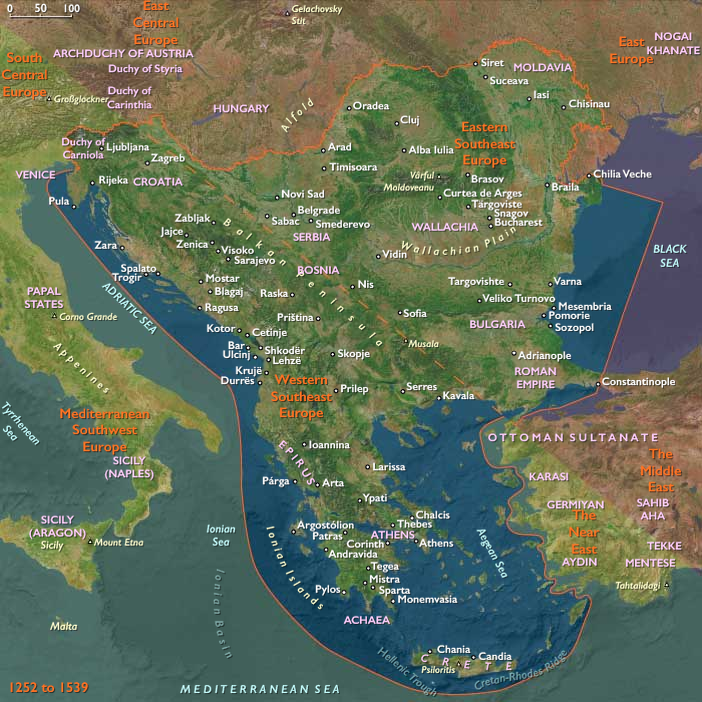
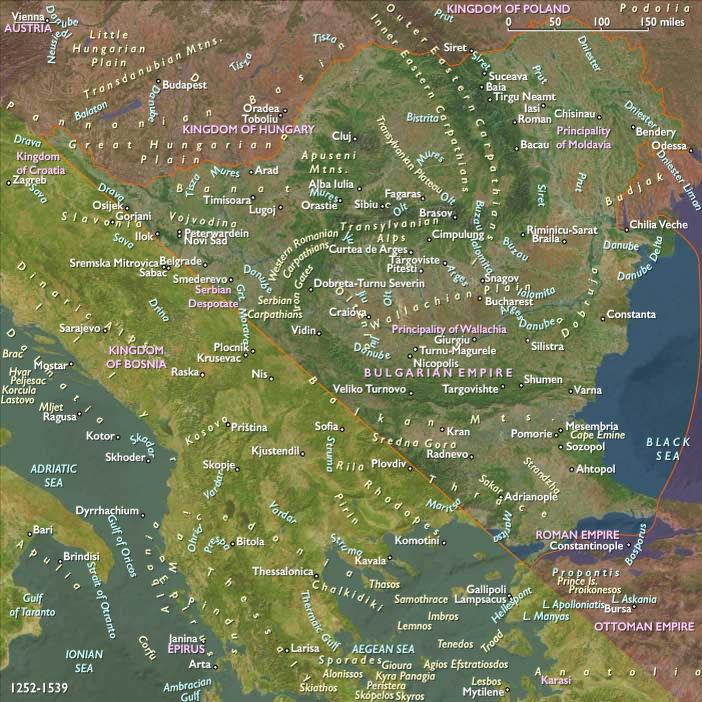
Between 1300 and 1311, the Byzantine Empire, under Emperor Andronikos II Palaiologos (1282–1328), maintained relative territorial stability within its European holdings, though its Anatolian territories continued suffering Turkish incursions. This contributed to demographic shifts, with Greek-speaking populations increasingly concentrated around urban centers such as Constantinople and Adrianople.
Bulgarian Political Instability
The Second Bulgarian Empire, led by Tsar Theodore Svetoslav (1300–1321), underwent internal stabilization after a prolonged period of turmoil. Svetoslav reestablished central control, reasserting authority over feuding boyars and briefly restoring Bulgarian influence along the lower Danube and Black Sea coast.
Political Dynamics and Regional Rivalries
Byzantine Cultural Patronage and Diplomacy
Emperor Andronikos II emphasized cultural revival as part of his strategy to consolidate imperial authority amid geopolitical decline. He sponsored intellectual and artistic pursuits, significantly rejuvenating Byzantine culture and fostering diplomatic ties to mitigate threats from Serbian, Bulgarian, and Turkish expansion.
Bulgarian Centralization and Rivalry
Tsar Theodore Svetoslav’s reign marked renewed centralized control, temporarily strengthening Bulgaria’s internal coherence. This consolidation prompted cautious relations with the Byzantines, marked by occasional tensions over Thracian territories and Black Sea trade routes.
Economic and Technological Developments
Byzantine Economic Resilience
Despite persistent military pressures, the Byzantine economy remained functional, benefiting from stable trade routes connecting Constantinople to the Mediterranean, Black Sea, and European interior. Genoese merchants continued playing essential roles in maritime commerce, further embedding Western economic influences in Byzantine territories.
Bulgarian Economic Recovery
Bulgaria experienced moderate economic recovery under Theodore Svetoslav, bolstered by improved internal stability, expanded agricultural production, and revitalized trade via the Danube and Black Sea ports. The renewed central authority facilitated smoother taxation and trade regulation.
Cultural and Artistic Developments
Byzantine Cultural Revival
Andronikos II’s reign witnessed a significant cultural revival in Constantinople, characterized by patronage of the arts, literature, philosophy, and religious scholarship. Intellectuals like Theodore Metochites and artistically significant projects, including illuminated manuscripts and religious frescoes, underscored the vitality of this renaissance.
Bulgarian Literary and Religious Continuity
Bulgarian cultural activity persisted robustly, with a sustained tradition of manuscript production and religious iconography. Monastic communities around Turnovo continued as crucial cultural centers, nurturing Bulgarian literary traditions and Orthodox spirituality.
Social and Religious Developments
Byzantine Orthodoxy and Cultural Identity
Orthodox Christianity maintained a pivotal role in Byzantine society, strengthened by cultural patronage from Andronikos II. The Church, supported by imperial authority, reinforced social cohesion and cultural continuity, especially amid political and military challenges.
Bulgarian Ecclesiastical Stability
The Bulgarian Orthodox Church, now stabilized and closely aligned with Theodore Svetoslav’s regime, reinforced national identity and societal cohesion. Ecclesiastical authorities played vital roles in governance, culture, and diplomacy, reflecting the Church’s entrenched influence.
Long-Term Consequences and Historical Significance
The era 1300–1311 CE marked a notable phase of Byzantine cultural renaissance and Bulgarian internal stabilization. These developments influenced regional dynamics, strengthening cultural identities and institutional coherence, significantly shaping the trajectory of Eastern Southeast Europe in subsequent decades.
People
Groups
- Bulgarian Orthodox Church
- Genoa, (Most Serene) Republic of
- Christians, Roman Catholic
- Christians, Eastern Orthodox
- Venice, (Most Serene) Republic of
- Bulgarian Empire (Second), or Empire of Vlachs and Bulgars
- Latin Empire of Constantinople (“Romania”)
- Nicaea, Empire of
- Blue Horde, Khanate of the
Topics
Commodoties
Subjects
Regions
Subregions
Years: 1300 - 1311
People
Groups
- Bulgarian Orthodox Church
- Genoa, (Most Serene) Republic of
- Christians, Roman Catholic
- Christians, Eastern Orthodox
- Venice, (Most Serene) Republic of
- Bulgarian Empire (Second), or Empire of Vlachs and Bulgars
- Latin Empire of Constantinople (“Romania”)
- Nicaea, Empire of
- Blue Horde, Khanate of the
Topics
Commodoties
Subjects
Regions
Subregions