
Eastern Southeast Europe (1288–1299 CE): Byzantine Struggles …
Years: 1288 - 1299
Eastern Southeast Europe (1288–1299 CE): Byzantine Struggles and Bulgarian Decline
Settlement and Migration Patterns
Byzantine Territorial Pressures
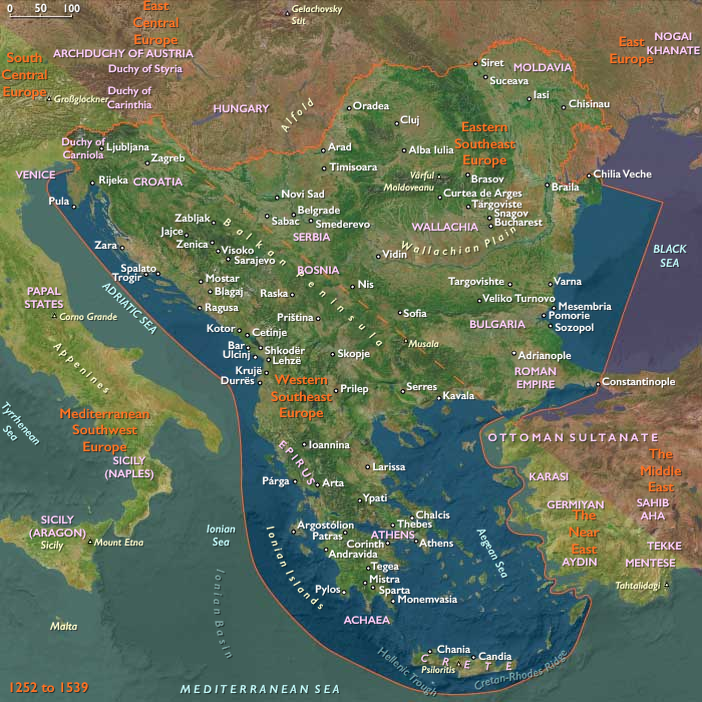
During the era of 1288–1299 CE, the Byzantine Empire, under Andronikos II Palaiologos (1282–1328), continued to experience territorial erosion, particularly in Asia Minor, due to intensified Turkish incursions. This loss forced demographic shifts, with Greek populations migrating increasingly toward fortified urban centers in Thrace and Macedonia.
Continued Bulgarian Instability
The Second Bulgarian Empire, under Tsar George Terter I (1280–1292) and his successor Smilets (1292–1298), grappled with internal fragmentation and external pressures, including persistent Mongol influence from the Golden Horde. Instability prompted regional population movements and weakened centralized authority.
Political Dynamics and Regional Rivalries
Byzantine Diplomatic and Military Efforts
Andronikos II, recognizing growing vulnerabilities, sought diplomatic alliances and engaged Genoese assistance to bolster naval defenses against Venetian and Turkish pressures. His focus on defending European territories underscored Byzantium's diminishing capacity to manage external threats effectively.
Fragmented Bulgarian Rule
Bulgaria endured continuous internal divisions, with powerful regional nobles (boyars) frequently challenging central authority. Mongol demands for tribute exacerbated these tensions, severely weakening the Bulgarian monarchy and limiting its ability to counter external threats.
Economic and Technological Developments
Byzantine Economic Challenges and Adjustments
Economic difficulties arose from territorial losses and increased military expenditures. Byzantium increasingly relied on Genoese commercial networks to sustain economic activities, particularly around Constantinople and major Thracian cities like Adrianople.
Declining Bulgarian Economy
Economic activity within Bulgaria suffered under political instability. While commerce persisted along key Danubian and Black Sea ports, internal divisions and external pressures hampered substantial economic growth and regional development.
Cultural and Artistic Developments
Byzantine Cultural Persistence
Despite ongoing challenges, Byzantine culture maintained resilience and vibrancy. Religious institutions and urban centers continued producing religious art, illuminated manuscripts, and architecture reflecting enduring traditions and spiritual vitality.
Bulgarian Cultural Struggles and Continuity
Cultural production in Bulgaria remained active, notably in religious and literary circles around Turnovo. Despite political turmoil, monasteries and ecclesiastical institutions sustained Bulgarian literary and artistic traditions, reinforcing cultural identity.
Social and Religious Developments
Orthodox Church’s Stabilizing Influence
Throughout Byzantium and Bulgaria, Orthodox Christianity remained central to societal coherence. Ecclesiastical institutions provided stability and continuity, especially crucial amid declining political and military conditions.
Byzantine Ecclesiastical Diplomacy
The Byzantine Church actively managed relations with Western Christianity and responded strategically to doctrinal controversies. Efforts to maintain Orthodox unity were significant during a period of external threats and internal strain.
Long-Term Consequences and Historical Significance
The period 1288–1299 CE represented a crucial stage of Byzantine territorial contraction, internal Bulgarian fragmentation, and persistent cultural resilience. The developments of this era profoundly shaped the region’s political and cultural trajectory, establishing conditions for future challenges and transformations in Eastern Southeast Europe.
People
Groups
- Bulgarian Orthodox Church
- Genoa, (Most Serene) Republic of
- Christians, Roman Catholic
- Christians, Eastern Orthodox
- Venice, (Most Serene) Republic of
- Bulgarian Empire (Second), or Empire of Vlachs and Bulgars
- Latin Empire of Constantinople (“Romania”)
- Nicaea, Empire of
- Blue Horde, Khanate of the
Topics
Commodoties
Subjects
Regions
Subregions

Years: 1288 - 1299
People
Groups
- Bulgarian Orthodox Church
- Genoa, (Most Serene) Republic of
- Christians, Roman Catholic
- Christians, Eastern Orthodox
- Venice, (Most Serene) Republic of
- Bulgarian Empire (Second), or Empire of Vlachs and Bulgars
- Latin Empire of Constantinople (“Romania”)
- Nicaea, Empire of
- Blue Horde, Khanate of the
Topics
Commodoties
Subjects
Regions
Subregions