
Eastern Southeast Europe (1276–1287 CE): Byzantine Diplomacy …
Years: 1276 - 1287
Eastern Southeast Europe (1276–1287 CE): Byzantine Diplomacy and Bulgarian Struggles
Settlement and Migration Patterns
Continued Byzantine Stabilization
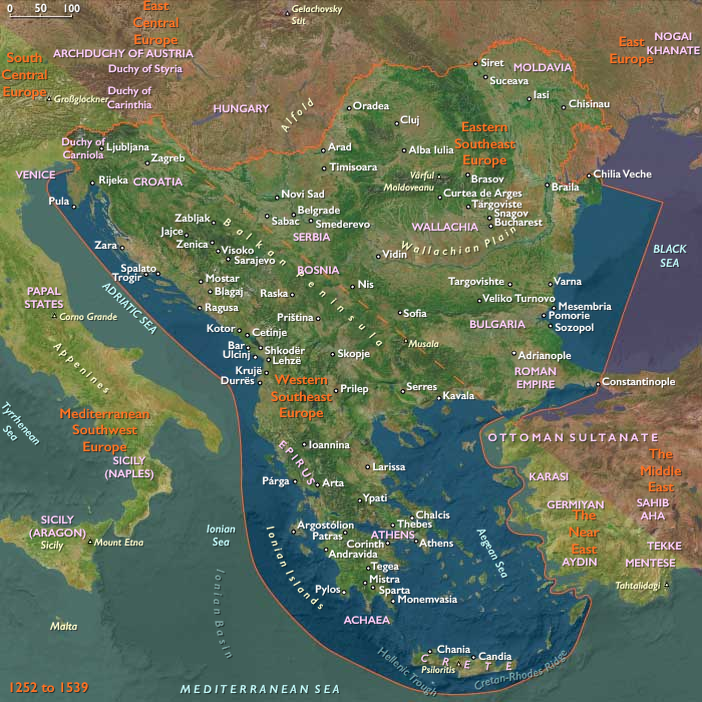
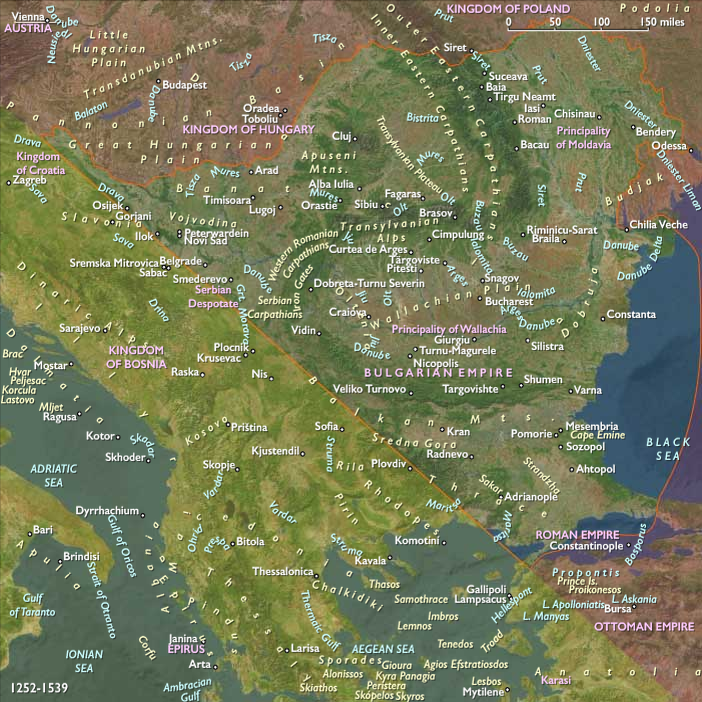
The Byzantine Empire under Emperor Michael VIII Palaiologos and his successor Andronikos II Palaiologos (from 1282) continued consolidating control over urban and rural areas, stabilizing populations primarily around Constantinople, Adrianople, and Thrace. Byzantine authorities fortified strategic locations, maintaining stable demographic conditions in established settlements.
Bulgarian Fragmentation and Population Shifts
Internal strife and political divisions within the Second Bulgarian Empire intensified, causing minor population movements and settlement realignments. The struggle between regional boyars (nobility) undermined centralized authority, promoting a decentralized pattern of settlement, particularly in areas around Turnovo and northern Bulgaria.
Political Dynamics and Regional Rivalries
Byzantine Diplomatic Efforts
Under Emperor Michael VIII and subsequently Andronikos II, Byzantine diplomacy actively pursued strategic alliances, notably with the Italian maritime republic of Genoa, to counterbalance Venetian economic dominance. Diplomatic marriages and treaties with Western European powers continued to shape regional politics.
Increasing Bulgarian Political Turmoil
Bulgarian authority further declined due to internal power struggles following the death of Tsar Constantine Tikh (r. 1257–1277). The resulting fragmentation left Bulgaria vulnerable to external pressures, weakening its ability to resist Byzantine and Mongol influences.
Economic and Technological Developments
Byzantine Economic Consolidation
The Byzantine economy maintained steady growth and stability, supported by strategic trade alliances with Genoa, especially in the Black Sea trade, reinforcing the economic vitality of major cities such as Constantinople and Adrianople.
Regionalized Bulgarian Economy
Economic activity in Bulgaria continued to fragment, with regional lords independently managing trade relationships, particularly with Genoese and Venetian merchants. Turnovo remained economically significant but increasingly isolated economically due to internal strife.
Cultural and Artistic Developments
Byzantine Cultural Renaissance
Byzantine artistic and cultural activity flourished under the Palaiologan emperors, reflecting a renewed sense of imperial dignity and Orthodox spirituality. Monumental religious art, illuminated manuscripts, and renewed architectural projects highlighted a sustained cultural revival.
Bulgarian Cultural Endurance
Despite political instability, Bulgarian culture persisted robustly, particularly around Turnovo, preserving religious, literary, and artistic traditions. Cultural resilience continued despite diminished political cohesion, sustaining Bulgaria's distinct national identity.
Social and Religious Developments
Strengthened Orthodox Church Institutions
Orthodox Christianity remained central in Byzantine and Bulgarian social structures, with ecclesiastical authorities providing stability and coherence. The Byzantine patriarchate retained significant influence, while the Bulgarian patriarchate in Turnovo helped maintain social cohesion amid political divisions.
Religious Diplomacy and Tensions
Byzantium actively managed religious diplomacy, notably addressing tensions with Western Catholic authorities and the lingering impact of the Union of Lyons (1274), a short-lived attempt at reconciliation between Eastern Orthodoxy and the Roman Catholic Church.
Long-Term Consequences and Historical Significance
The era from 1276 to 1287 CE in Eastern Southeast Europe marked continued Byzantine diplomatic stabilization, economic consolidation, and cultural flourishing, contrasted by ongoing Bulgarian political fragmentation and internal challenges. These dynamics profoundly shaped regional stability and influenced subsequent historical developments in the Balkans, paving the way for future struggles and transformations.
People
Groups
- Bulgarian Orthodox Church
- Genoa, (Most Serene) Republic of
- Christians, Roman Catholic
- Christians, Eastern Orthodox
- Venice, (Most Serene) Republic of
- Bulgarian Empire (Second), or Empire of Vlachs and Bulgars
- Latin Empire of Constantinople (“Romania”)
- Nicaea, Empire of
- Blue Horde, Khanate of the
Topics
Commodoties
Subjects
Regions
Subregions
Years: 1276 - 1287
People
Groups
- Bulgarian Orthodox Church
- Genoa, (Most Serene) Republic of
- Christians, Roman Catholic
- Christians, Eastern Orthodox
- Venice, (Most Serene) Republic of
- Bulgarian Empire (Second), or Empire of Vlachs and Bulgars
- Latin Empire of Constantinople (“Romania”)
- Nicaea, Empire of
- Blue Horde, Khanate of the
Topics
Commodoties
Subjects
Regions
Subregions