
Eastern Southeast Europe (1240–1251 CE): Fragmentation, Rivalries, …
Years: 1240 - 1251
Eastern Southeast Europe (1240–1251 CE): Fragmentation, Rivalries, and Shifting Alliances
Settlement and Migration Patterns
Continued Decline of the Latin Empire
Between 1240 and 1251 CE, the Constantinople-based Latin Empire further deteriorated under constant territorial pressures from surrounding Greek successor states and the Second Bulgarian Empire. Latin populations continued their retreat into shrinking enclaves or assimilated with local communities.
Expansion of Greek Influence
The Empire of Nicaea solidified its territories in Asia Minor and advanced closer to reclaiming Constantinople, becoming the principal Greek successor state. Simultaneously, the Despotate of Epirus maintained its hold in northwestern Greece, competing with Nicaea for influence over Greek populations.
Bulgarian Territorial Adjustments
The Second Bulgarian Empire, despite earlier successes under Tsar Ivan Asen II, faced internal challenges and external pressures following his death in 1241. These dynamics altered territorial control, causing localized population movements and resettlements within the empire.
Economic and Technological Developments
Economic Fragmentation and Localization
As centralized control weakened further, economic activity increasingly fragmented, leading to localized trade networks. Cities such as Thessalonica, under Epirus, and Adrianople, under Nicaean influence, became key centers of regional commerce.
Strengthened Fortifications and Defensive Systems
The ongoing conflicts spurred significant defensive enhancements. Major urban centers and strategic fortresses throughout Bulgaria, Epirus, and Nicaea received substantial fortification improvements, emphasizing the militarization of regional economies and urban planning.
Cultural and Artistic Developments
Byzantine Cultural Revival
Byzantine traditions continued to flourish prominently within the Empire of Nicaea, significantly influencing religious art, architecture, and literature. Nicaea emerged as a vibrant cultural center, laying important foundations for future Byzantine revival.
Bulgarian Cultural Resilience
Despite internal political turbulence, Bulgarian cultural production continued robustly. Artistic and religious traditions, including manuscript illuminations and monumental church architecture, persisted, reflecting strong Byzantine influences adapted to Bulgarian national identity.
Social and Religious Developments
Orthodox Ecclesiastical Authority
Orthodox Christianity reinforced its dominance in reclaimed Greek territories and Bulgarian lands, diminishing Latin ecclesiastical presence. Orthodox patriarchates and bishoprics played essential roles in consolidating regional identities and social coherence.
Internal Bulgarian Church Dynamics
Within Bulgaria, the Orthodox Church navigated internal political shifts following Ivan Asen II’s death, maintaining its independence and pivotal societal role. Church institutions served as stabilizing forces amid political uncertainties.
Political Fragmentation and Regional Rivalries
Weakening Latin Authority
The Latin Empire experienced severe political fragmentation, becoming increasingly dependent on external alliances for survival. Its internal governance deteriorated significantly, reducing its geopolitical relevance in regional affairs.
Rising Rivalries Among Greek States
Intensifying rivalries between the Empire of Nicaea and the Despotate of Epirus shaped regional politics. These Greek states competed fiercely for dominance over formerly Byzantine territories, significantly affecting the broader balance of power.
Bulgarian Political Instability
Following Tsar Ivan Asen II's death, Bulgaria entered a period of internal division and shifting alliances. The weakening of central authority allowed neighboring powers to exploit Bulgaria’s vulnerabilities, leading to territorial and political instability.
Long-Term Consequences and Historical Significance
The period from 1240 to 1251 CE saw substantial political fragmentation, shifting alliances, and intensified regional rivalries. These developments significantly shaped Eastern Southeast Europe's political landscape, influencing future dynamics leading up to the eventual Byzantine restoration in Constantinople and shaping enduring national and religious identities.
People
Groups
- Bulgarian Orthodox Church
- Christians, Eastern Orthodox
- Serbian Grand Principality
- Bulgarian Empire (Second), or Empire of Vlachs and Bulgars
- Nicaea, Empire of
- Latin Empire of Constantinople (“Romania”)
- Epirus, Despotate of
- Serbian Orthodox Church
Topics
Commodoties
Subjects
Regions
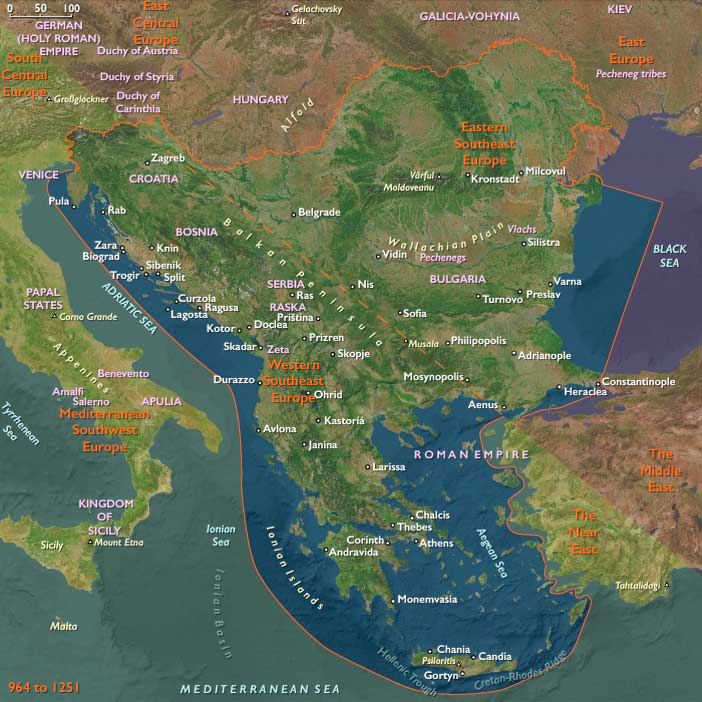
Subregions
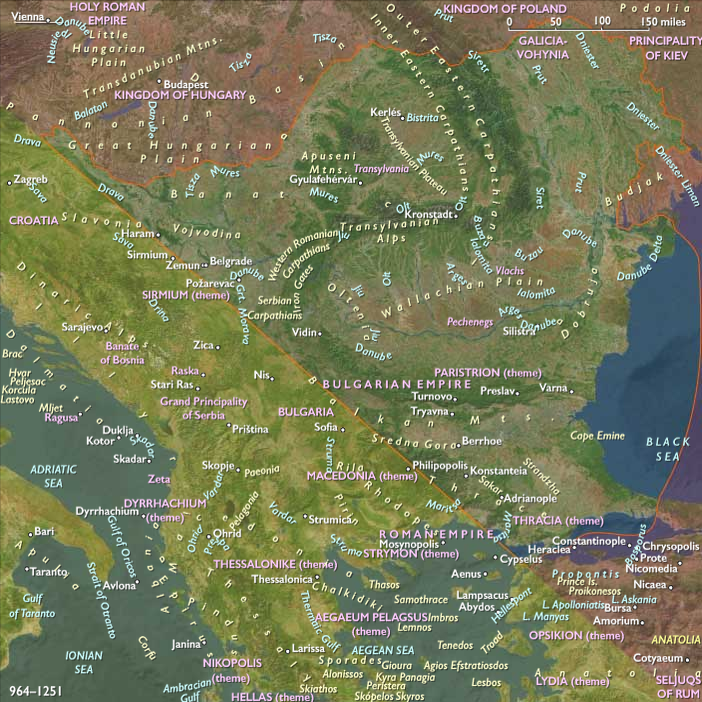
Years: 1240 - 1251
People
Groups
- Bulgarian Orthodox Church
- Christians, Eastern Orthodox
- Serbian Grand Principality
- Bulgarian Empire (Second), or Empire of Vlachs and Bulgars
- Nicaea, Empire of
- Latin Empire of Constantinople (“Romania”)
- Epirus, Despotate of
- Serbian Orthodox Church
Topics
Commodoties
Subjects
Regions
Subregions