
Eastern Southeast Europe (1228–1239 CE): Territorial Realignments …
Years: 1228 - 1239
Eastern Southeast Europe (1228–1239 CE): Territorial Realignments and Regional Rivalries
Settlement and Migration Patterns
Shrinking Latin Influence
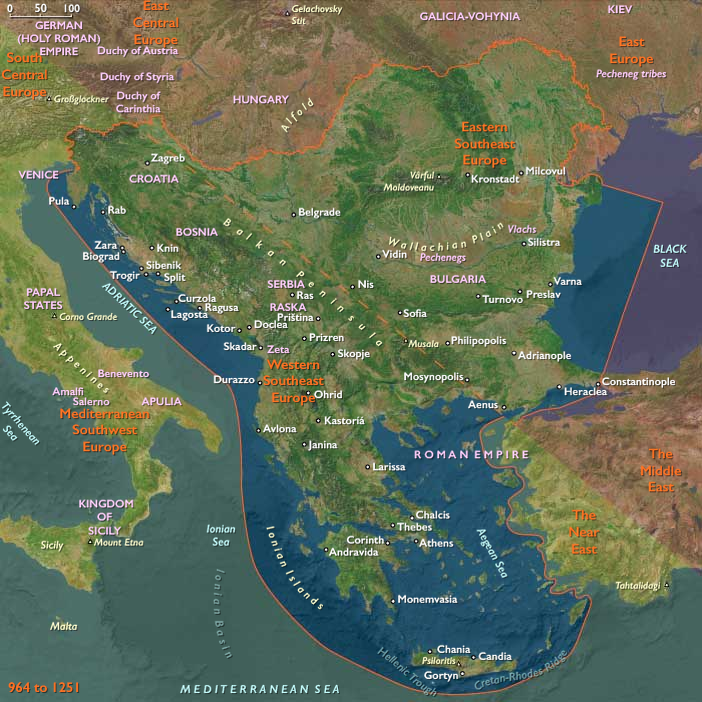
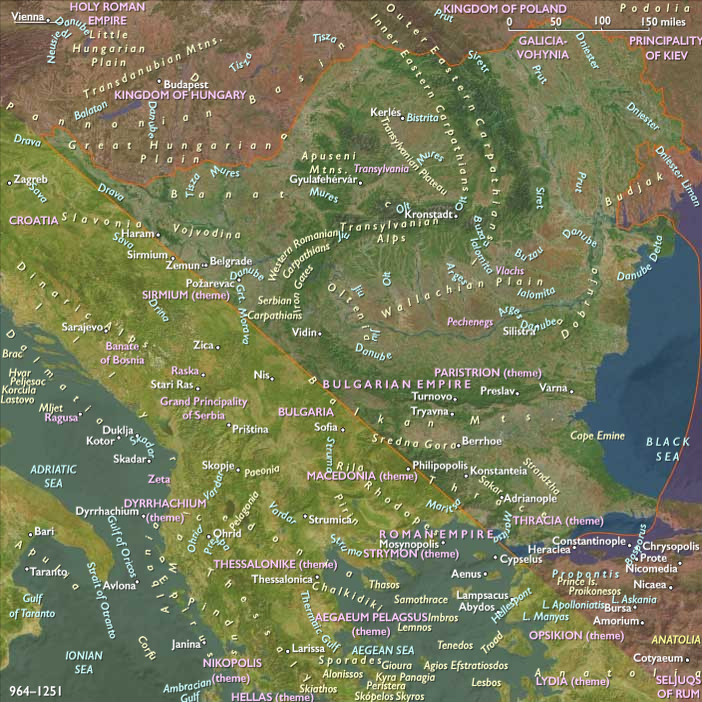
The territory of the Constantinople-based Latin Empire was substantially reduced during this era, as aggressive invasions by the Greeks of the Despotate of Epirus and the Empire of Nicaea, coupled with military pressures from the expanding Second Bulgarian Empire, eroded Latin control. This caused notable demographic shifts, with Latin settlers either integrating into local populations or retreating to fortified enclaves.
Bulgarian Territorial Consolidation
Under the leadership of Tsar Ivan Asen II, the Second Bulgarian Empire continued to expand and consolidate its hold on the Balkans, significantly shaping regional demographics and reinforcing Bulgarian cultural and administrative influence across newly acquired territories.
Emergence of Greek Successor States
The Empire of Nicaea and the Despotate of Epirus successfully reclaimed numerous Byzantine territories from Latin control. The consolidation of these Greek successor states led to population movements as Greek populations resettled reclaimed territories, bolstering their demographic and cultural cohesion.
Economic and Technological Developments
Localized Economic Strength
Economic activities increasingly localized as centralized Latin power weakened. Bulgaria, Epirus, and Nicaea each strengthened internal trade networks and local artisanal production, boosting regional economies and reducing reliance on broader imperial commerce.
Defensive Innovations
Amidst frequent conflicts, fortifications throughout the region were expanded and strengthened. Notably, urban centers under Bulgarian and Greek control received significant fortification upgrades, reflecting the heightened need for defense against both internal revolts and external invasions.
Cultural and Artistic Developments
Revival of Byzantine Traditions
With the resurgence of Greek successor states, Byzantine cultural traditions flourished anew. Artistic expressions, including religious iconography and architecture, strongly revived traditional Byzantine styles, particularly within the Empire of Nicaea and the Despotate of Epirus.
Bulgarian Cultural Flourishing
Under Ivan Asen II, the Second Bulgarian Empire experienced a cultural renaissance. Architectural developments, manuscript illumination, and religious arts saw notable advancements, reflecting both Byzantine influence and distinct Bulgarian cultural identity.
Social and Religious Developments
Orthodox Ecclesiastical Reassertion
The resurgence of Greek states bolstered Eastern Orthodoxy, diminishing the influence of Latin ecclesiastical structures imposed by the crusaders. Orthodox patriarchates and bishoprics regained prominence in reclaimed territories, reinforcing religious and social cohesion.
Bulgarian Ecclesiastical Independence
The Bulgarian Orthodox Church continued to assert its independence and authority, significantly shaping social and political structures within the expanding Bulgarian territories. Ivan Asen II notably supported ecclesiastical autonomy, reinforcing Bulgaria's national and religious identity.
Political Fragmentation and Regional Rivalries
Decline of the Latin Empire
The Latin Empire's authority continued to diminish significantly, weakened by continuous territorial losses and internal divisions. Its rulers struggled to maintain effective control, rendering it increasingly vulnerable to the resurgent Greek states and Bulgarian expansion.
Rise of Greek and Bulgarian Dominance
This period marked the definitive ascendance of the Empire of Nicaea, Despotate of Epirus, and the Second Bulgarian Empire as dominant regional powers. Their territorial gains significantly reshaped political dynamics, intensifying rivalries and alliances that defined subsequent regional politics.
Long-Term Consequences and Historical Significance
The period from 1228 to 1239 CE profoundly reshaped Eastern Southeast Europe, characterized by significant territorial realignments, the decline of Latin rule, and the strengthened positions of Greek and Bulgarian powers. These changes significantly influenced the region's historical trajectory, laying the groundwork for renewed Byzantine revival efforts and intensified national and religious identities.
People
Groups
- Venice, Duchy of
- Bulgarian Orthodox Church
- Christians, Eastern Orthodox
- Serbian Grand Principality
- Bulgarian Empire (Second), or Empire of Vlachs and Bulgars
- Latin Empire of Constantinople (“Romania”)
- Nicaea, Empire of
- Epirus, Despotate of
- Serbian Orthodox Church
Topics
Commodoties
Subjects
Regions
Subregions
Years: 1228 - 1239
People
Groups
- Venice, Duchy of
- Bulgarian Orthodox Church
- Christians, Eastern Orthodox
- Serbian Grand Principality
- Bulgarian Empire (Second), or Empire of Vlachs and Bulgars
- Latin Empire of Constantinople (“Romania”)
- Nicaea, Empire of
- Epirus, Despotate of
- Serbian Orthodox Church
Topics
Commodoties
Subjects
Regions
Subregions