
Eastern Southeast Europe (1204–1215 CE): Aftermath of …
Years: 1204 - 1215
Eastern Southeast Europe (1204–1215 CE): Aftermath of the Fourth Crusade, Fragmentation, and New Powers
Settlement and Migration Patterns
Crusader States and Latin Rule
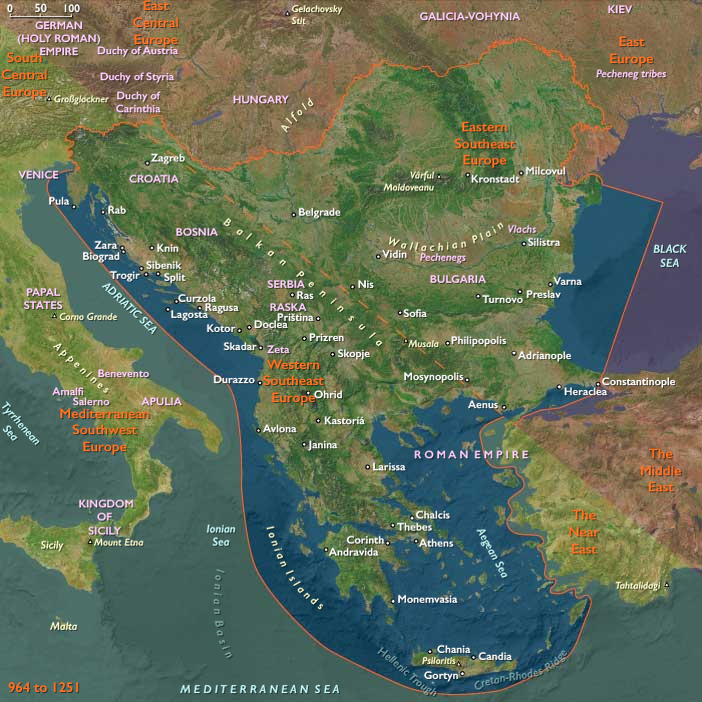
The aftermath of the Fourth Crusade in 1204 significantly reshaped Eastern Southeast Europe's political landscape. Crusaders established the Latin Empire of Constantinople, drastically altering settlement patterns as Latin nobles and knights assumed control of formerly Byzantine territories. Regions around Constantinople saw significant settlement by Western Europeans, resulting in cultural and demographic shifts.
Bulgarian Territorial Consolidation
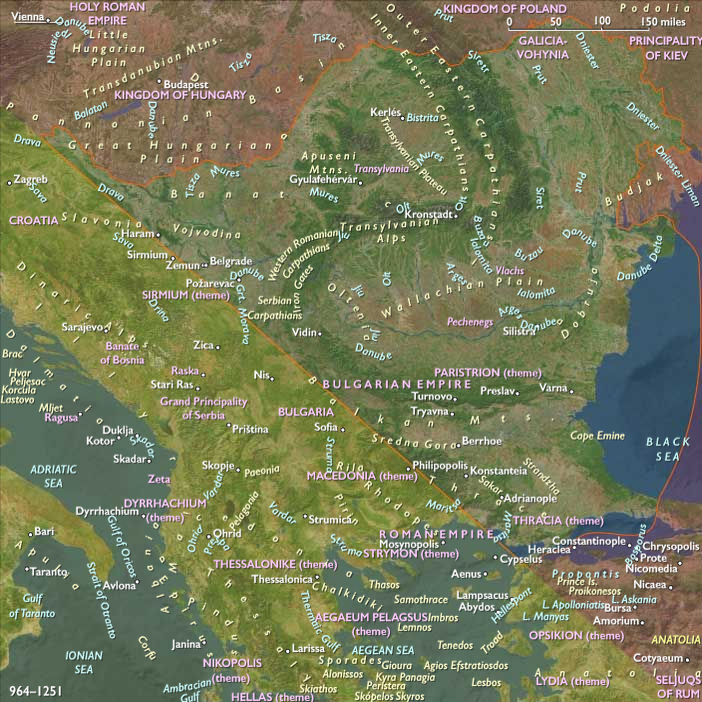
Under Tsar Kaloyan, the Second Bulgarian Empire capitalized on Byzantine collapse, significantly expanding its territory and consolidating control over much of the Balkan Peninsula. Bulgarian settlements and influence increased markedly, notably in areas previously under Byzantine rule.
Serbian Expansion and Consolidation
Serbian territorial gains under Stefan Nemanja and subsequently his son, Stefan the First-Crowned, continued. The Serbian state grew more cohesive, establishing stronger administrative and urban centers, reinforcing Serbian settlements across the region.
Economic and Technological Developments
Decline of Byzantine Economic Dominance
The economic impact of Constantinople's fall to the crusaders was profound. Byzantine commercial influence dramatically diminished, replaced by Latin-controlled trade networks dominated by Venetian and Genoese merchants. These Western powers seized control of key trade routes and maritime commerce.
Development of Local Economies
Regional economic autonomy increased as the fragmented political environment necessitated localized trade and production. Towns and cities, particularly within Bulgaria and Serbia, experienced economic growth through local trade, agriculture, and artisanal production.
Military Fortifications and Innovations
Defensive structures were reinforced and newly constructed across the region. Crusader states and emergent Balkan kingdoms heavily invested in fortifications, enhancing their capacity to defend against both external invasions and internal rebellions.
Cultural and Artistic Developments
Western Influence in Art and Architecture
Latin rule introduced considerable Western European cultural elements, particularly noticeable in religious and military architecture. Gothic and Romanesque styles increasingly blended with traditional Byzantine aesthetics, resulting in unique hybrid forms in the region.
Preservation and Adaptation of Byzantine Culture
Despite the political upheaval, Byzantine cultural traditions persisted, adapting to new political realities. Orthodox religious art, manuscript illumination, and classical learning continued, often merging subtly with Latin influences.
Social and Religious Developments
Establishment of Latin Ecclesiastical Structures
The Latin Empire introduced Roman Catholic ecclesiastical institutions to regions historically dominated by Eastern Orthodoxy. Latin patriarchs and bishops replaced or competed with their Orthodox counterparts, creating deep religious tensions and conflicts.
Bulgarian Church Autonomy
The Bulgarian Church reasserted autonomy under Tsar Kaloyan, who secured recognition from Pope Innocent III, briefly aligning with Rome against the Latin Empire. This strategic alignment enhanced Bulgaria’s political and religious independence, although it remained fundamentally Orthodox in practice.
Serbian Ecclesiastical Strengthening
Serbian rulers strengthened the Serbian Orthodox Church, aligning closely with Eastern Orthodox traditions. The growing power of the Serbian Church supported national identity and provided social cohesion amidst regional fragmentation.
Political Fragmentation and Regional Rivalries
Latin Empire’s Instability
The Latin Empire of Constantinople struggled to consolidate power, facing constant resistance from Byzantine successor states such as the Empire of Nicaea, Despotate of Epirus, and the Empire of Trebizond. Internal divisions and external pressures from Bulgaria and Serbia further weakened its authority.
Rise of Bulgarian and Serbian Dominance
The period saw the definitive emergence of Bulgaria and Serbia as dominant regional powers, each capitalizing on Byzantine collapse to expand their territories and strengthen administrative systems. Their growing influence reshaped regional politics, setting the stage for future conflicts and alliances.
Long-Term Consequences and Historical Significance
The era from 1204 to 1215 CE dramatically altered Eastern Southeast Europe, characterized by political fragmentation, the emergence of new regional powers, economic reorientation toward localized production, and significant cultural exchanges between Latin and Byzantine traditions. These developments profoundly influenced the region's subsequent historical trajectory, laying foundations for lasting divisions, regional identities, and the complex interplay of religious and political forces.
People
Groups
- Transylvania, region of
- Thrace, Theme of
- Venice, Duchy of
- Macedonia, East Roman Theme of
- Roma (Romani subgroup)
- Bulgarian Orthodox Church
- Hungary, Kingdom of
- Christians, Eastern Orthodox
- Sicily, County of
- Serbian Grand Principality
- Saxons, Transylvanian
- Sicily, Kingdom of
- Székelys
- Roman Empire, Eastern: Angelid dynasty
- Bulgarian Empire (Second), or Empire of Vlachs and Bulgars
- Trebizond, Empire of
- Nicaea, Empire of
- Latin Empire of Constantinople (“Romania”)
- Epirus, Despotate of
Topics
Commodoties
Subjects
Regions
Subregions
Related Events
Showing 6 events out of 6 total
Years: 1204 - 1215
People
Groups
- Transylvania, region of
- Thrace, Theme of
- Venice, Duchy of
- Macedonia, East Roman Theme of
- Roma (Romani subgroup)
- Bulgarian Orthodox Church
- Hungary, Kingdom of
- Christians, Eastern Orthodox
- Sicily, County of
- Serbian Grand Principality
- Saxons, Transylvanian
- Sicily, Kingdom of
- Székelys
- Roman Empire, Eastern: Angelid dynasty
- Bulgarian Empire (Second), or Empire of Vlachs and Bulgars
- Trebizond, Empire of
- Nicaea, Empire of
- Latin Empire of Constantinople (“Romania”)
- Epirus, Despotate of
Topics
Commodoties
Subjects
Regions
Subregions