
Eastern Southeast Europe (1192–1203 CE): Political Turmoil, …
Years: 1192 - 1203
Eastern Southeast Europe (1192–1203 CE): Political Turmoil, Fragmentation, and External Incursions
Settlement and Migration Patterns
Frontier Security and Szekler Communities
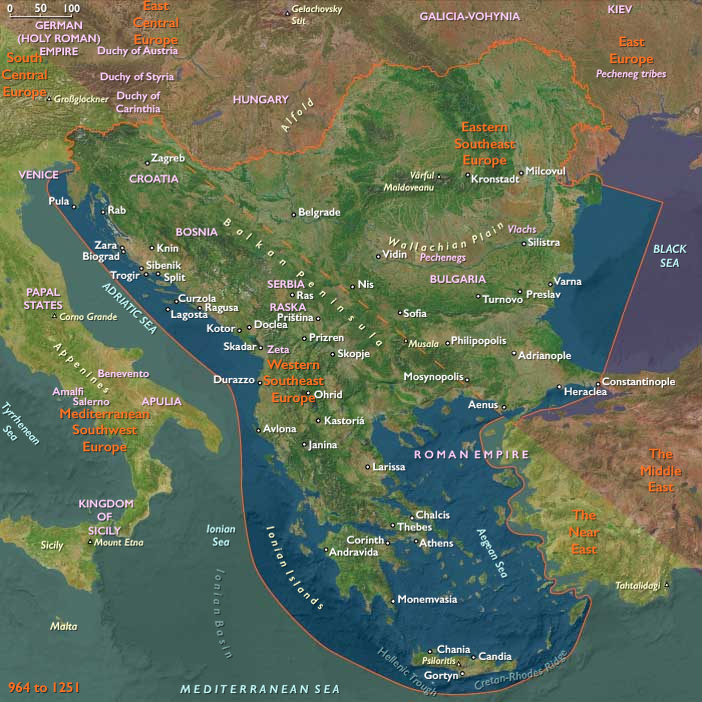
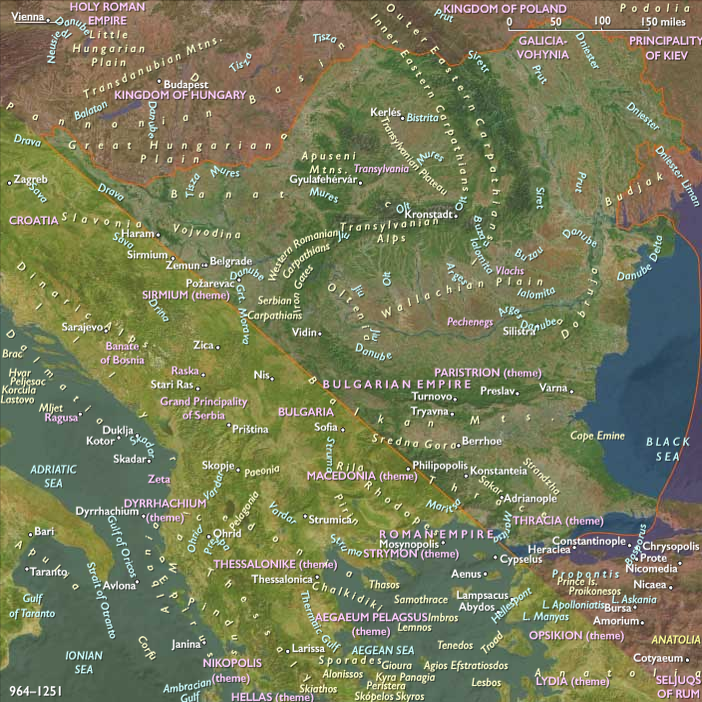
The Szeklers continued playing a pivotal role in frontier security within Transylvania, defending against incursions and maintaining the Hungarian Kingdom’s eastern borders amidst increasing regional instability. Their role became increasingly vital as the power vacuum left by Byzantine decline intensified frontier conflicts.
Expansion of Transylvanian Saxon Settlements
The Transylvanian Saxons, predominantly settlers from the Low Countries and German-speaking regions, further consolidated their presence. Originally invited by Hungarian rulers in previous decades to strengthen frontier defenses, they continued developing fortified towns, which significantly enhanced regional agricultural productivity, trade, and security.
Arrival and Integration of Roma Populations
Ancestral populations of modern European Roma, known historically as the Doma, entered the Balkans around the beginning of the twelfth century. Having originated from northwestern India and migrated westward around CE 500, these groups gradually spread throughout Europe, beginning their integration into local societies while preserving their distinct cultural identities.
Economic and Technological Developments
Continued Venetian Trade Dominance
Economic conditions remained heavily influenced by Venetian commercial interests, whose dominance over key trade routes and markets persisted despite Byzantine attempts to challenge their control. This ongoing economic rivalry underscored the difficulty Constantinople faced in asserting regional trade autonomy during a period of increasing fragmentation.
Military and Defensive Enhancements
Technological advancements continued to prioritize military defense, particularly through fortifications in strategic urban centers, notably Constantinople. Enhanced defensive systems and improved logistical capabilities remained crucial amidst mounting internal and external pressures.
Cultural and Artistic Developments
Byzantine Cultural Continuity Amid Transition
Despite political upheaval, Byzantine culture continued to flourish, integrating Western artistic elements that had become more prominent during the reign of Manuel I Komnenos. The court in Constantinople maintained significant cultural exchanges, reflecting a complex blend of Eastern and Western influences.
Scholarly and Educational Stability
Institutions of learning preserved classical and theological traditions, adapting to the turbulent political environment. The continuity of intellectual pursuits provided resilience amidst shifting political and military conditions.
Social and Religious Developments
Succession Crisis and Diplomatic Complexity
The death of Emperor Manuel I Komnenos in 1180 resulted in a prolonged succession crisis that exacerbated internal factionalism and weakened Byzantine political coherence. The resulting instability deeply impacted diplomatic relations with neighboring states, particularly Hungary, Serbia, and the increasingly assertive Latin powers.
Increasing Latin Influence and Internal Tensions
Latin (Western European) influences, extensively promoted during Manuel’s reign, increasingly became sources of internal friction. Policies intended to bridge Eastern and Western divides instead intensified tensions between Greek and Latin communities, significantly affecting social stability and political unity.
Expansion of Christian Institutional Influence
Christian institutions continued to expand their presence and influence amidst internal turmoil, providing crucial social cohesion and spiritual guidance. Ecclesiastical structures remained central to regional stability, even as secular authorities weakened.
Byzantine Fragmentation and External Pressures
Serbian and Bulgarian Expansion
Around the turn of the twelfth century, Byzantine authority in the Balkans was severely diminished by the military successes of Serbian leader Stefan Nemanja, whose conquests substantially reduced imperial influence in the western Balkans. Concurrently, the rise of the Second Bulgarian Empire under the leadership of Tsar Kaloyan further curtailed Byzantine territorial control.
Fourth Crusade and the Fall of Constantinople
The devastating events of the Fourth Crusade culminated in the crusaders’ diversion toward Constantinople in 1203. Originally aimed at retaking Jerusalem, the crusaders instead captured Constantinople, deposed the reigning emperor, and installed their own puppet ruler alongside his elderly, blinded father. This event was catastrophic for Byzantine authority, significantly altering regional power dynamics and precipitating further political fragmentation.
Long-Term Consequences and Historical Significance
The era from 1192 to 1203 CE was marked by profound political upheaval, demographic shifts, economic rivalry, and the onset of severe territorial fragmentation. The arrival and integration of Roma populations, the rise of Serbian and Bulgarian powers, and the catastrophic impact of the Fourth Crusade significantly reshaped Eastern Southeast Europe's historical trajectory, laying critical foundations for the profound transformations of the following centuries
People
Groups
- Transylvania, region of
- Thrace, Theme of
- Venice, Duchy of
- Macedonia, East Roman Theme of
- Roma (Romani subgroup)
- Bulgarian Orthodox Church
- Hungary, Kingdom of
- Christians, Eastern Orthodox
- Sicily, County of
- Roman Empire, Eastern: Komnenos dynasty, restored
- Serbian Grand Principality
- Saxons, Transylvanian
- Sicily, Kingdom of
- Székelys
- Bulgarian Empire (Second), or Empire of Vlachs and Bulgars
Topics
Commodoties
Subjects
Regions
Subregions
Years: 1192 - 1203
People
Groups
- Transylvania, region of
- Thrace, Theme of
- Venice, Duchy of
- Macedonia, East Roman Theme of
- Roma (Romani subgroup)
- Bulgarian Orthodox Church
- Hungary, Kingdom of
- Christians, Eastern Orthodox
- Sicily, County of
- Roman Empire, Eastern: Komnenos dynasty, restored
- Serbian Grand Principality
- Saxons, Transylvanian
- Sicily, Kingdom of
- Székelys
- Bulgarian Empire (Second), or Empire of Vlachs and Bulgars
Topics
Commodoties
Subjects
Regions
Subregions