
Eastern Southeast Europe (1144–1155 CE): Diplomatic Complexity …
Years: 1144 - 1155
Eastern Southeast Europe (1144–1155 CE): Diplomatic Complexity and Cultural Integration
Settlement and Migration Patterns
Szekler Community Origins
During this era, scholarly debate regarding the Szeklers, a Magyar ethnic group, continued. Traditionally claiming descent from Attila’s Huns, and referenced as such in Procopius' De bello Gothico, modern scholarship largely viewed them as true Hungarians or Magyars—possibly descendants of a Magyarized Turkic group. Their role as frontier guards (their name meaning "frontier guards") indicated strategic placement in Transylvania to defend against incursions.
Urban Development and Stability
Urban centers such as Constantinople continued to flourish and expand modestly. The city’s infrastructure saw ongoing improvements, emphasizing fortification and public projects to ensure resilience amid geopolitical uncertainties.
Economic and Technological Developments
Continued Venetian Dominance
Under Emperor Manuel I Komnenos (reign 1143–1180), attempts persisted to curtail the dominance of Venetian merchants, who increasingly monopolized imperial trade. These efforts, however, largely failed, reinforcing Venice’s powerful economic position in regional commerce.
Defensive and Technological Progress
Technological advancements continued emphasizing military defense, fortifications, and logistical improvements. Such enhancements were vital in supporting the region’s stability and defending economic interests amidst ongoing rivalries and geopolitical tensions.
Cultural and Artistic Developments
Flourishing Byzantine-Western Cultural Exchanges
Emperor Manuel I actively fostered cultural exchange with Western Europe. His affinity for Western culture was evident in his marriages to Western women and the integration of Latins at the Byzantine court, granting them estates and official appointments. Despite local reservations, this cultural integration had lasting impacts on artistic, social, and political interactions between Byzantium and Western powers.
Preservation of Intellectual Traditions
Educational institutions continued to maintain and transmit classical and theological knowledge. Scholarly activities adapted to the increased Western influence, enriching regional intellectual and cultural dialogues.
Social and Religious Developments
Complex Diplomacy under Manuel I Komnenos
Emperor Manuel I recognized that Constantinople could not isolate itself from the growing power dynamics in the West. His proactive diplomacy involved strengthening ties with the Kingdom of Hungary and cautiously navigating relations with the Kingdom of Sicily, established in 1130 under Roger II. Unfortunately, the catastrophic Second Crusade (1147) intensified the bitterness between Greeks and Latins, complicating Manuel’s diplomatic efforts and entangling the region further into Western European political struggles.
Strengthening of Christianity
Christianity continued to deeply influence social, cultural, and political norms. The era saw ongoing expansion and consolidation of religious institutions, reinforcing societal cohesion and spiritual life amidst broader geopolitical challenges.
Long-Term Consequences and Historical Significance
The period from 1144 to 1155 CE was defined by complex diplomatic maneuvers, sustained economic rivalry with Venice, and significant cultural integration with Western Europe. The nuanced diplomacy of Emperor Manuel I Komnenos, alongside cultural exchanges with Western powers, set the stage for future interactions and conflicts. These developments substantially shaped Eastern Southeast Europe's regional stability, cultural landscape, and historical trajectory, influencing subsequent geopolitical and cultural dynamics.
People
Groups
- Thrace, Theme of
- Venice, Duchy of
- Macedonia, East Roman Theme of
- Bulgarian Orthodox Church
- Hungary, Kingdom of
- Christians, Eastern Orthodox
- Sicily, County of
- Roman Empire, Eastern: Komnenos dynasty, restored
- Serbian Grand Principality
- Sicily, Kingdom of
- Székelys
Topics
Commodoties
Subjects
Regions
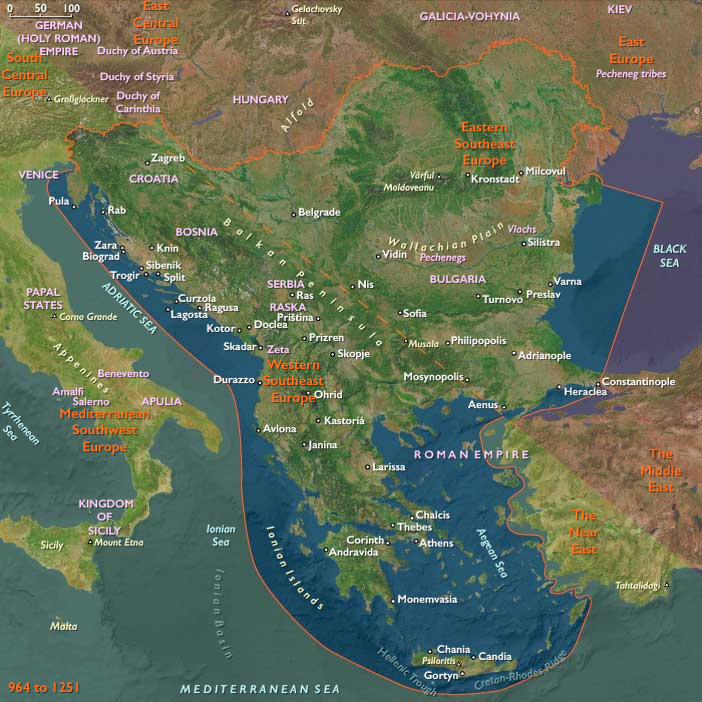
Subregions
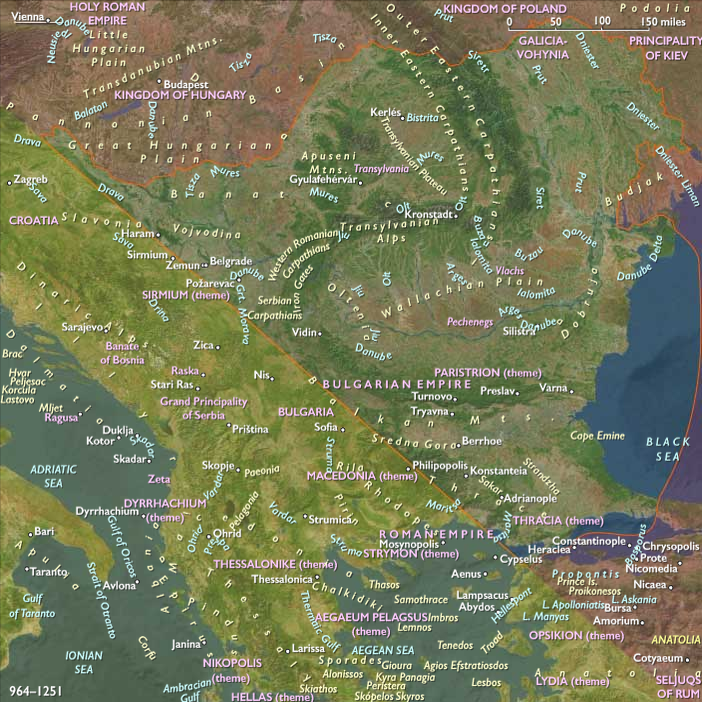
Years: 1144 - 1155
People
Groups
- Thrace, Theme of
- Venice, Duchy of
- Macedonia, East Roman Theme of
- Bulgarian Orthodox Church
- Hungary, Kingdom of
- Christians, Eastern Orthodox
- Sicily, County of
- Roman Empire, Eastern: Komnenos dynasty, restored
- Serbian Grand Principality
- Sicily, Kingdom of
- Székelys
Topics
Commodoties
Subjects
Regions
Subregions