
Southeast Europe (1108 – 1251 CE): Fragmented …
Years: 1108 - 1251
Southeast Europe (1108 – 1251 CE): Fragmented Empires and Emerging Kingdoms
Between 1108 and 1251 CE, Southeast Europe—stretching from the Adriatic to the Black Sea—was transformed by imperial decline, religious division, and the rise of new Slavic and Latin powers. The Byzantine world, once dominant, fractured under internal strain and Western assault, giving rise to a contested landscape of kingdoms, crusader states, and maritime republics. Yet amid war and fragmentation, Orthodox and Latin traditions flourished, cities revived, and regional identities took enduring form. This was the age when Serbia and Bulgaria ascended, Venice ruled the seas, and Byzantium retreated only to reinvent itself in exile.
Geographic and Environmental Context
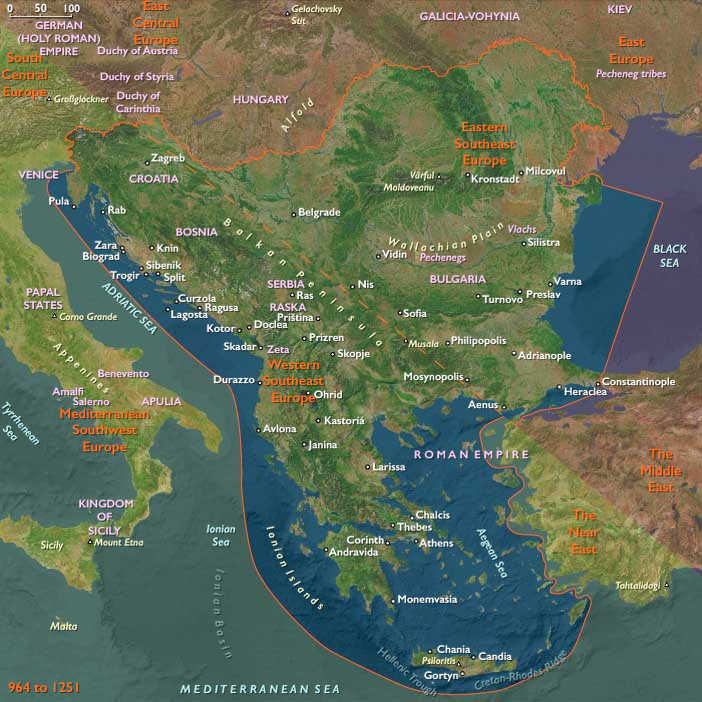
Southeast Europe encompassed two distinct yet interdependent spheres:
-
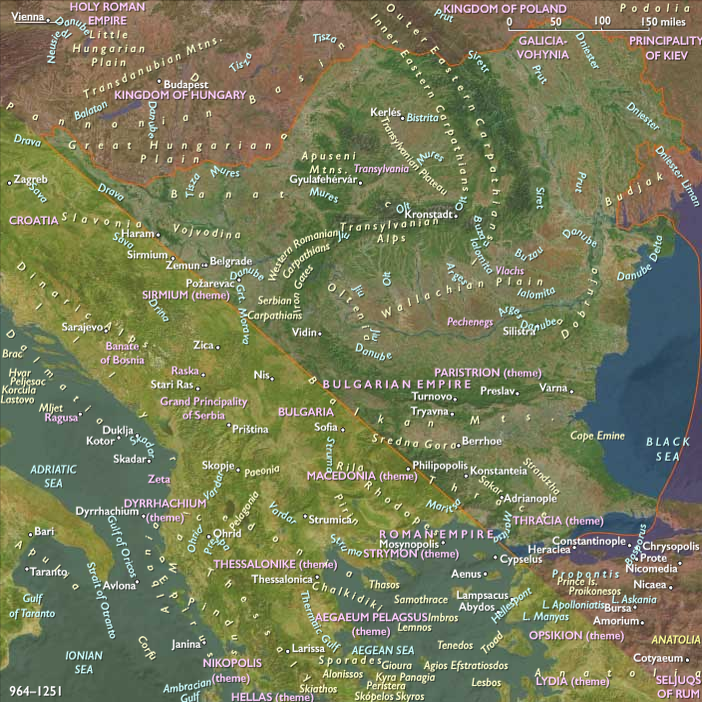
Eastern Southeast Europe, from the Thracian plain and lower Danube to the Black Sea and the Balkan interior, included Bulgaria, Thrace, Moldavia, Romania, northeastern Serbia, and northern Greece.
-
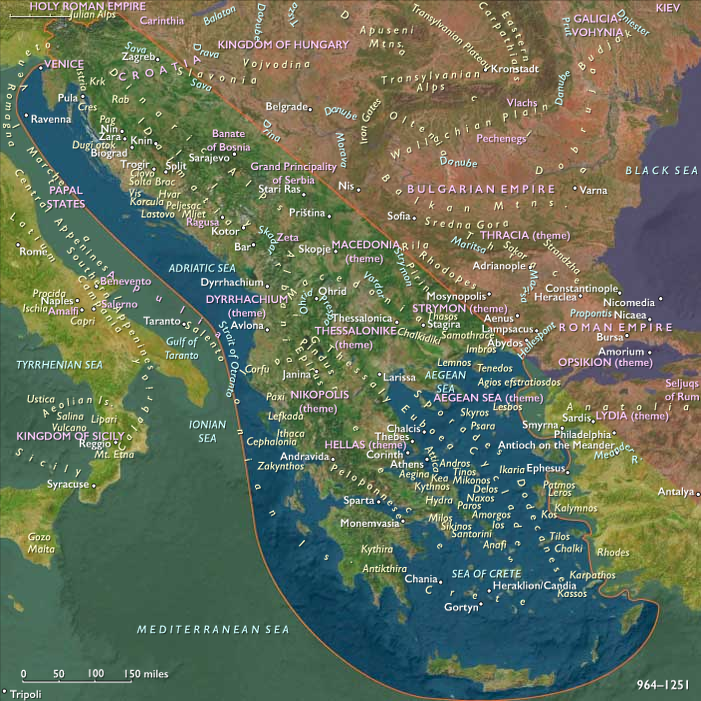
Western Southeast Europe, extending from Greece and Epirus across Albania, Montenegro, Bosnia, Croatia, Slovenia, and the Dalmatian coast, connected the Aegean to the Adriatic through the Via Egnatia and Morava–Vardar corridors.
Mountainous interiors, river valleys, and Adriatic littorals supported mixed economies—agriculture, herding, and maritime commerce—while fortresses and monasteries dominated strategic passes. The region’s geography fostered fragmentation and resilience in equal measure.
Climate and Environmental Shifts
The late Medieval Warm Period brought stable growing conditions, fostering viticulture, grain production, and transhumant herding in the mountains.
The Danube basin and Macedonian valleys remained fertile, while Adriatic ports thrived on Mediterranean maritime expansion.
Periodic droughts and floods stressed the lower Danube but did not disrupt agrarian continuity.
Forests and river routes supplied timber, salt, and silver to Italy and Byzantium, underpinning the region’s economic networks even amid warfare.
Political Transformations
Byzantine Resilience and Decline:
The Komnenian emperors—John II (r. 1118–1143) and Manuel I (r. 1143–1180)—revived imperial administration and defended Greek coasts and roads, yet their reliance on Western alliances invited instability.
Manuel’s Westernizing policies and his defeat at Myriokephalon (1176) weakened imperial authority, while frontier lords in Serbia and Bulgaria asserted independence.
Balkan Ascendancy:
-
Serbia, under Stefan Nemanja (r. 1166–1196), united Raška and neighboring lands; his son Stefan Nemanjić (the First-Crowned) secured papal recognition in 1217, and Saint Sava gained autocephaly for the Serbian Church in 1219, blending sacred kingship and Orthodoxy.
-
Bulgaria, revived by Peter and Asen’s rebellion (1185), rose as the Second Bulgarian Empire, reaching its height under Tsar Ivan Asen II (r. 1218–1241), who extended rule over Thrace, Macedonia, and the lower Danube before internal divisions followed his death.
The Fourth Crusade and Latin Fragmentation (1204):
The capture of Constantinople shattered Byzantine unity. The Latin Empire, Kingdom of Thessalonica, and Principality of Achaea divided Greek lands, while Greek successor states—the Empire of Nicaea, Despotate of Epirus, and Empire of Trebizond—carried forward Byzantine legitimacy.
By 1251, Nicaea had eclipsed its rivals, poised to reclaim Constantinople.
Western Powers:
-
Hungary extended authority over Croatia and Bosnia, settling Saxons and Szeklers in Transylvania to guard frontiers.
-
Venice and Ragusa (Dubrovnik) dominated Adriatic trade, securing Dalmatian ports after 1205.
-
Bosnia, under Ban Kulin (r. 1180–1204), thrived as an autonomous, multi-faith banate trading along caravan routes.
-
Epirus and Albania became contested buffer zones between Greek, Latin, and Serbian ambitions.
Economy and Trade
Economic resilience outpaced political stability.
-
Agrarian bases: Bulgaria’s Danube plains and Serbia’s river valleys produced grain and livestock; Greek and Macedonian estates supplied olive oil and wine.
-
Mining and craft: Bosnia and Serbia’s silver mines at Rudnik and Novo Brdo enriched courts and monasteries.
-
Maritime trade: Venetian and Ragusan fleets carried Balkan timber, hides, and metals to Italy and Levantine markets, importing cloth and salt.
-
Urban revival: Thessalonica, Adrianople, and Skopje prospered as regional trade hubs; coastal communes gained autonomy through notarial governance and maritime law.
The Via Egnatia, Vardar–Morava, and Drina–Sava corridors linked Adriatic harbors to Balkan interiors, sustaining commerce amid shifting sovereignties.
Cultural and Religious Life
Despite fragmentation, Southeast Europe remained a crucible of faith and art.
-
Orthodoxy remained dominant in Greece, Serbia, and Bulgaria, while Latin Christianity prevailed along the Adriatic.
-
Saint Sava’s reforms anchored Serbian monasticism and literacy, fusing political and religious legitimacy.
-
Byzantine culture survived through the schools of Nicaea, sustaining manuscript illumination and theology.
-
In Bulgaria, churches and manuscripts under Ivan Asen II expressed Slavic identity through Byzantine models.
-
Latin rule in Constantinople introduced Western artistic styles but provoked Orthodox revival in response.
Monastic communities, from Mount Athos to Studenica, preserved literacy and artistic excellence, while fortresses and frescoed churches proclaimed continuity amid chaos.
Ethnic and Population Movements
Population diversity deepened.
-
The Roma appeared in the Balkans by the early 12th century.
-
Transylvanian Saxons and Szeklers fortified Hungarian frontiers.
-
Vlachs and Albanian highlanders expanded pastoral networks across Epirus and Macedonia.
These migrations enriched cultural and linguistic layers, forging the plural character of the medieval Balkans.
Adaptation and Resilience
Southeast Europe adapted through pluralism and trade:
-
Political fragmentation fostered local autonomy—monastic, communal, and mercantile.
-
Mountain fortresses ensured security; coastal communes thrived under shifting overlords.
-
Ecclesiastical structures preserved literacy and law, stabilizing society where dynasties faltered.
-
Maritime republics and Orthodox monasteries functioned as parallel institutions of continuity.
Resilience lay in the coexistence of Latin and Orthodox worlds—competitive yet symbiotic across ports, valleys, and passes.
Long-Term Significance
By 1251 CE, Southeast Europe had become a constellation of successor states and emerging nations:
-
The Byzantine heartland survived in Nicaea, awaiting its restoration.
-
Serbia stood as a crowned Orthodox kingdom.
-
Bulgaria, though fragmented, retained imperial memory.
-
Venice ruled the Adriatic, while Epirus guarded the Greek gateways.
-
Bosnia and Dalmatia flourished as mercantile intermediaries.
This tapestry of rival polities and enduring faiths shaped the Balkan order for centuries. Fragmented yet fertile, Southeast Europe bridged the medieval Mediterranean and Orthodox East, preserving continuity through resilience and renewal.
Eastern Southeast Europe (with civilization) ©2024-25 Electric Prism, Inc. All rights reserved.
People
Groups
- Roma (Romani subgroup)
- Bulgarian Orthodox Church
- Christians, Eastern Orthodox
- Roman Empire, Eastern: Komnenos dynasty, restored
- Serbian Grand Principality
- Saxons, Transylvanian
- Székelys
- Roman Empire, Eastern: Angelid dynasty
- Bulgarian Empire (Second), or Empire of Vlachs and Bulgars
- Latin Empire of Constantinople (“Romania”)
- Nicaea, Empire of
- Epirus, Despotate of
- Serbian Orthodox Church
Topics
Commodoties
Subjects
Regions
Subregions
Related Events
Showing 10 events out of 49873 total
Years: 1108 - 1251
Eastern Southeast Europe (with civilization) ©2024-25 Electric Prism, Inc. All rights reserved.
People
Groups
- Roma (Romani subgroup)
- Bulgarian Orthodox Church
- Christians, Eastern Orthodox
- Roman Empire, Eastern: Komnenos dynasty, restored
- Serbian Grand Principality
- Saxons, Transylvanian
- Székelys
- Roman Empire, Eastern: Angelid dynasty
- Bulgarian Empire (Second), or Empire of Vlachs and Bulgars
- Latin Empire of Constantinople (“Romania”)
- Nicaea, Empire of
- Epirus, Despotate of
- Serbian Orthodox Church
Topics
Commodoties
Subjects
Regions
Subregions