
Eastern Southeast Europe (964 – 1107 CE): …
Years: 964 - 1107
Eastern Southeast Europe (964 – 1107 CE): Bulgarian Decline, Byzantine Resurgence, and Steppe Pressures
Geographic and Environmental Context
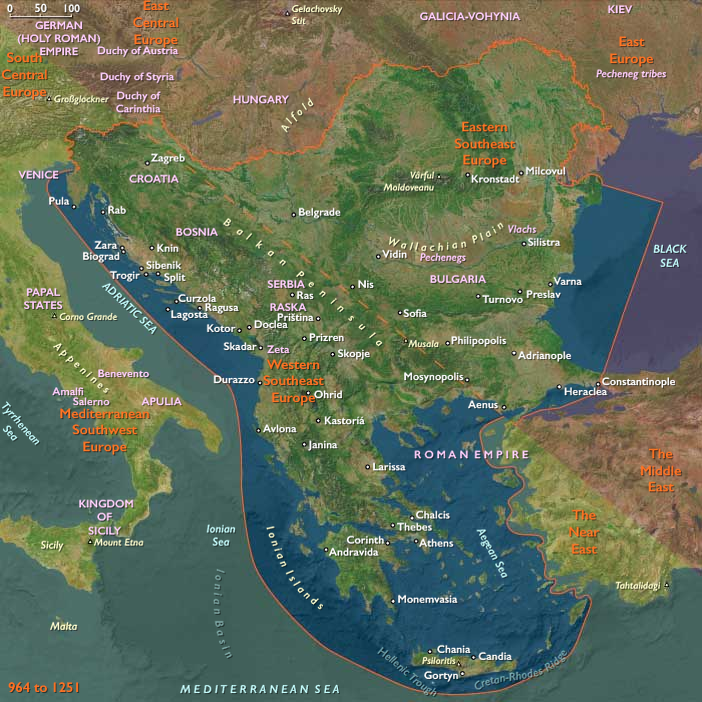
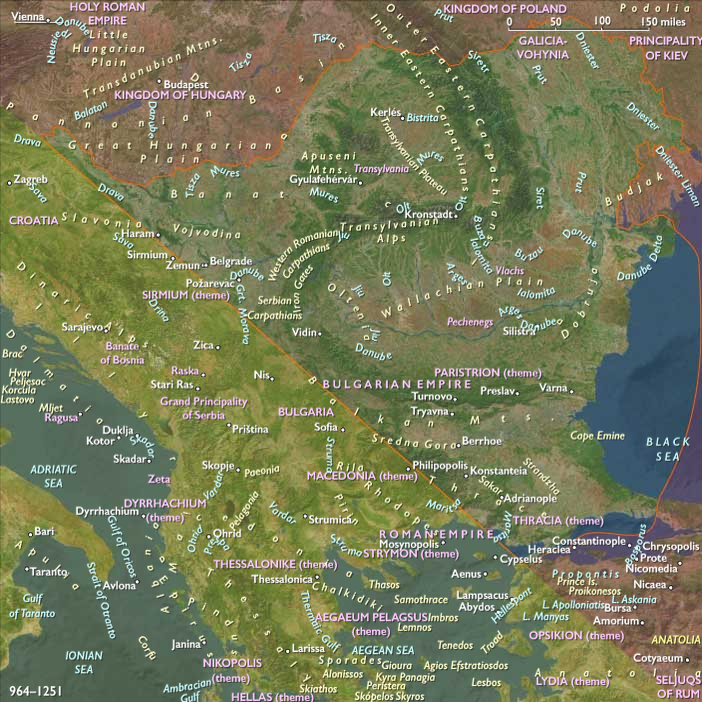
Eastern Southeast Europe includes Turkey-in-Europe (Thrace), northeastern Greece (Thrace-in-Greece), nearly all of Bulgaria (except its southwestern portion), modern-day Romania and Moldova, northeastern Serbia, northeastern Croatia, and extreme northeastern Bosnia and Herzegovina.
-
Core lowlands: the Lower Danube, Wallachian Plain, and Dobruja coast.
-
Mountain corridors: Balkan passes (Shipka, Varbitsa), the Carpathian Gates into Transylvania, and the Via Militaris linking Belgrade–Niš–Sofia–Adrianople–Constantinople.
-
The Black Sea ports (Varna, Constanţa) and Danube crossings remained vital for trade and war.
Climate and Environmental Shifts
-
The Medieval Warm Period (c. 950–1250) brought longer growing seasons and greater agricultural surpluses in the Danube plain and Thrace.
-
Stable monsoonal rainfall boosted viticulture and wheat production, though steppe drought cycles intensified nomadic incursions.
-
River floods on the Danube and Maritsa structured transport calendars.
Societies and Political Developments
-
First Bulgarian Empire:
-
After Peter I (r. 927–969), internal weakness and external pressures mounted.
-
Rus’ prince Sviatoslav invaded Bulgaria (968–971), capturing Preslav; Byzantine emperor John I Tzimiskes (r. 969–976) intervened, defeating Sviatoslav and annexing eastern Bulgaria (971).
-
Bulgarian resistance persisted in the western Balkans under the Cometopuli brothers; Samuel of Bulgaria (r. 997–1014) built a strong empire from Ohrid, challenging Byzantium across the Danube and Adriatic.
-
Basil II “Bulgar-Slayer” (r. 976–1025) waged relentless wars, culminating in the Battle of Kleidion (1014); by 1018, Bulgaria was fully absorbed into the Byzantine Empire.
-
-
Byzantine Resurgence:
-
The Macedonian dynasty (Basil II, Constantine VIII) secured the Balkans after 1018, establishing themes (administrative districts) in Bulgaria and along the Danube.
-
Constantinople reasserted direct control over Thrace, Adrianople, and the Danubian marches, founding bishoprics and garrisons.
-
-
Steppe Nomads:
-
Pechenegs dominated the Lower Danube steppe in the late 10th–11th centuries, raiding Byzantine and Bulgarian lands.
-
Byzantines suffered major defeats (e.g., Battle of Levounion, 1091) before defeating the Pechenegs with Cuman aid.
-
Cumans (Polovtsians) succeeded them as the principal nomads, raiding the Danube frontier by the late 11th century.
-
-
Romania/Moldova (north of the Danube):
-
Slavic–Romance populations persisted under shifting suzerainties (Bulgarian, Byzantine, Pecheneg).
-
Autonomous principalities in Transylvania developed under Hungarian expansion after 1000.
-
-
Northeastern Serbia / Croatia / Bosnia frontiers:
-
Tributary to Bulgaria, Byzantium, or Hungary in shifting intervals; local župans (chieftains) leveraged Danube–Sava junctions for trade and tribute.
-
Economy and Trade
-
Agriculture: wheat, barley, oats, millet, and vines thrived in Thrace and the Danube valley; stock raising continued in mountain margins.
-
Byzantine land system: after conquest of Bulgaria (1018), imperial fiscal registers (praktika) integrated Bulgar peasants into Byzantine tax law.
-
Trade corridors:
-
Danube linked Rus’, Hungary, and the Balkans to Constantinople.
-
Via Militaris carried imperial armies and caravans.
-
Black Sea ports funneled wax, honey, grain, and slaves southward.
-
-
Coinage: Byzantine nomismata circulated widely; regional markets expanded around Preslav, Adrianople, and Skopje.
Subsistence and Technology
-
Fortifications: Byzantine rebuilt Preslav and fortified Sofia, Skopje, and Adrianople; Danube palisades defended ferries.
-
Military systems: Byzantine cataphract cavalry and thematic infantry dominated post-1018; Bulgarians contributed levies. Steppe nomads relied on horse archery and deep raids.
-
Literacy and scripts: Bulgarian monasteries sustained Cyrillic culture even under Byzantine control; scriptoria at Ohrid and Preslav produced hagiographies and law codes.
Movement and Interaction Corridors
-
Danube crossings: Ruse, Silistra, and Vidin remained contested gateways for Pecheneg and Cuman incursions.
-
Via Militaris tied Constantinople with Belgrade, essential for imperial supply.
-
Carpathian passes opened Magyar access into Transylvania and the Danube plain.
-
Black Sea shipping connected ports to Rus’ merchants and Byzantine markets.
Belief and Symbolism
-
Orthodox Christianity:
-
Consolidated in Bulgaria under Boris and Simeon, then integrated into the Byzantine patriarchate after 1018.
-
Ohrid Archbishopric (granted autonomy by Basil II) preserved Slavic liturgy and Cyrillic texts.
-
-
Bogomilism: Dualist heresy spread in 10th–11th centuries, critiquing wealth and hierarchy, enduring into Balkan medieval society.
-
Byzantine Orthodoxy in Thrace and Macedonia reinforced Constantinople’s legitimacy; icons, relics, and churches marked the landscape.
Adaptation and Resilience
-
Imperial absorption: Byzantine themes stabilized taxation and law in conquered Bulgaria.
-
Nomad diplomacy: Byzantines alternated tribute, alliances, and military campaigns to manage Pechenegs and Cumans.
-
Cultural resilience: Slavic literacy and ecclesiastical autonomy at Ohrid preserved Bulgarian identity under Byzantine rule.
-
Military adaptation: recruitment of Pecheneg and Cuman auxiliaries allowed Byzantium to redirect steppe threats against rivals.
Long-Term Significance
By 1107 CE, Eastern Southeast Europe had been reshaped:
-
Bulgaria was integrated into the Byzantine system, though Slavic identity and the Ohrid Archbishopric ensured cultural survival.
-
Byzantium controlled Thrace and the Danube frontier, though constant steppe raids drained resources.
-
Pecheneg collapse and Cuman rise altered the steppe balance.
-
Hungary extended into Transylvania, shifting power north of the Danube.
This age defined the region’s Orthodox Christian character, embedded Cyrillic literacy, and hardened the Byzantine–steppe frontier dynamics that would endure until the Komnenian revival and the Second Bulgarian Empire in the late 12th century.
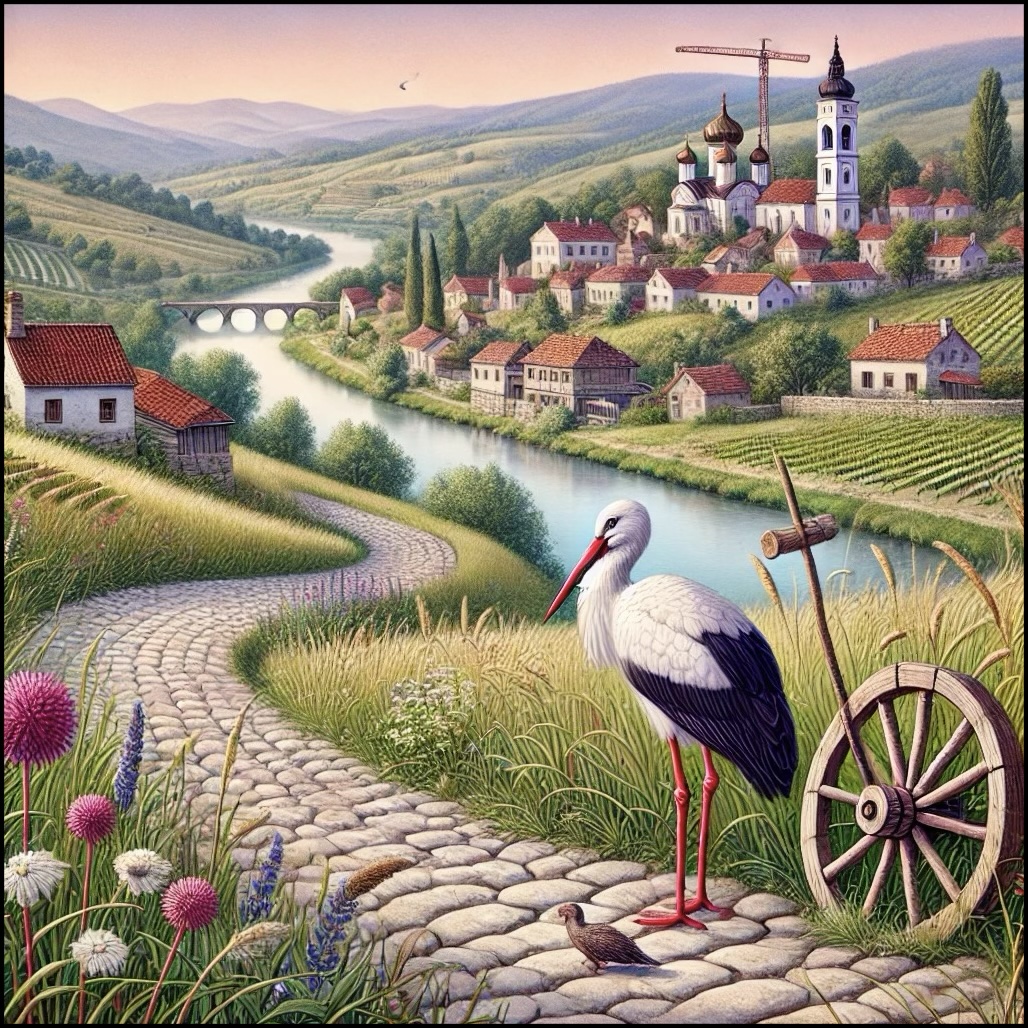
Eastern Southeast Europe (with civilization) ©2024-25 Electric Prism, Inc. All rights reserved.
People
- Basil II
- Boleslaw I Chrobry
- Constantine VIII
- John I Tzimiskes
- Peter I of Bulgaria
- Samuel of Bulgaria
- Sviatoslav I of Kiev
Groups
- Thrace, Theme of
- Slavs, South
- Christianity, Chalcedonian
- Muslims, Sunni
- Macedonia, East Roman Theme of
- Pechenegs, or Patzinaks
- Bogomilism
- Bulgarian Empire (First)
- Bulgarian Empire, First
- Cuman people, or Western Kipchaks, also called Polovtsy, Polovtsians)
- Bulgaria, Theme of
- Christians, Roman Catholic
- Christians, Eastern Orthodox
- Roman Empire, Eastern: Doukid dynasty
Topics
- Byzantine-Bulgarian Wars
- Middle Subatlantic Period
- Medieval Warm Period (MWP) or Medieval Climate Optimum
- Bulgaria, Byzantine conquest of
- Bulgarian-Byzantine War of 981-1018
- Kleidion, Battle of
- East–West Schism
- Levounion, Battle of
- Crusades, The
Commodoties
- Hides and feathers
- Gem materials
- Domestic animals
- Oils, gums, resins, and waxes
- Grains and produce
- Textiles
- Slaves
- Salt
- Sweeteners
- Manufactured goods
Subjects
- Commerce
- Language
- Architecture
- Engineering
- Conflict
- Faith
- Government
- Scholarship
- Custom and Law
- Technology
Regions
Subregions
Years: 964 - 1107
Eastern Southeast Europe (with civilization) ©2024-25 Electric Prism, Inc. All rights reserved.
People
- Basil II
- Boleslaw I Chrobry
- Constantine VIII
- John I Tzimiskes
- Peter I of Bulgaria
- Samuel of Bulgaria
- Sviatoslav I of Kiev
Groups
- Thrace, Theme of
- Slavs, South
- Christianity, Chalcedonian
- Muslims, Sunni
- Macedonia, East Roman Theme of
- Pechenegs, or Patzinaks
- Bogomilism
- Bulgarian Empire (First)
- Bulgarian Empire, First
- Cuman people, or Western Kipchaks, also called Polovtsy, Polovtsians)
- Bulgaria, Theme of
- Christians, Roman Catholic
- Christians, Eastern Orthodox
- Roman Empire, Eastern: Doukid dynasty
Topics
- Byzantine-Bulgarian Wars
- Middle Subatlantic Period
- Medieval Warm Period (MWP) or Medieval Climate Optimum
- Bulgaria, Byzantine conquest of
- Bulgarian-Byzantine War of 981-1018
- Kleidion, Battle of
- East–West Schism
- Levounion, Battle of
- Crusades, The
Commodoties
- Hides and feathers
- Gem materials
- Domestic animals
- Oils, gums, resins, and waxes
- Grains and produce
- Textiles
- Slaves
- Salt
- Sweeteners
- Manufactured goods
Subjects
- Commerce
- Language
- Architecture
- Engineering
- Conflict
- Faith
- Government
- Scholarship
- Custom and Law
- Technology
Regions
Subregions