
Eastern Southeast Europe (1072–1083 CE): Byzantine Crisis …
Years: 1072 - 1083
Eastern Southeast Europe (1072–1083 CE): Byzantine Crisis and Shifting Power Dynamics
Settlement and Migration Patterns
Changing Borders and Demographic Stability
Between 1072 and 1083 CE, Eastern Southeast Europe experienced significant political and territorial upheaval, although demographic patterns within existing territories largely remained stable.
Political and Military Developments
Aftermath of the Battle of Manzikert
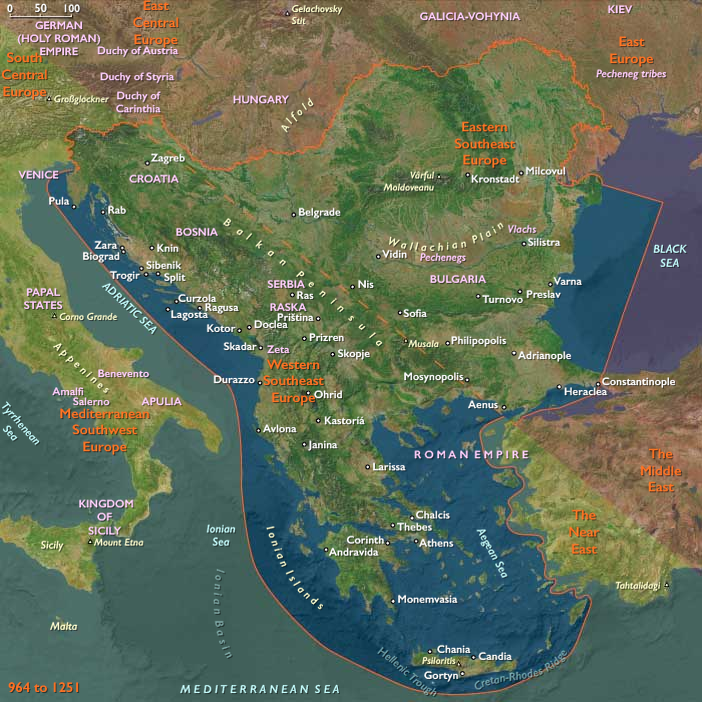
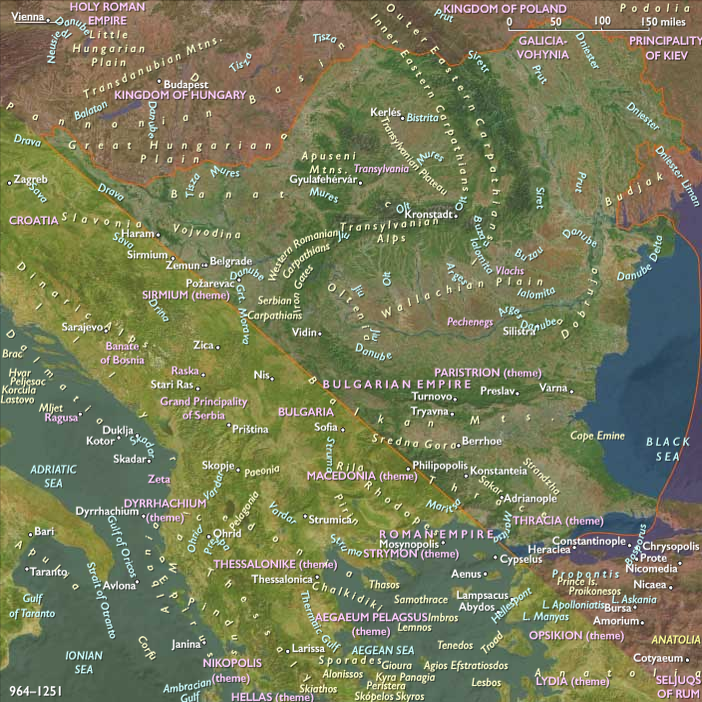
The devastating defeat of the Byzantine Empire at the Battle of Manzikert in 1071 forced it to drastically redraw its borders at the Bosporus. The Empire lost nearly all of Asia Minor to the Seljuq Turks under Sultan Alp Arslan, significantly altering regional power dynamics and shifting its eastern boundary back toward the Ionian coast of Classical Greece.
Seljuq Turkish Ascendancy
The Battle of Manzikert marked the beginning of Turkish dominance in Anatolia. Despite the continuation of the Byzantine Empire for nearly four centuries afterward, the region’s balance of power decisively shifted toward Seljuq Turks and Sunni Muslims. Turkic migration into Anatolia fundamentally undermined the traditional Byzantine theme system, depriving the Empire of critical military manpower and economic resources.
Byzantine Response and Internal Challenges
In the wake of defeat, internal Byzantine factions sometimes invited Seljuq mercenaries into their cities for protection, paradoxically facilitating further Turkish penetration into imperial territories. In 1078, even the key city of Nicaea was entrusted to Seljuq forces, reflecting deep internal divisions.
Rise of the Komnenian Dynasty
Despite severe territorial and political setbacks, the ascension of Alexios I Komnenos in 1081 marked a turning point. Alexios initiated emergency reforms, including requisitioning Church funds, to stabilize the Empire. His rule initiated a century-long Komnenian dynasty (1081–1185), restoring a measure of stability and continuity to Byzantine governance.
Norman Expansion and Conflict
Meanwhile, the Normans, fresh from their conquest of southern Italy, posed another significant threat. Under the formidable leadership of Robert Guiscard and his son Bohemund, Norman forces successfully captured Dyrrhachium and Corfu, and laid siege to Larissa in Thessaly. Alexios I initially suffered several defeats before eventually repelling the Normans.
Diplomatic Maneuvers
To relieve pressure from the Normans, Alexios strategically bribed German King Henry IV with a substantial sum to attack Norman holdings in Italy, diverting their attention away from Byzantine territories. Additionally, Alexios secured the alliance of Henry, Count of Monte Sant'Angelo, who recognized Alexios' authority, marking the last significant instance of Byzantine political influence on peninsular Italy.
Economic and Technological Developments
Economic Pressures and Military Strain
The extensive military conflicts and territorial losses significantly strained the Byzantine economy. Resources previously drawn from prosperous Anatolian themes were lost, greatly reducing economic stability and fiscal capacity.
Defensive Infrastructure
Byzantine military strategy during this period emphasized fortification improvements along reduced territorial boundaries, especially in areas vulnerable to Norman incursions and further Turkish advances.
Cultural and Artistic Developments
Cultural Resilience Amid Crisis
Despite severe territorial and political crises, Byzantine cultural and intellectual life endured, supported by continued patronage from imperial and ecclesiastical authorities.
Social and Religious Developments
Orthodox Christianity’s Central Role
Orthodox Christianity remained dominant, providing spiritual cohesion and social stability amidst turmoil. Ecclesiastical institutions retained significant influence and continued supporting cultural continuity.
Ongoing Presence of Religious Movements
Alternative religious movements such as Bogomilism continued their presence, particularly in rural areas, reflecting ongoing religious and social diversity.
Long-Term Consequences and Historical Significance
The period from 1072 to 1083 CE represented a critical juncture marked by severe Byzantine territorial losses, internal political crises, and external military threats. The rise of Alexios I Komnenos and his reforms, along with shifting geopolitical dynamics involving Turkish and Norman expansions, significantly influenced the future trajectory of Eastern Southeast Europe and the broader Mediterranean region.
People
- Alexios I Komnenos
- Alp Arslan
- Bohemond I of Antioch
- Henry IV, Holy Roman Emperor
- Henry, Count of Monte Sant'Angelo
- Robert Guiscard
Groups
- Thrace, Theme of
- Muslims, Sunni
- Macedonia, East Roman Theme of
- Bulgarian Orthodox Church
- Bogomilism
- Normans
- Germany, Kingdom of (within the Holy Roman Empire)
- Seljuq Empire (Isfahan)
- Christians, Eastern Orthodox
- Roman Empire, Eastern: Doukid dynasty
- Sicily, County of
Topics
Commodoties
Subjects
Regions
Subregions
Years: 1072 - 1083
People
- Alexios I Komnenos
- Alp Arslan
- Bohemond I of Antioch
- Henry IV, Holy Roman Emperor
- Henry, Count of Monte Sant'Angelo
- Robert Guiscard
Groups
- Thrace, Theme of
- Muslims, Sunni
- Macedonia, East Roman Theme of
- Bulgarian Orthodox Church
- Bogomilism
- Normans
- Germany, Kingdom of (within the Holy Roman Empire)
- Seljuq Empire (Isfahan)
- Christians, Eastern Orthodox
- Roman Empire, Eastern: Doukid dynasty
- Sicily, County of
Topics
Commodoties
Subjects
Regions
Subregions