
Eastern Southeast Europe (1024–1035 CE): Imperial Challenges …
Years: 1024 - 1035
Eastern Southeast Europe (1024–1035 CE): Imperial Challenges and Byzantine Feudalization
Settlement and Migration Patterns
Stability Amidst Political Changes
Between 1024 and 1035 CE, demographic stability persisted across Eastern Southeast Europe, despite significant changes in landholding patterns and external threats impacting regional dynamics.
Political and Military Developments
Byzantine Feudalization
After the death of Emperor Basil II in 1025, the Byzantine government in Constantinople lost much of its ability to restrain powerful landowners. These influential magnates rapidly integrated lands held by small freeholders, accelerating the feudalization of the empire, shifting power away from central imperial control toward local aristocratic dominance.
Russo-Byzantine War of 1024
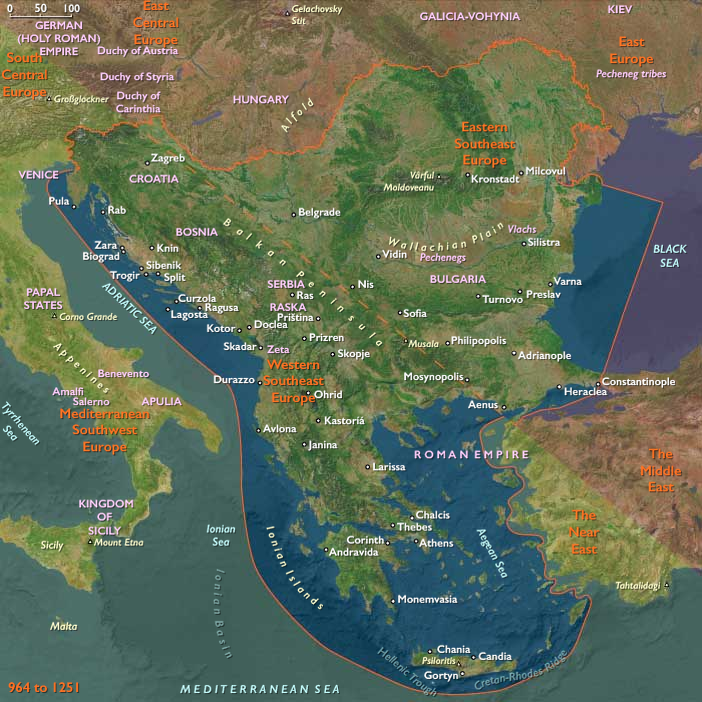
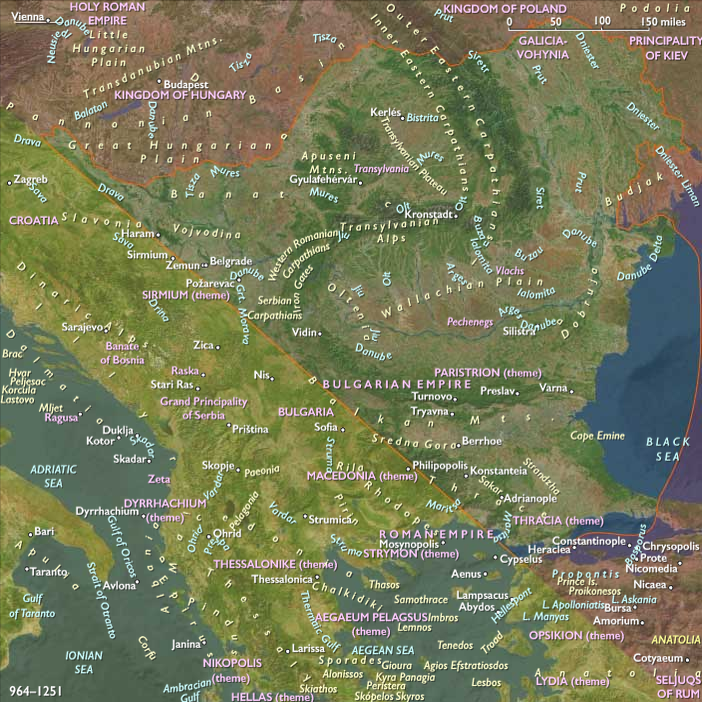
The penultimate Russo-Byzantine War occurred in 1024, as documented by medieval Greek sources. A relative of the Kievan prince, commanding around eight hundred men and twenty ships, successfully penetrated the Bosporus, defeating a Byzantine coastal defense unit before advancing into the Aegean Sea. The conflict concluded when the Kievans reached the island of Lemnos, where they were annihilated by a superior imperial fleet. Notably, this conflict lacks documentation in Kievan sources, and its motivations remain unclear.
Economic and Technological Developments
Economic Disruptions and Adaptations
The growing feudalization and military engagements led to disruptions in regional trade networks and agricultural practices. However, fortified urban centers and established economic activities continued to provide some resilience against these pressures.
Fortifications and Defensive Infrastructure
The Byzantine Empire continued enhancing defensive infrastructure to address internal political fragmentation and external military threats, focusing particularly on coastal and border fortifications.
Cultural and Artistic Developments
Continued Cultural Expression
Despite political instability and warfare, cultural and artistic activities persisted. Artistic and literary traditions, supported by ecclesiastical institutions and monastic scriptoria, continued to thrive, reflecting enduring cultural resilience.
Social and Religious Developments
Dominance of Orthodox Christianity
Orthodox Christianity retained its central role, ensuring societal stability and reinforcing community cohesion amidst ongoing political and military upheaval. Ecclesiastical authorities continued to wield significant influence within society.
Ongoing Influence of Religious Movements
The Bogomil movement continued its presence, especially within rural populations, perpetuating distinctive religious and societal dynamics that shaped regional identities.
Long-Term Consequences and Historical Significance
The period from 1024 to 1035 CE was marked by significant internal changes in Byzantine landholding practices, leading to a pronounced feudalization process. Coupled with external military challenges such as the Russo-Byzantine conflict of 1024, these developments profoundly influenced regional stability and imperial authority, reshaping Eastern Southeast Europe's socioeconomic and political landscape.
People
Groups
- Thrace, Theme of
- Christianity, Chalcedonian
- Greeks, Medieval (Byzantines)
- Bulgarians (South Slavs)
- Bulgarian Empire (First)
- Macedonia, East Roman Theme of
- Pechenegs, or Patzinaks
- Roman Empire, Eastern: Macedonian dynasty
- Bulgarian Orthodox Church
- Kievan Rus', or Kiev, Great Principality of
- Bogomilism
- Hungary, Kingdom of
Topics
Commodoties
Subjects
Regions
Subregions
Years: 1024 - 1035
People
Groups
- Thrace, Theme of
- Christianity, Chalcedonian
- Greeks, Medieval (Byzantines)
- Bulgarians (South Slavs)
- Bulgarian Empire (First)
- Macedonia, East Roman Theme of
- Pechenegs, or Patzinaks
- Roman Empire, Eastern: Macedonian dynasty
- Bulgarian Orthodox Church
- Kievan Rus', or Kiev, Great Principality of
- Bogomilism
- Hungary, Kingdom of
Topics
Commodoties
Subjects
Regions
Subregions