
Eastern Southeast Europe (244–387 CE): Imperial Challenges …
Years: 244 - 387
Eastern Southeast Europe (244–387 CE): Imperial Challenges and Transformations
Settlement and Migration Patterns
Intensified Migration and Border Conflicts
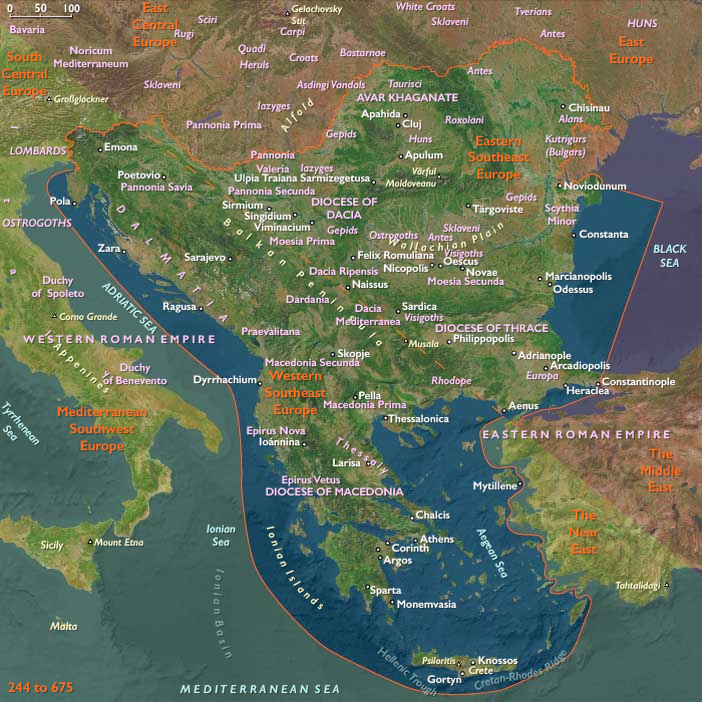
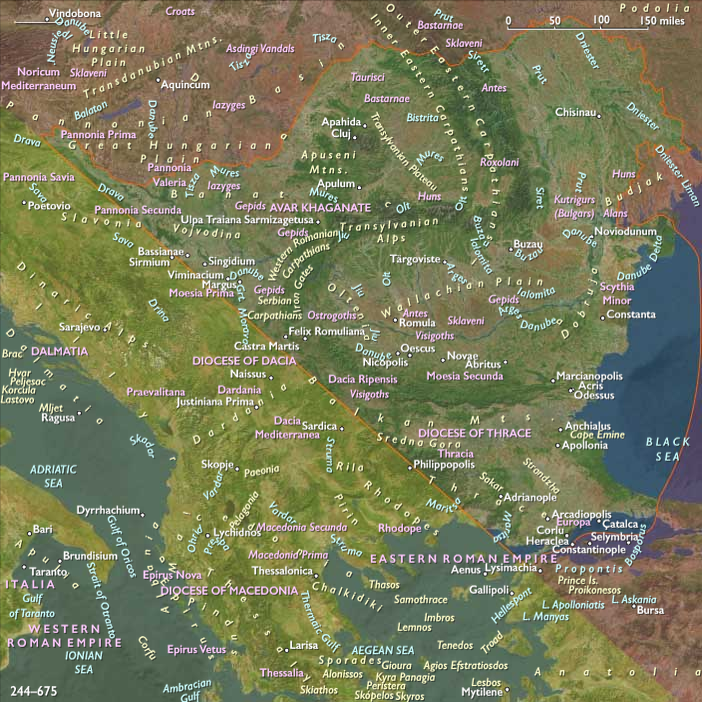
Between 244 and 387 CE, Eastern Southeast Europe experienced increased migration pressures and border conflicts. Gothic tribes, notably under leaders such as Cniva, increasingly tested the region’s northern borders, dramatically impacting settlement patterns. In 251 CE, Cniva conquered Philippopolis (modern-day Plovdiv) and killed Roman Emperor Decius and his son at the Battle of Abritus—the first Roman emperor to fall in combat against barbarians. Emperor Aurelian, facing ongoing invasions, ordered a strategic withdrawal from Roman Dacia in 271 CE, relocating Roman troops, officials, and colonists south of the Danube. Many Dacian peasants, however, remained, preserving cultural continuity and influencing future settlement patterns.
Urban Fortification and Adaptation
In response to these increasing pressures, urban centers intensified their fortification efforts. Key cities such as Byzantium (Constantinople), Philippopolis, and especially Serdica (modern-day Sofia) fortified extensively. Serdica flourished as a significant administrative and trading center. The division of the Roman Empire in 395 CE, enacted by Emperor Theodosius’ sons, further solidified regional defense strategies, marking a permanent administrative and cultural separation between Greek-speaking Constantinople and Latin-speaking Rome, profoundly affecting future regional identities.
Economic and Technological Developments
Economic Resilience Amidst Disruptions
Despite external disruptions from frequent invasions, regional economic activities exhibited notable resilience. Agricultural productivity, mining (particularly gold and silver), and trade networks continued functioning effectively, though occasionally compromised by migration and conflict. The Romans actively maintained critical infrastructure, sustaining roads connecting fortresses, mining centers, and trade hubs, thereby ensuring economic continuity.
Defensive Infrastructure and Military Adaptation
Technological advancements primarily focused on military defense and infrastructure development. Enhanced fortifications, improved roads, and robust logistical networks were maintained and expanded to secure military effectiveness. Strategic adjustments such as the abandonment of northern provinces (Dacia) signaled a shift toward consolidating defensible frontiers along the Danube, laying the groundwork for subsequent Byzantine military strategies.
Cultural and Artistic Developments
Cultural Continuity and Artistic Adaptation
Despite disruptions, artistic and cultural traditions endured, adapting to reflect contemporary themes of imperial resilience, spirituality, and stability. Urban centers preserved Greco-Roman heritage through continued patronage of public art, architecture, and monuments, gradually blending these traditions with emerging Christian iconography, notably within urban centers such as Constantinople and Philippopolis.
Intellectual Vitality and the Preservation of Learning
Intellectual and educational pursuits flourished in major cities. The establishment of a university at Constantinople by Theodosius II in 425 (though slightly after this age, its roots lie in this period's intellectual environment) emphasized the ongoing commitment to classical and philosophical learning, fostering scholarly activities and laying foundations for Byzantine intellectual life.
Social and Religious Developments
Administrative Reorganization and Governance Shifts
The empire underwent significant governance shifts due to ongoing external pressures. Diocletian’s administrative reorganization in 285 CE created distinct spheres of jurisdiction between the Greek-speaking East and the Latin-speaking West, fundamentally reshaping regional governance. The relocation of the imperial capital by Emperor Constantine to Byzantium (renamed Constantinople) in 330 CE further strengthened administrative control, making Constantinople a pivotal center for regional governance and military command.
Spread and Institutionalization of Christianity
Christianity’s influence expanded significantly during this era, particularly following official toleration under the Edict of Milan (313 CE). Churches, monastic communities, and theological institutions proliferated throughout Eastern Southeast Europe, embedding Christianity deeply within the region’s social fabric. Constantinople emerged as a central religious hub, where an established patriarchate exercised ecclesiastical authority over the Greek East, laying essential groundwork for future religious developments and theological debates.
Long-Term Consequences and Historical Significance
The period from 244 to 387 CE proved transformative for Eastern Southeast Europe. Intensified migrations, strategic territorial adjustments, administrative reorganizations, and the growing dominance of Christianity deeply impacted regional development. These changes established critical frameworks and traditions that significantly influenced the subsequent historical evolution of the Byzantine Empire, leaving a lasting imprint on regional identity, governance, and culture.
People
Groups
- Dacians, or Getae, or Geto-Dacians
- Sarmatians
- Dacia, Kingdom of
- Thrace, Theme of
- Macedonia, Roman
- Goths (East Germanic tribe)
- Christians, Early
- Thracia (Roman province)
- Moesia Inferior (Roman province)
- Dacia, Roman
- Roman Empire (Rome): Non-dynastic
- Dacia Aureliana (Roman province)
- Roman Empire: Tetrarchy
- Dacia Mediterranea (Roman province)
- Dacia Ripensis (Roman province)
- Scythia Minor (Roman province)
- Pannonia Secunda (Roman province)
- Macedonia, Diocese of
- Europa (Roman province)
- Roman Empire: Constantinian dynasty (Nicomedia)
- Christianity, Nicene
- Roman Empire: Constantinian dynasty (Constantinople)
- Dacia, Diocese of
- Roman Empire: Theodosian dynasty (Constantinople)
Topics
Commodoties
- Weapons
- Oils, gums, resins, and waxes
- Grains and produce
- Ceramics
- Strategic metals
- Slaves
- Beer, wine, and spirits
- Lumber
Subjects
Regions
Subregions
Years: 244 - 387
People
Groups
- Dacians, or Getae, or Geto-Dacians
- Sarmatians
- Dacia, Kingdom of
- Thrace, Theme of
- Macedonia, Roman
- Goths (East Germanic tribe)
- Christians, Early
- Thracia (Roman province)
- Moesia Inferior (Roman province)
- Dacia, Roman
- Roman Empire (Rome): Non-dynastic
- Dacia Aureliana (Roman province)
- Roman Empire: Tetrarchy
- Dacia Mediterranea (Roman province)
- Dacia Ripensis (Roman province)
- Scythia Minor (Roman province)
- Pannonia Secunda (Roman province)
- Macedonia, Diocese of
- Europa (Roman province)
- Roman Empire: Constantinian dynasty (Nicomedia)
- Christianity, Nicene
- Roman Empire: Constantinian dynasty (Constantinople)
- Dacia, Diocese of
- Roman Empire: Theodosian dynasty (Constantinople)
Topics
Commodoties
- Weapons
- Oils, gums, resins, and waxes
- Grains and produce
- Ceramics
- Strategic metals
- Slaves
- Beer, wine, and spirits
- Lumber
Subjects
Regions
Subregions