
Eastern Southeast Europe (1012–1023 CE): Basil II's …
Years: 1012 - 1023
Eastern Southeast Europe (1012–1023 CE): Basil II's Consolidation and New Challenges
Settlement and Migration Patterns
Demographic Continuity and New Threats
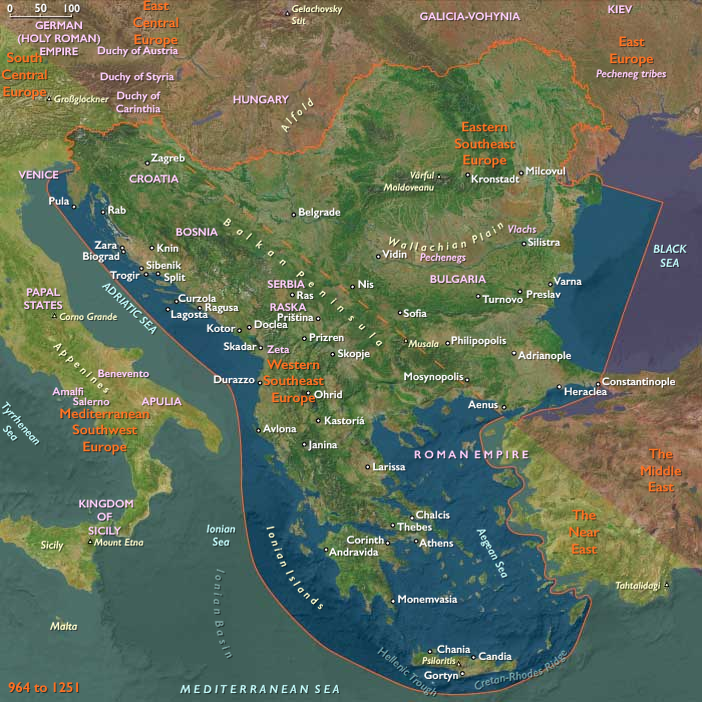
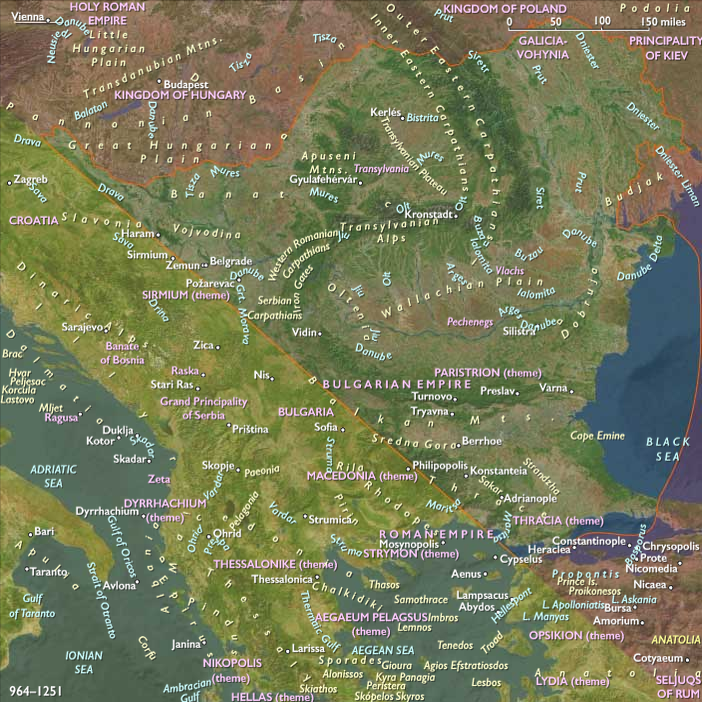
From 1012 to 1023 CE, Eastern Southeast Europe maintained overall demographic stability despite emerging threats and continued military campaigns. The Pechenegs, a Turkic tribal confederation and northern neighbors of the Bulgarians, increasingly posed a threat, intensifying raids into imperial territories after the Byzantine conquest of Bulgaria in 1018.
Political and Military Developments
Pecheneg Incursions
Previously viewed as valuable allies by earlier Byzantine emperors such as Constantine VII against the Bulgarians, Magyars, and Rus', the Pechenegs shifted into a formidable threat. Their aggressive raids across the Danube into imperial territories increased significantly following Bulgaria's fall to Byzantine forces.
Basil II’s Persistent Leadership
Emperor Basil II, described vividly in contemporary histories as a robust and austere figure, governed with ruthless efficiency. Renowned for his short stature, bright blue eyes, and distinctive mannerisms, Basil was a soldierly leader, unsparing and tenacious both militarily and administratively. His personality traits—particularly his rigorous attention to detail and intense focus—allowed him to consolidate imperial power successfully.
Strengthening Imperial Authority
Basil II consistently sought to reinforce imperial authority by weakening powerful regional magnates, especially influential military families in Asia Minor. This policy of reducing aristocratic dominance included rigorous inspections of land ownership and arbitrary confiscations of extensive estates, significantly bolstering the power of the central authority and aiding smallholder farmers who owed military service and taxes directly to the crown.
Economic and Technological Developments
Fiscal Efficiency and Wealth Accumulation
Basil’s rigorous administrative policies resulted in substantial financial gains for the empire. Despite costly military campaigns, he maintained a well-stocked treasury, even constructing special underground chambers to store imperial wealth securely.
Continued Military and Infrastructure Investments
To sustain his extensive military campaigns and consolidate territories, Basil significantly invested in military infrastructure and logistics, reinforcing fortifications along critical frontiers, especially following the conquest of Bulgaria.
Cultural and Artistic Developments
Popular Vernacular Poetry
The period saw a notable cultural development with the emergence of popular poetry composed in vernacular Greek, reflecting a broader societal shift and diversification of cultural expression in Byzantine territories.
Religious and Cultural Patronage
Though Basil II personally showed limited interest in scholarly pursuits, he commissioned religious art and undertook the construction or restoration of churches and monasteries, particularly in Boeotia and Athens, reflecting conventional imperial piety.
Social and Religious Developments
Orthodox Christianity’s Dominance
Orthodox Christianity continued to provide spiritual stability and societal cohesion, reinforced through Basil’s patronage of religious institutions and rebuilding efforts in key regions, further solidifying the religion's central role within society.
Continued Presence of Bogomilism
The Bogomil religious movement maintained its regional influence, persisting as an alternative religious expression, especially among rural populations, and continuing to shape local religious dynamics through its distinct dualistic beliefs.
Long-Term Consequences and Historical Significance
The era from 1012 to 1023 CE highlighted Basil II's administrative rigor and strategic tenacity, significantly reshaping Eastern Southeast Europe's geopolitical landscape. The intensified threats from the Pechenegs, Basil’s internal administrative reforms, and his forward-looking ambitions to reinforce Byzantine control in southern Italy and Sicily underscored his reign's enduring impact on the region’s historical trajectory.
People
Groups
- Thrace, Theme of
- Christianity, Chalcedonian
- Greeks, Medieval (Byzantines)
- Bulgarians (South Slavs)
- Bulgarian Empire (First)
- Macedonia, East Roman Theme of
- Pechenegs, or Patzinaks
- Roman Empire, Eastern: Macedonian dynasty
- Bulgarian Orthodox Church
- Kievan Rus', or Kiev, Great Principality of
- Bogomilism
- Hungary, Kingdom of
Topics
Commodoties
Subjects
Regions
Subregions
Related Events
Showing 10 events out of 51826 total
Years: 1012 - 1023
People
Groups
- Thrace, Theme of
- Christianity, Chalcedonian
- Greeks, Medieval (Byzantines)
- Bulgarians (South Slavs)
- Bulgarian Empire (First)
- Macedonia, East Roman Theme of
- Pechenegs, or Patzinaks
- Roman Empire, Eastern: Macedonian dynasty
- Bulgarian Orthodox Church
- Kievan Rus', or Kiev, Great Principality of
- Bogomilism
- Hungary, Kingdom of
Topics
Commodoties
Subjects
Regions
Subregions