
East Micronesia (49,293 – 28,578 BCE): Upper …
Years: 49293BCE - 28578BCE
East Micronesia (49,293 – 28,578 BCE): Upper Pleistocene — Reef Platforms, Windward Rims, and Seabird Realms (No Human Presence)
Geographic & Environmental Context
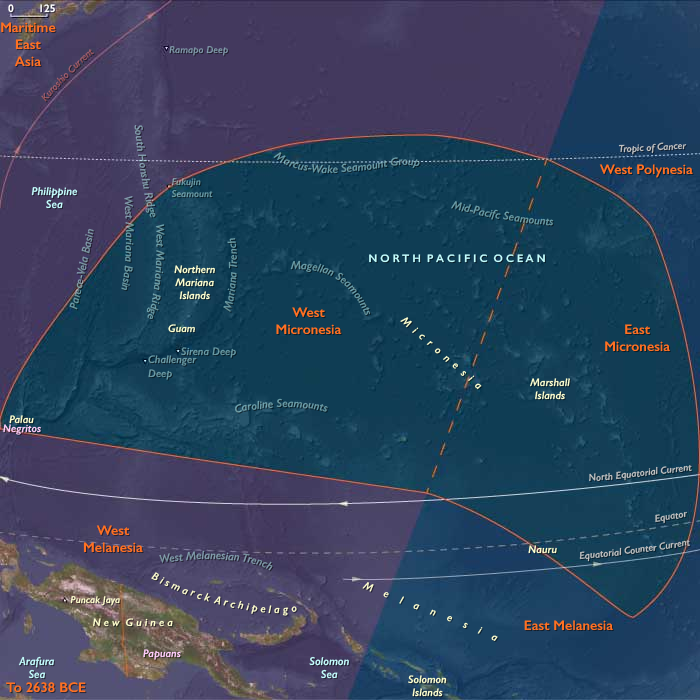
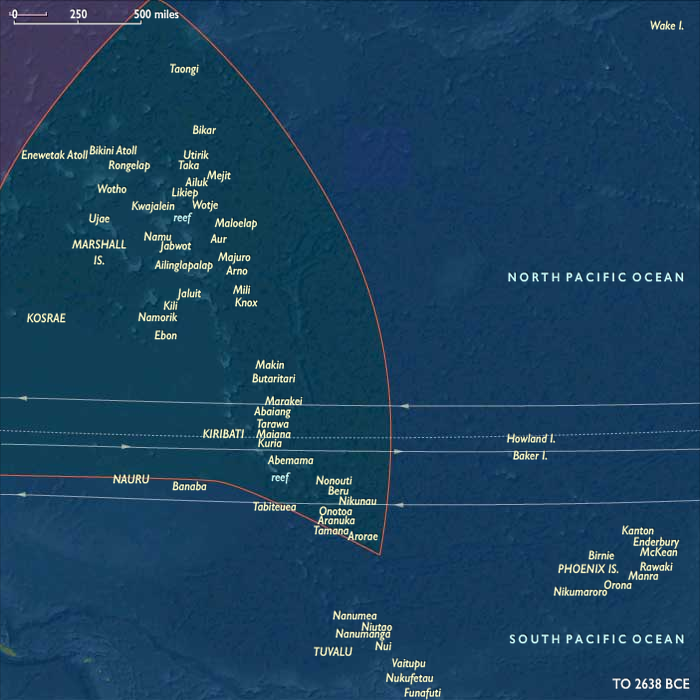
East Melanesia includes Kiribati (Gilbert Islands), the Marshall Islands (Ralik and Ratak chains), Nauru (uplifted phosphatic limestone island), and Kosrae (high, volcanic island on the eastern Caroline arc).
-
Sea level sat ~100 m below modern, exposing broad reef flats and terrace benches on the future Ralik–Ratak and Gilbert atolls; Nauru stood as a higher limestone mesa; Kosrae loomed as a steep volcanic high island with deep valleys.
Climate & Environmental Shifts
-
Last Glacial Maximum: cooler SSTs, stronger trades and winter swell; slower coral accretion but wide intertidal zones.
Baseline Ecology
-
Seabird supercolonies nested on outer cays; turtles used broad beaches; lagoonal microhabitats were incipient.
-
Kosrae’s montane forest and unmodified streams sustained high freshwater biodiversity.
Long-Term Significance
These lowstand landscapes fixed the reef foundations and high-island watersheds that later support Micronesian arboriculture, taro pondfields, and lagoon fisheries.
Topics
Subjects
Regions
Subregions
Related Events
Showing 10 events out of 69706 total
Years: 49293BCE - 28578BCE
Topics
Subjects
Regions
Subregions