
East Micronesia (28,577 – 7,822 BCE): Deglaciation …
Years: 28577BCE - 7822BCE
East Micronesia (28,577 – 7,822 BCE): Deglaciation — Drowning Shelves, Lagoon Formation, and Reef “Catch-Up” (No Human Presence)
Geographic & Environmental Context
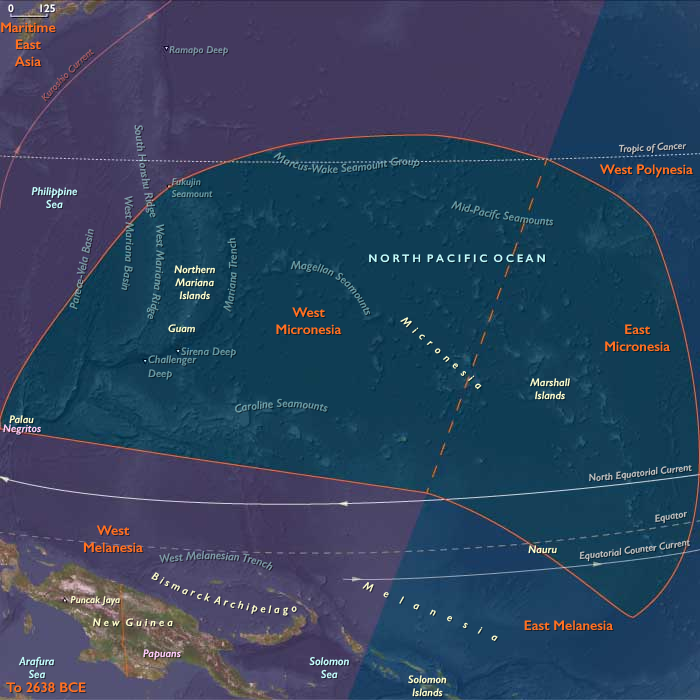
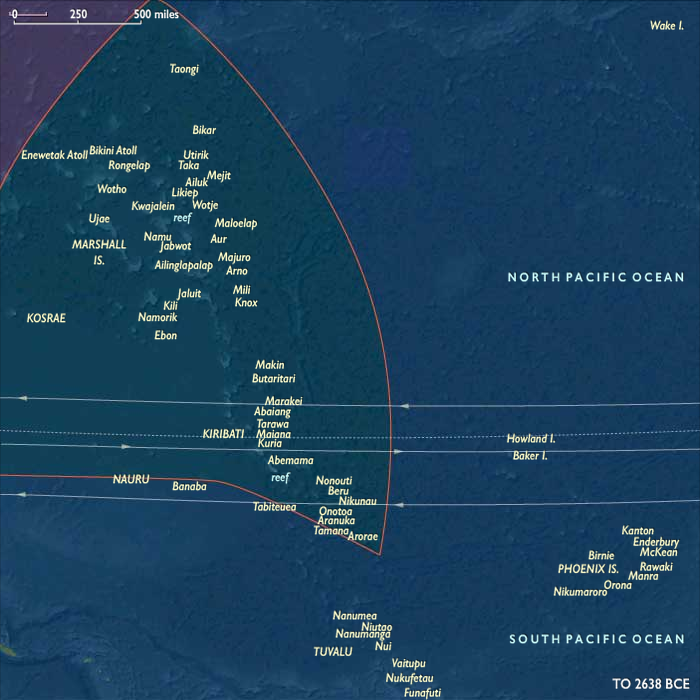
East Melanesia includes Kiribati (Gilbert Islands), the Marshall Islands (Ralik and Ratak chains), Nauru (uplifted phosphatic limestone island), and Kosrae (high, volcanic island on the eastern Caroline arc).
-
Rapid sea-level rise flooded glacial benches, carving pass channels and back-reef lagoons across the Ralik–Ratak and Gilbert platforms; Nauru became a ringed limestone island; Kosrae gained new fringing reef flats.
Climate & Environmental Shifts
-
Bølling–Allerød warmth boosted coral growth; Younger Dryas slowed it briefly; Early Holocene warmth stabilized reef accretion and lagoon development.
Baseline Ecology
-
Mature lagoons supported mullet, surgeonfish, parrotfish; outer reefs grew spur-and-groove structures.
-
Dune–strand forests stabilized cays; Kosrae’s wet windward slopes fed productive estuaries.
Long-Term Significance
The lagoon–reef architecture that later anchors fish weirs, clam gardens, and canoe passes took recognizable form in this era.
Topics
Subjects
Regions
Subregions
Years: 28577BCE - 7822BCE
Topics
Subjects
Regions
Subregions