
Antarctica (28,577 – 7,822 BCE): Upper …
Years: 28577BCE - 7822BCE
Antarctica (28,577 – 7,822 BCE): Upper Pleistocene II → Early Holocene — Ice, Ocean, and the Edges of Life
Geographic & Environmental Context
During the transition from the Last Glacial Maximum (LGM) to the Early Holocene, Antarctica remained a continent of deep ice and shallow change—a frozen core slowly responding to planetary warming.
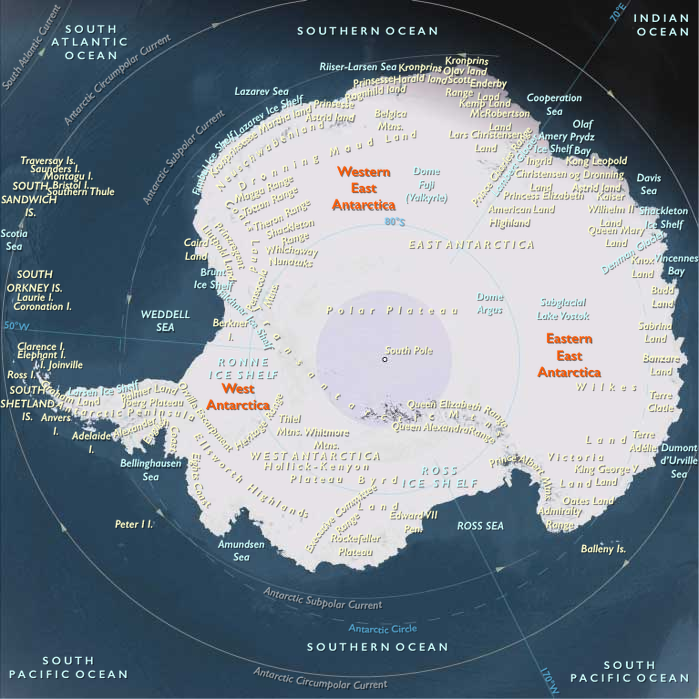
Its three major regions reflected stark gradients of cold, wind, and ecological possibility:
-
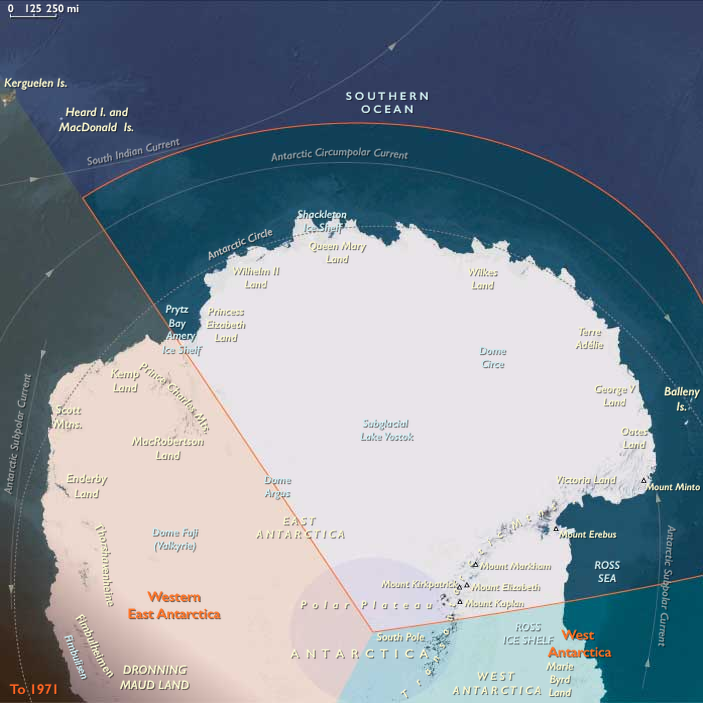
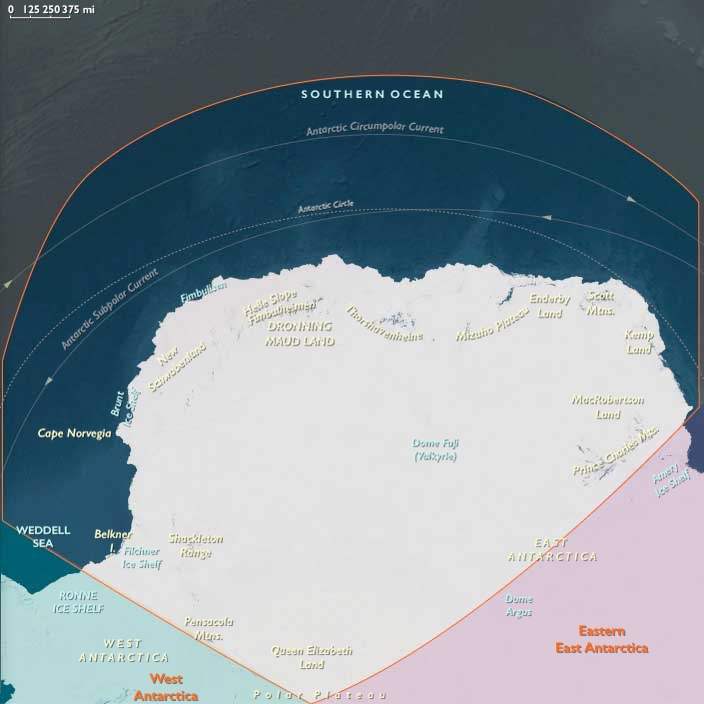
Eastern East Antarctica — the vast polar plateau rising over 3,000 m, capped by ice up to 4 km thick and rimmed by the Amery, Shackleton, and Ross Sea shelves. A hyper-arid interior where snow accumulation was minimal and temperatures rarely rose above –40 °C.
-
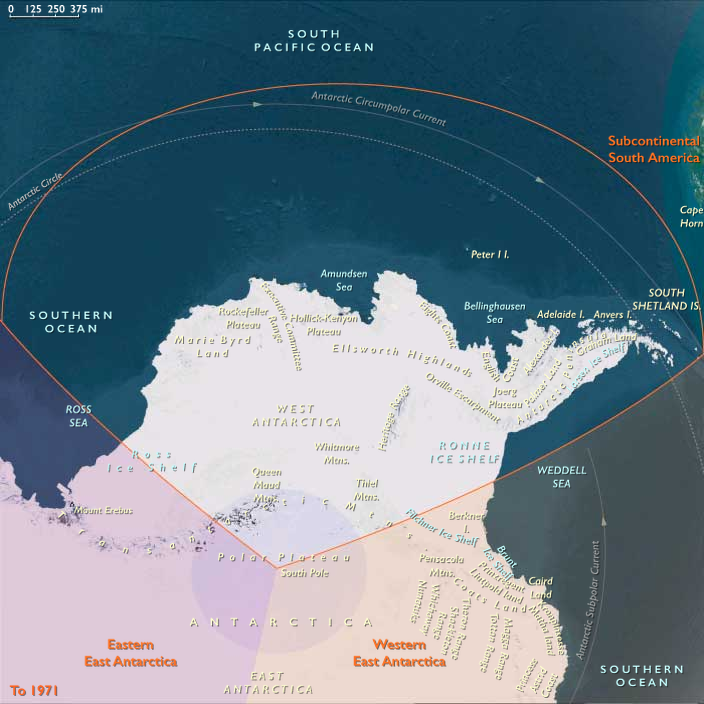
Western East Antarctica — the coastal fringe along the Indian and Atlantic sectors and its subantarctic island arc (South Georgia, South Sandwich, South Orkney, Bouvet, Prince Edward–Marion, western Kerguelen). Cold, wet, and windy, these islands were the biological outposts of the polar world.
-
West Antarctica — including the Antarctic Peninsula, Ellsworth Mountains, Marie Byrd Land, and the great Ross and Filchner–Ronne shelves. Ice streams here flowed into subpolar embayments, while geothermal oases and ice-free headlands supported sparse but persistent life.
Together they formed a mosaic from permanent polar desert to storm-lashed tundra, all encircled by the Antarctic Circumpolar Current (ACC)—the engine linking the Southern Ocean to every other sea.
Climate & Environmental Shifts
-
Last Glacial Maximum (c. 26,500 – 19,000 BCE):
The Antarctic Ice Sheet was thicker and broader than today. Ice shelves reached the continental-shelf edge; sea ice expanded hundreds of kilometers northward each winter. Mean annual temperatures were 6–10 °C colder than modern values. -
Bølling–Allerød (c. 14,700 – 12,900 BCE):
Global warming marginally softened coastal climates. Seasonal sea ice contracted slightly in summer, exposing rocky beaches for brief biological colonization. -
Younger Dryas (c. 12,900 – 11,700 BCE):
Cooling restored extensive winter sea ice; outlet glaciers paused or advanced; westerly winds strengthened. -
Early Holocene (post-11,700 BCE):
Renewed warmth reduced ice extent along the Antarctic Peninsula and Ross–Amundsen coasts; polynyas widened; ice-free ground on subantarctic islands expanded. Interior East Antarctica remained effectively unchanged—still the planet’s coldest desert.
Flora, Fauna & Ecology
Life was confined to coastal oases, volcanic slopes, and the surrounding seas:
-
Mainland Antarctica:
• Lichens, mosses, and microbial mats in ice-free pockets near geothermal sites and rocky headlands.
• Adélie and early Emperor penguins nesting on stable fast-ice or gravel beaches.
• Weddell, leopard, and crabeater seals using tide cracks and polynyas for breeding. -
Subantarctic islands:
• Tundra vegetation—tussock grasses, mosses, and cushion plants—spread on newly deglaciated slopes.
• Immense rookeries of albatrosses, petrels, penguins, and fur or elephant seals.
• Peat initiation began in saturated hollows, creating long-term carbon sinks. -
Marine realm:
• Seasonal phytoplankton blooms at the ice edge supported vast krill swarms, anchoring the food web for whales, seals, and seabirds.
• Nutrient-rich upwelling sustained the Southern Ocean as Earth’s most productive cold-water ecosystem.
Human Presence
None.
Antarctica remained completely beyond the reach of late Pleistocene navigation and survival technology. Its existence was outside any cultural geography or mythic horizon.
Environmental Dynamics
-
Ice-flow systems transported snow from the plateau to the sea, feeding the great shelves.
-
Calving and polynyas drove marine productivity by mixing surface and deep waters.
-
Volcanism in Marie Byrd Land, the South Shetlands, and South Sandwich arc created minor geothermal refuges that harbored unique biota.
-
Subantarctic feedback loops: guano deposition, peat formation, and storm redistribution of nutrients knit ocean and land into one biogeochemical engine.
Symbolic & Conceptual Role
For every human society of this time, Antarctica did not yet exist—not as rumor, myth, or destination. It was a planetary absence, sensed only through distant weather and current systems that touched Africa, South America, and Australasia.
Topics
Subjects
Regions
Subregions
Years: 28577BCE - 7822BCE
Topics
Subjects
Regions
Subregions