
Western East Antarctica (28557 – 7822 BCE): …
Years: 28577BCE - 7822BCE
Western East Antarctica (28557 – 7822 BCE): Icebound Shores and Subantarctic Refuges
Geographic and Environmental Context
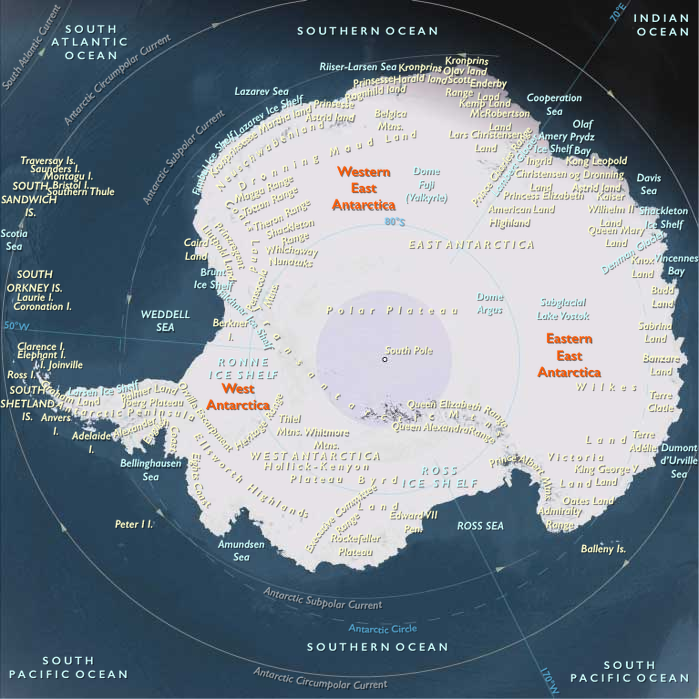
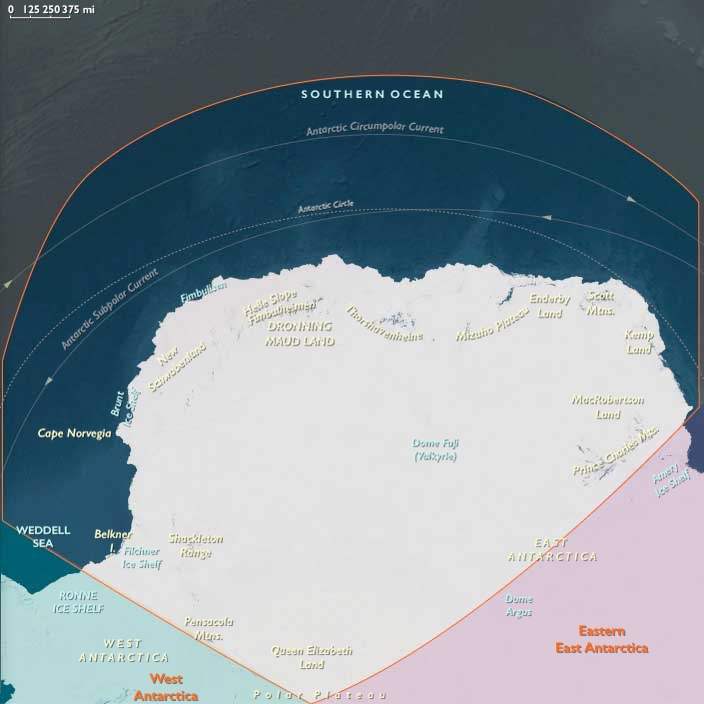
Western East Antarctica—stretching along the Indian Ocean and Atlantic sectors of the Southern Ocean from the Transantarctic Mountains eastward—includes the coastal Antarctic mainland as well as a chain of subantarctic islands: South Georgia, the South Sandwich Islands, the South Orkney Islands (including Coronation Island), Bouvet Island, Prince Edward and Marion Islands, and the western Kerguelen Islands.
-
The mainland is dominated by the East Antarctic Ice Sheet’s steep coastal margins, calving massive icebergs into the Southern Ocean.
-
The subantarctic islands, positioned in the Furious Fifties and Screaming Sixties, are cold, wet, and windy but far more biologically productive than the Antarctic continent.
Climate and Environmental Shifts
-
Last Glacial Maximum (c. 26,500 – 19,000 BCE): The Antarctic mainland experienced intensified cold and sea ice expansion; glaciers extended beyond modern limits in some coastal sectors. The subantarctic islands were glaciated at higher elevations but retained ice-free lowlands that served as refugia for seabirds and hardy tundra vegetation.
-
Bølling–Allerød (c. 14,700 – 12,900 BCE): Slight warming shortened seasonal sea ice extent around the islands; vegetation cover expanded, and seabird populations grew. Offshore waters saw richer plankton blooms as ice-edge productivity increased.
-
Younger Dryas (c. 12,900 – 11,700 BCE): Cooling reversed some gains—winter sea ice extended further north again, and glacial tongues on islands advanced slightly.
-
Early Holocene (after c. 11,700 BCE): Renewed warming and more stable ocean circulation patterns improved biological productivity in the Southern Ocean, supporting dense colonies of penguins, seals, and seabirds on ice-free coastal slopes.
Flora, Fauna, and Ecology
-
Mainland Antarctica: Almost entirely ice-covered, with life restricted to scattered ice-free rock hosting lichens, mosses, and microbial mats.
-
Subantarctic islands: Supported tundra vegetation, tussock grasslands, and mossy bogs; teeming seabird rookeries (albatrosses, petrels, penguins) and seal haul-outs (fur seals, elephant seals).
-
The surrounding Southern Ocean hosted krill swarms, fish, and seasonal whale migrations.
Human Presence
-
During this period, no humans had reached Western East Antarctica or its subantarctic islands. Distances from inhabited continents, extreme weather, and rough seas placed them far beyond the range of late Pleistocene navigation.
-
These ecosystems evolved without human disturbance.
Environmental Dynamics
-
The Antarctic Circumpolar Current and persistent westerly winds maintained high nutrient turnover in surrounding waters, sustaining marine productivity even during colder phases.
-
Volcanic activity in the South Sandwich Islands occasionally reshaped coastlines, creating new nesting sites.
-
Iceberg calving events influenced local marine habitats, providing temporary platforms for seals and seabirds.
Symbolic and Conceptual Role
For contemporary human cultures, these lands and islands were unknown southern realms, invisible beyond the maritime horizons of the southern continents.
Transition Toward the Holocene
By 7822 BCE, Western East Antarctica’s subantarctic islands were entering a biologically rich phase under Early Holocene warmth. The mainland coast remained icebound, but seasonal productivity along the ice edge made the surrounding Southern Ocean one of the planet’s richest marine ecosystems—still untouched by humans.
Topics
Regions
Subregions
Years: 28577BCE - 7822BCE
Topics
Regions
Subregions