
East Polynesia (1828–1971 CE): Missionaries, Colonial Rule, …
Years: 1828 - 1971
East Polynesia (1828–1971 CE): Missionaries, Colonial Rule, and Remote Resilience
Geographic & Environmental Context
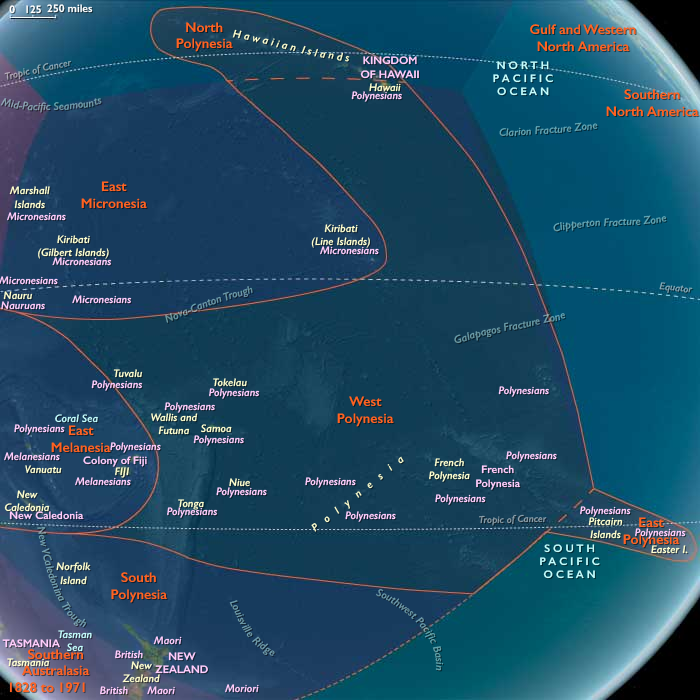
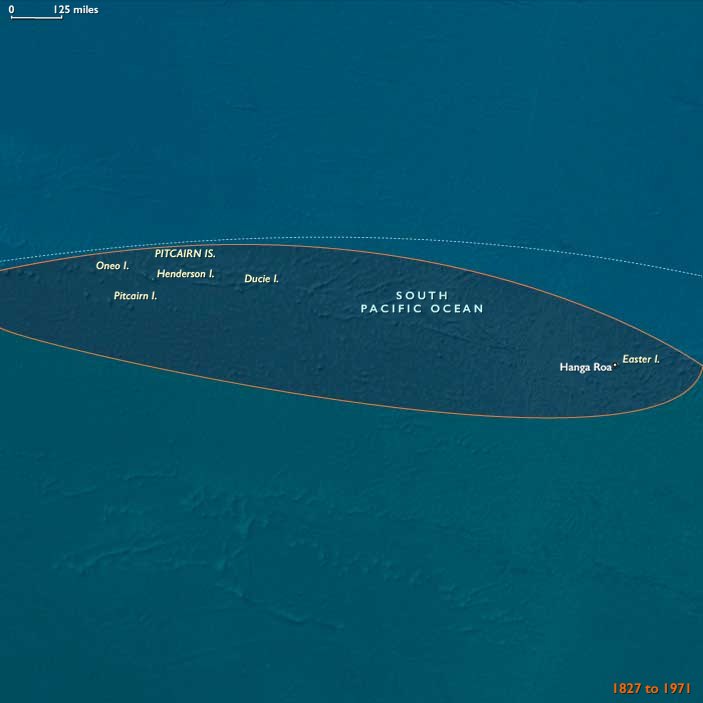
The subregion of East Polynesia includes Rapa Nui (Easter Island) and the Pitcairn Islands (Pitcairn, Henderson, Ducie, Oeno). Anchors included the Orongo ceremonial village and Rano Kau crater on Rapa Nui, the volcanic soils of Pitcairn, the limestone plateau of Henderson, and the low coral cays of Ducie and Oeno. These islands remained among the most remote and sparsely populated corners of the Pacific, increasingly tied to European and later global powers.
Climate & Environmental Shifts
Climate moderated after the Little Ice Age, though droughts still stressed Rapa Nui’s gardens and freshwater shortages persisted on Pitcairn and Henderson. Hurricanes and cyclones occasionally struck Ducie and Oeno, scouring fragile islets. Deforested landscapes on Rapa Nui worsened soil erosion; Pitcairn’s limited farmland supported only modest subsistence.
Subsistence & Settlement
-
Rapa Nui: After devastating raids by Peruvian slavers in the 1860s and epidemics, the population collapsed to barely a hundred. Survivors rebuilt communities under Catholic mission leadership. In 1888, Rapa Nui was annexed by Chile, becoming a remote colonial territory. Pastoral ranching, particularly sheep introduced by colonists, reshaped landscapes.
-
Pitcairn: Settled since 1790 by the Bounty mutineers and their Polynesian companions, Pitcairn grew to a few hundred by the mid-19th century. In 1856, overpopulation led to relocation of the community to Norfolk Island, though some later returned. Pitcairn remained a small British dependency, supported by subsistence farming and limited trade.
-
Henderson, Ducie, Oeno: Uninhabited, though occasionally visited by Pitcairn islanders, whalers, and later scientific expeditions.
Technology & Material Culture
Missionaries on Rapa Nui introduced churches, schools, and stone ranch buildings, replacing earlier ceremonial centers. Polynesian oral traditions persisted in song and carving. On Pitcairn, houses of wood and stone, subsistence gardens, and small boats dominated material culture. Religious life was marked by conversion to Seventh-day Adventism in the late 19th century, which strongly shaped Pitcairn identity.
Movement & Interaction Corridors
-
Rapa Nui was drawn into Chilean shipping routes from Valparaíso.
-
Pitcairn relied on infrequent visits from passing ships, later connected irregularly to New Zealand.
-
Whaling and sealing ships traversed the South Pacific, occasionally using these islands for water and provisions.
-
Global missionary networks tied both Rapa Nui and Pitcairn to wider Christian movements.
Cultural & Symbolic Expressions
-
On Rapa Nui, ancestral traditions persisted in oral lore, despite suppression of the tangata manu cult by missionaries. Catholic feasts and syncretic practices marked the annual calendar.
-
Pitcairn Islanders, descendants of Bounty mutineers and Polynesians, crafted a distinct English–Polynesian creole culture. Their faith, storytelling, and songs became central to identity, along with genealogical memory of the Bounty.
-
Henderson, Ducie, and Oeno carried symbolic value as ecological sanctuaries, later subjects of scientific exploration.
Environmental Adaptation & Resilience
Rapa Nui’s people adapted deforested soils through stone mulching and subsistence gardening. Sheep ranching under Chilean administration degraded landscapes further, yet communities preserved resilience through kinship, ritual, and persistence. Pitcairn Islanders relied on mixed subsistence—bananas, sweet potatoes, chickens, and fishing—balanced by cooperation and self-sufficiency. Isolation remained both challenge and protection.
Transition
By 1971 CE, East Polynesia had entered modern global networks while remaining highly isolated. Rapa Nui was firmly Chilean territory, marked by cultural revival efforts amid colonial marginalization. Pitcairn survived as a micro-community of fewer than 100 people, still a British dependency. Henderson, Ducie, and Oeno remained uninhabited but ecologically significant. Across the subregion, Indigenous memory, missionary legacies, and colonial frameworks intertwined, sustaining fragile yet enduring human presence at the farthest reaches of Polynesia.
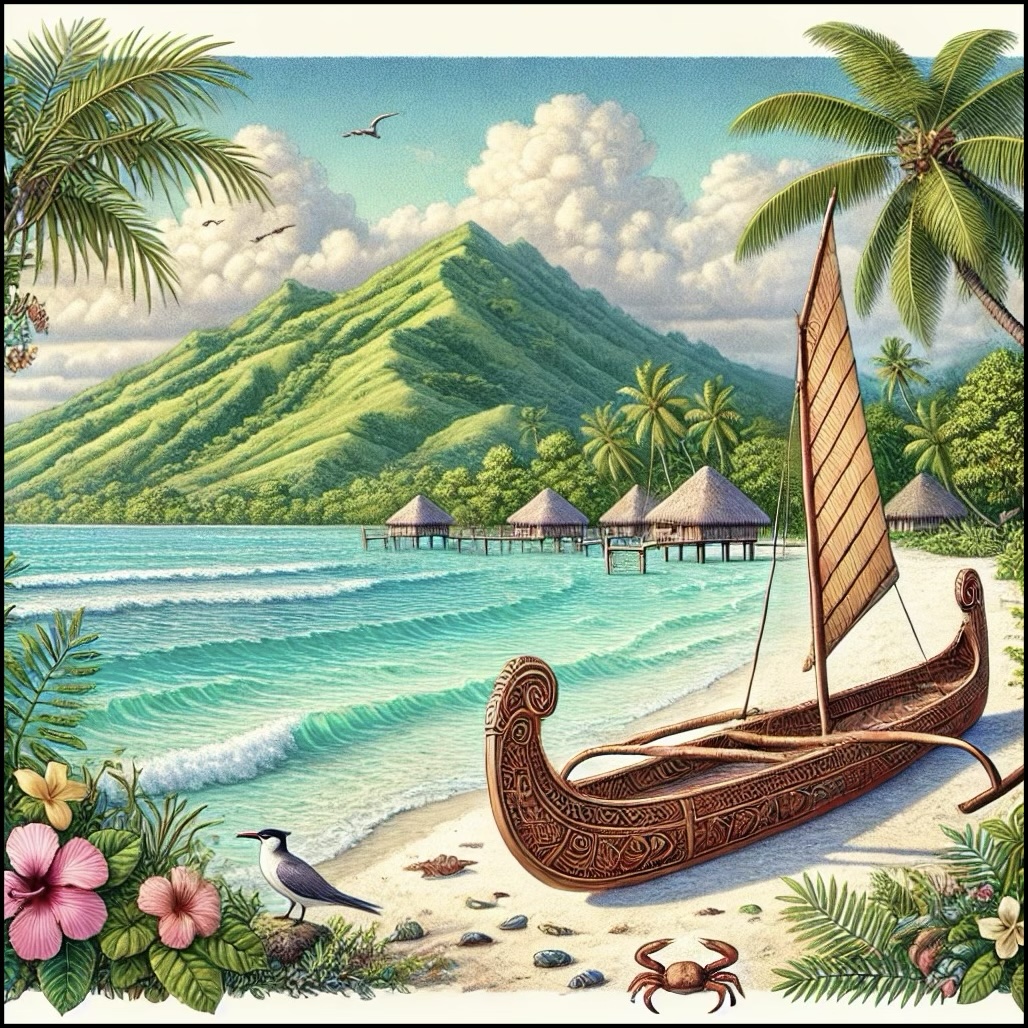
East Polynesia (with civilization) ©2024-25 Electric Prism, Inc. All rights reserved.
People
Groups
Topics
- Oceania, Settlement of
- Little Ice Age, Warm Phase I
- Little Ice Age (LIA)
- Cook, Second Voyage of James
- Bounty, Mutiny on the
Commodoties
Subjects
Regions
Subregions
Years: 1828 - 1971
East Polynesia (with civilization) ©2024-25 Electric Prism, Inc. All rights reserved.
People
Groups
Topics
- Oceania, Settlement of
- Little Ice Age, Warm Phase I
- Little Ice Age (LIA)
- Cook, Second Voyage of James
- Bounty, Mutiny on the
Commodoties
Subjects
Regions
Subregions