
East Polynesia (1684–1827 CE): First European Sails …
Years: 1684 - 1827
East Polynesia (1684–1827 CE): First European Sails and Island Transformations
Geographic & Environmental Context
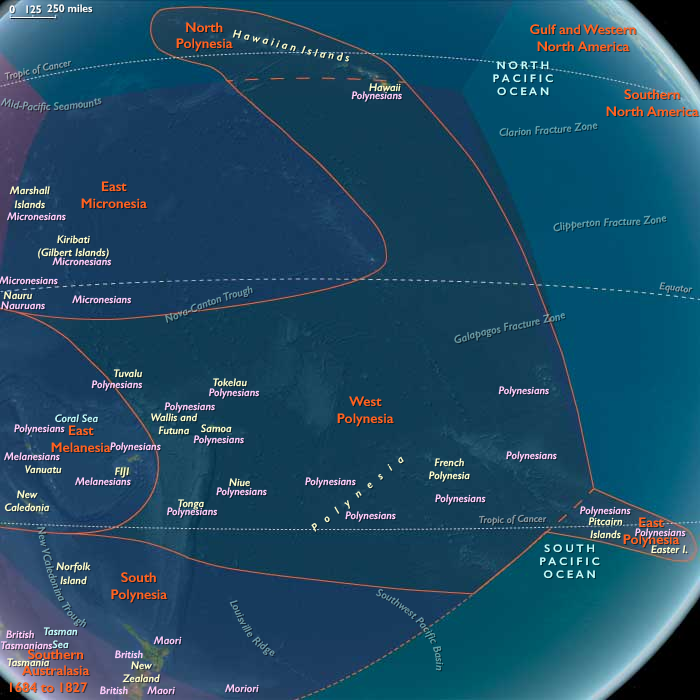
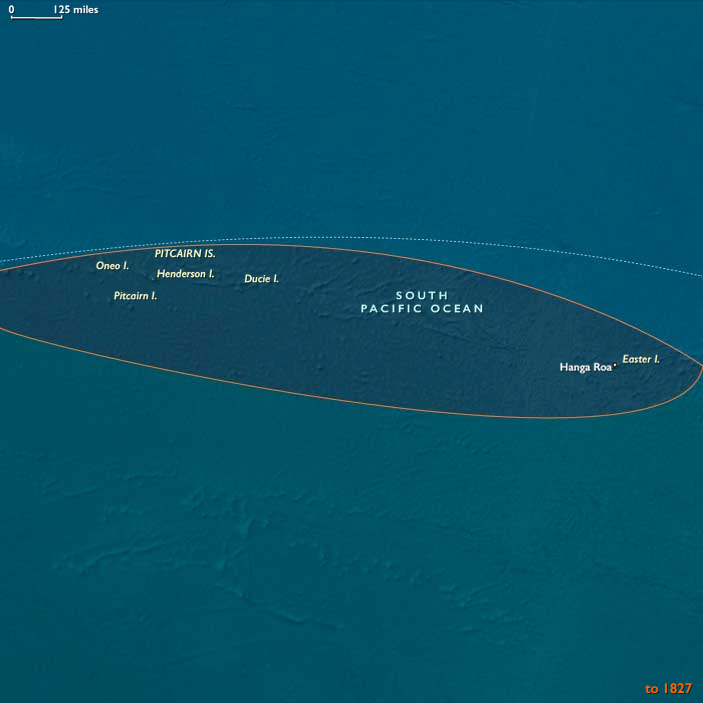
The subregion of East Polynesia includes Rapa Nui (Easter Island) and the Pitcairn Islands (Pitcairn, Henderson, Ducie, Oeno). Anchors included the Rano Raraku quarry and ahu-lined coasts of Rapa Nui, the volcanic soils of Pitcairn, the limestone plateau of Henderson, and the low coral cays of Ducie and Oeno. This isolated cluster remained ecologically fragile and culturally distinct, set at the margins of the Pacific until the arrival of European voyagers.
Climate & Environmental Shifts
The late Little Ice Age persisted into the 18th century, with drought cycles stressing Rapa Nui’s gardens and Henderson’s limited water sources. Storm surges occasionally swamped Ducie and Oeno. Cooler sea conditions affected fishing yields, while deforestation on Rapa Nui reduced resilience against soil erosion and drought.
Subsistence & Settlement
-
Rapa Nui: Rock-mulched gardens produced sweet potato, yams, and gourds; chickens were intensively kept in stone enclosures. Fishing and shellfish provided protein. Social divisions sharpened as resource stress deepened.
-
Pitcairn: Supported small-scale horticulture of root crops and fruit trees, with marine resources supplementing diets. By the 18th century, voyaging connections with Henderson, Ducie, and Oeno appear to have waned.
-
Henderson, Ducie, Oeno: Likely visited only intermittently for seabirds, turtles, and shells; permanent habitation had diminished.
Technology & Material Culture
On Rapa Nui, the tradition of raising moai on ahu waned, giving way to the tangata manu (birdman) cult at Orongo. Petroglyphs of birds and ceremonial houses became central. Stone tools, fishhooks, and weaving continued in daily life. On Pitcairn, adzes and fishhooks remained common, though archaeological evidence suggests dwindling communities.
Movement & Interaction Corridors
-
Canoe routes on Rapa Nui remained coastal and ritual in scope.
-
The Pitcairn group sustained limited inter-island visits, but geographic isolation deepened.
-
European voyages reached the region: Rapa Nui was sighted by Jacob Roggeveen in 1722, later visited by Felipe González de Ahedo (1770), James Cook (1774), and others. The Pitcairns were charted by Philip Carteret (1767) and later became infamous as the refuge of the Bounty mutineers (1790).
Cultural & Symbolic Expressions
On Rapa Nui, the tangata manu ritual gained prominence, with annual contests to retrieve the first seabird egg from islets off Orongo symbolizing sacred authority. Oral traditions encoded memories of voyaging ancestors, ecological decline, and clan rivalries. The Pitcairn group retained Polynesian ritual landscapes, but communities were shrinking. The arrival of Europeans introduced crosses, flags, and written records, foreshadowing cultural upheaval.
Environmental Adaptation & Resilience
Rapa Nui’s people intensified chicken keeping, diversified fishing, and maintained lithic mulching to buffer food shortages. Social structures reorganized around ritual authority and warfare. On Pitcairn, small populations combined cultivation with birding and reef foraging. The islets of Henderson, Ducie, and Oeno remained ecological refuges, sustaining wildlife and occasional human visits.
Transition
By 1827 CE, East Polynesia stood at a turning point. Rapa Nui had shifted from the moai era to the tangata manuorder, enduring deep ecological stress yet sustaining cultural resilience. Pitcairn was settled by the descendants of the Bounty mutineers and Polynesian companions, creating a hybrid community of global renown. Henderson, Ducie, and Oeno remained uninhabited but tied into new European cartographies. Once isolated, the eastern edge of Polynesia had entered the orbit of global empires and maritime networks.

East Polynesia (with civilization) ©2024-25 Electric Prism, Inc. All rights reserved.
People
Groups
Topics
- Oceania, Settlement of
- Little Ice Age, Warm Phase I
- Little Ice Age (LIA)
- Cook, Second Voyage of James
- Bounty, Mutiny on the
Commodoties
Subjects
Regions
Subregions
Years: 1684 - 1827
East Polynesia (with civilization) ©2024-25 Electric Prism, Inc. All rights reserved.
People
Groups
Topics
- Oceania, Settlement of
- Little Ice Age, Warm Phase I
- Little Ice Age (LIA)
- Cook, Second Voyage of James
- Bounty, Mutiny on the
Commodoties
Subjects
Regions
Subregions