
West Micronesia (909 BCE – 819 CE): …
Years: 909BCE - 819
West Micronesia (909 BCE – 819 CE): Post-Settlement Flourishing — Canoe Logistics, Village Systems, and Monumental Trajectories
Geographic & Environmental Context
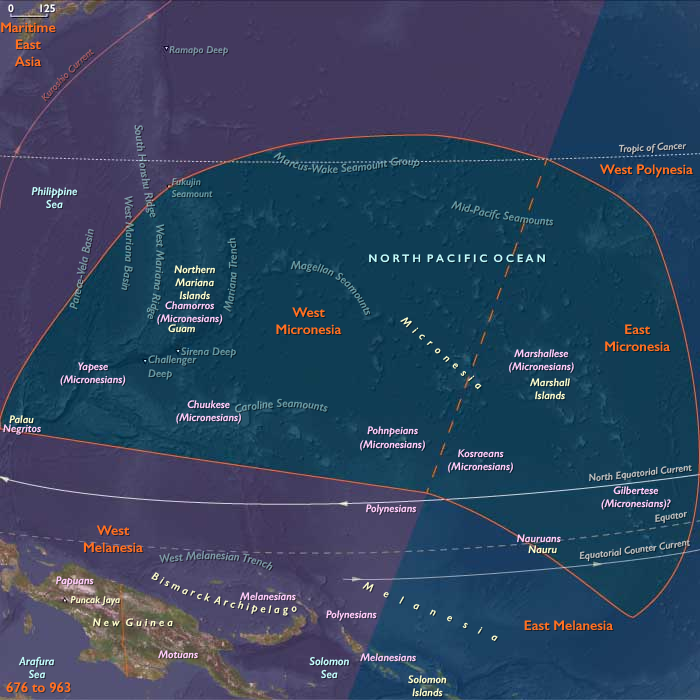
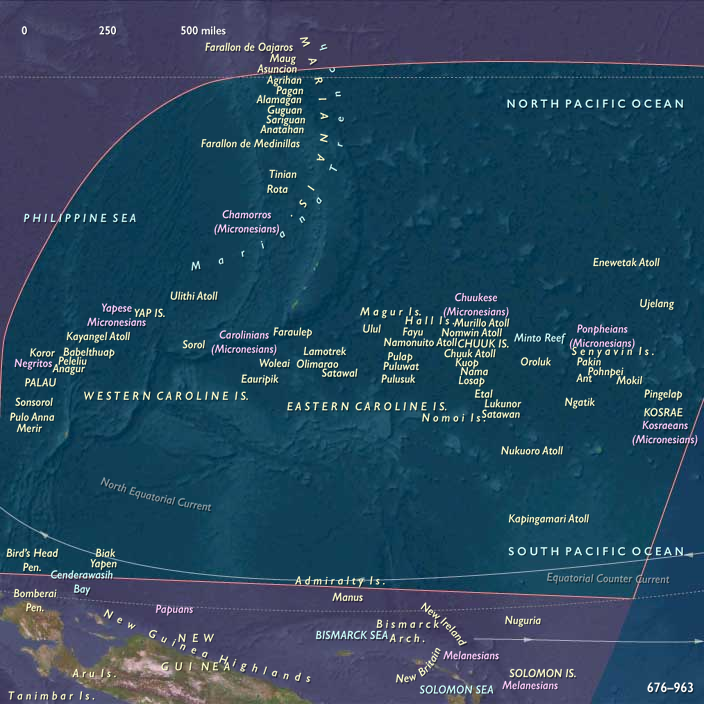
West Micronesia includes the Mariana Islands (Guam, Saipan, Tinian, Rota, and the northern chain), Palau (Babeldaob, Koror, Rock Islands), and Yap (Yap proper and its outer atolls).
-
Anchors: Guam–Saipan–Tinian–Rota villages; Babeldaob–Koror (Palau) with the Rock Islands; Yap proper with outer-atoll satellites (Ulithi–Woleai).
Climate & Environmental Shifts
-
First-millennium oscillations increased drought risk on limestone islands; Palau’s volcanic catchments and Yap’s wetlands buffered dryness; redistribution voyages grew central.
Subsistence & Settlement
-
Marianas: coastal settlements expanded; by the late first millennium CE the foundations for megalithic latte architecture were forming (full florescence mostly after 800–900 CE).
-
Palau: irrigated taro-swamp systems (Babeldaob) matured; mangrove/reef management intensified; village compounds took characteristic forms.
-
Yap: wet-field taro and reef estates knit villages; outer-atoll ties (Ulithi, Woleai) supplied shell valuables, while Yap supplied timber and stone.
Technology & Material Culture
-
Standardized outriggers with robust sails; stone fish weirs and tidal traps; shell adzes and basalt imports; fine fiber mats.
-
In Marianas, pottery traditions simplified; shell/bone hooks specialized for pelagics; groundwork for latte house foundations (megalithic caps and pillars) set late in the period.
Movement & Interaction Corridors
-
Regular canoe convoys circulated food, timber, and tools across each archipelago; Yap–outer atoll ties deepened; Palau served as a high-island hub for mangrove/timber and lagoon products.
Belief & Symbolism
-
Navigator guilds held sacred star-path knowledge; founding shrines at passes/landings; ancestor stones and canoe-house rituals sanctified tenure.
-
The social prestige of long-distance voyaging rose; ritual feasts sealed alliances.
Environmental Adaptation & Resilience
-
Distributed islet zoning, taro-pit agriculture, arboriculture, and reciprocal exchange buffered ENSO droughts and cyclones; canoe logistics enabled rapid inter-village relief.
Transition
By 819 CE, West Micronesia was a lattice of settled canoe societies: Marianas moving toward the latte era, Palau with mature taro-swamp engineering, and Yap orchestrating high-island/outer-atoll exchange — all precursors to the monumental and tribute systems described in our later medieval entries.
Groups
Commodoties
Subjects
Regions
Subregions
Years: 909BCE - 819
Groups
Commodoties
Subjects
Regions
Subregions