
East Micronesia (964 – 1107 CE): Monumental …
Years: 964 - 1107
East Micronesia (964 – 1107 CE): Monumental Beginnings, Navigational Mastery, and Expanding Chiefdoms
Geographic and Environmental Context
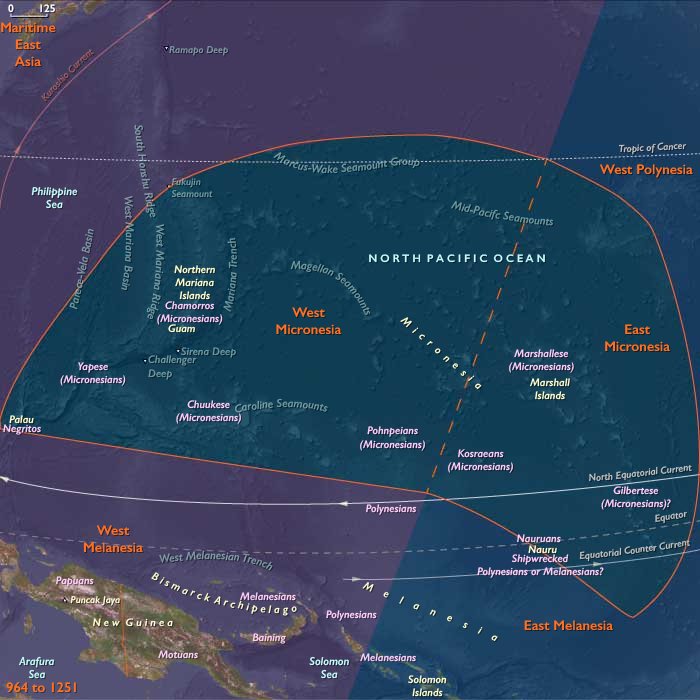
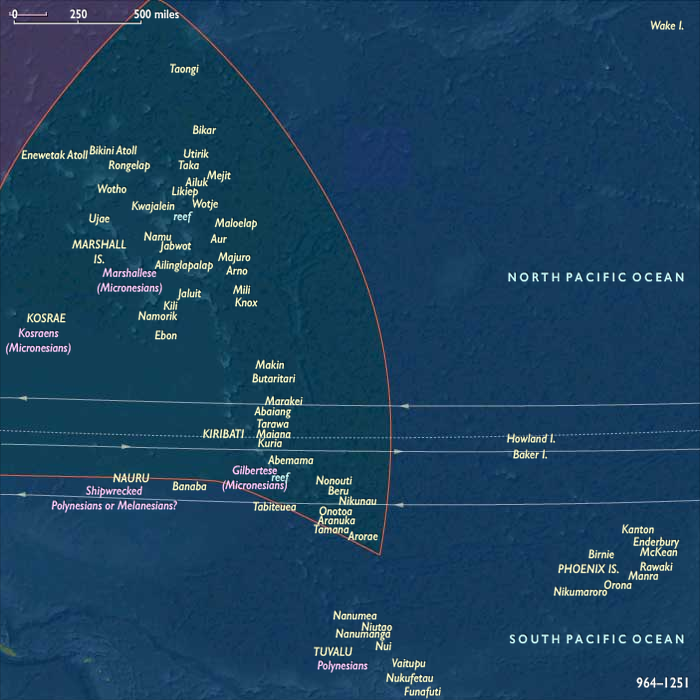
East Micronesia includes Kiribati, the Marshall Islands, Nauru, and Kosrae.
-
The Marshall and Kiribati atolls depended on lagoon fishing, coconut cultivation, and reef resources.
-
Kosrae, as a high island, offered agricultural abundance and freshwater, serving as the regional political center.
-
Nauru remained small and self-sufficient, oriented toward fishing and small-scale horticulture.
Climate and Environmental Shifts
-
The Medieval Warm Period stabilized rainfall across much of the Pacific, though atolls remained vulnerable to El Niño drought cycles.
-
Cyclones posed recurring threats, mitigated by inter-island exchange.
-
Fertile Kosrae buffered food shortages for surrounding islands.
Societies and Political Developments
-
Kosrae saw the rise of a powerful sacred kingship (tokosra), consolidating authority and laying the foundations for the later monumental city of Lelu.
-
Atoll chiefdoms in the Marshall Islands and Kiribati expanded, with chiefs regulating land tenure, fishing, and ritual redistribution.
-
Nauru maintained smaller, clan-based communities with flexible leadership.
-
Regional cohesion was reinforced by inter-island voyaging, marriage alliances, and ceremonial exchanges.
Economy and Trade
-
Breadfruit, taro, pandanus, and coconuts formed horticultural staples.
-
Fishing and sea foraging remained central, with preserved surpluses sustaining populations.
-
Inter-island exchange moved canoes, mats, preserved breadfruit, shell valuables, and ritual goods.
-
Kosrae’s emerging political centrality attracted tribute and cemented its role as an island hub.
Subsistence and Technology
-
Outrigger and double-hulled canoes supported long-range voyaging and trade.
-
Navigation mastery deepened, with Marshallese stick charts encoding swells and currents.
-
Early stone construction began at Kosrae, foreshadowing Lelu’s monumental architecture.
-
Breadfruit preservation pits allowed food to be stored for years, a vital adaptation.
Movement and Interaction Corridors
-
The Marshall Islands and Kiribati developed extensive voyaging networks, linking scattered atolls.
-
Kosrae became a major node, drawing in exchange from the wider Caroline and Micronesian worlds.
-
Nauru maintained looser ties but still participated in ritualized exchanges.
-
Regional mobility ensured resilience and reinforced cultural unity.
Belief and Symbolism
-
Sacred kingship on Kosrae intertwined political and divine authority.
-
Atoll societies emphasized ancestral spirits, ocean deities, and navigation rituals.
-
Canoes were sacred vessels, imbued with mana, their construction accompanied by ritual.
-
Shrines and ritual sites on Kosrae reflected growing social stratification.
Adaptation and Resilience
-
Breadfruit preservation and coconut dependence ensured resilience in fragile atoll ecologies.
-
Inter-island exchange created redundancy and social security.
-
Monumental beginnings on Kosrae reflected stability, wealth, and centralized authority.
-
Navigation systems enabled adaptation through access to distant resources.
Long-Term Significance
By 1107 CE, East Micronesia had developed into a maritime world of atoll chiefdoms and an emerging centralized kingdom on Kosrae. Navigational mastery, preserved food systems, and the first monumental architecture prepared the region for the flourishing of Lelu and East Micronesian voyaging traditions in the High Middle Ages.
Groups
Topics
Commodoties
Subjects
Regions
Subregions
Years: 964 - 1107
Groups
Topics
Commodoties
Subjects
Regions
Subregions