
East Micronesia (7,821 – 6,094 BCE): Early …
Years: 7821BCE - 6094BCE
East Micronesia (7,821 – 6,094 BCE): Early Holocene — Freshwater Lens Growth and Reef–Valley Coupling (No Human Presence)
Geographic & Environmental Context
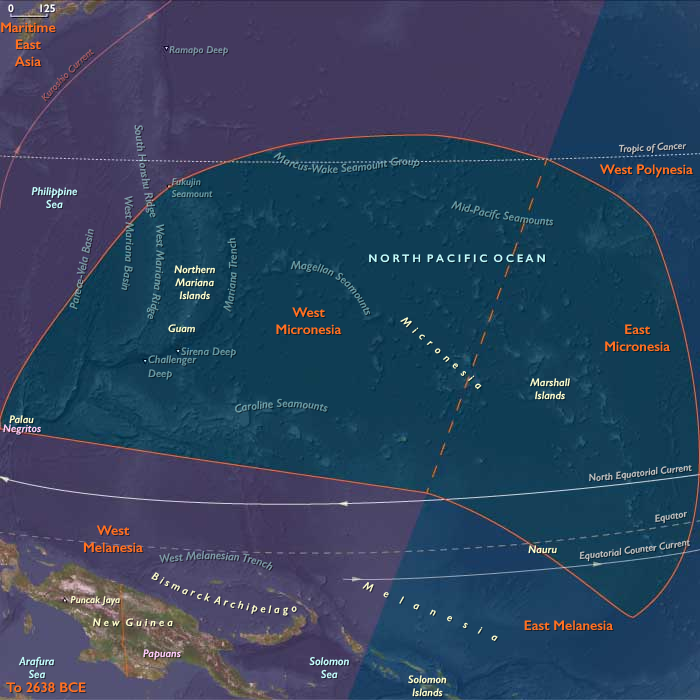
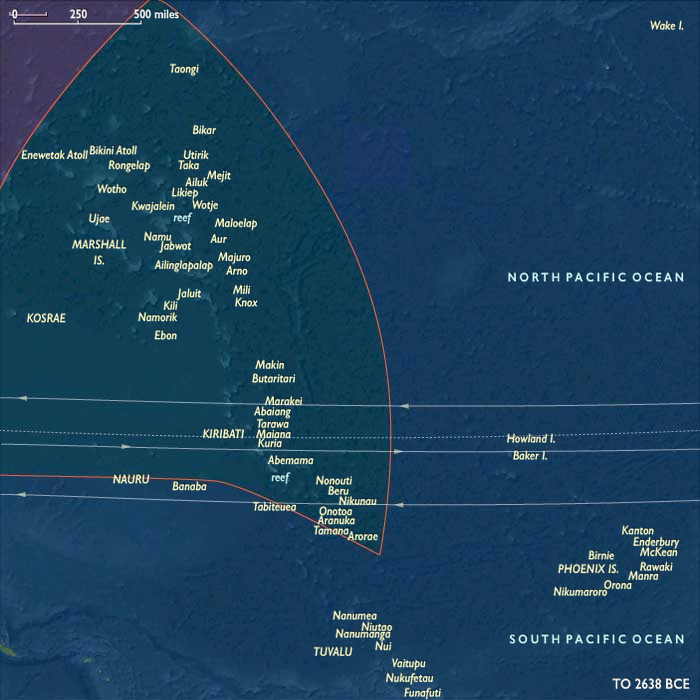
East Melanesia includes Kiribati (Gilbert Islands), the Marshall Islands (Ralik and Ratak chains), Nauru (uplifted phosphatic limestone island), and Kosrae (high, volcanic island on the eastern Caroline arc).
-
Anchors: broad, perched freshwater lenses began forming beneath Gilbert and Marshall atolls; Kosrae consolidated as a high-island hydrological hub.
Climate & Environmental Shifts
-
Holocene thermal optimum: stable trades, warm SSTs, reliable rainfall; occasional Kona-like storm systems.
Baseline Ecology
-
Atolls: lens-fed wetlands and shallow sabkha pockets formed behind beach ridges; reef flats and passes matured.
-
Kosrae: dense cloud forests, uncut valleys, and intact riparian corridors.
Long-Term Significance
These freshwater lenses are the future substrate for sunken taro gardens (taro pits) and village wells; Kosrae’s perennial streams anticipate wet-field taro.
Topics
Subjects
Regions
Subregions
Years: 7821BCE - 6094BCE
Topics
Subjects
Regions
Subregions