
East Micronesia (820–1971 CE): Colonization, Resistance, and …
Years: 820 - 1971
East Micronesia (820–1971 CE): Colonization, Resistance, and Independence
Political and Military Developments
Indigenous Governance and Societal Structures
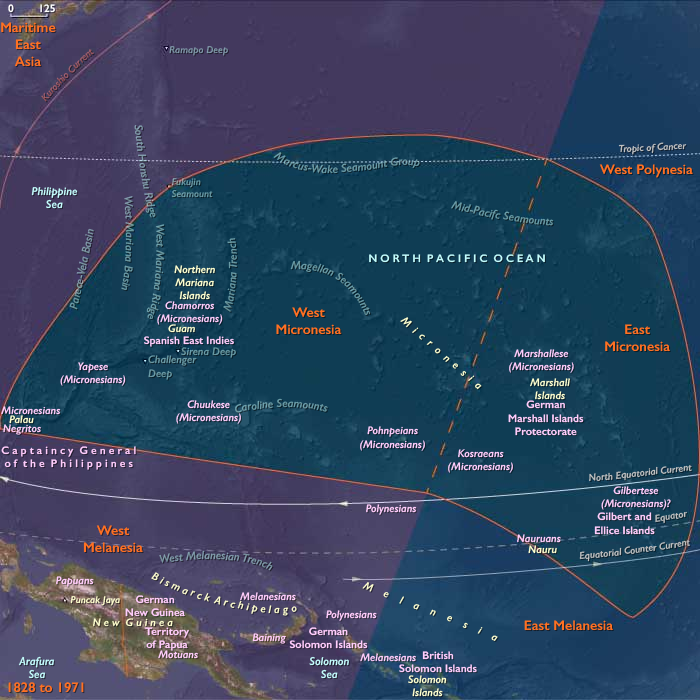
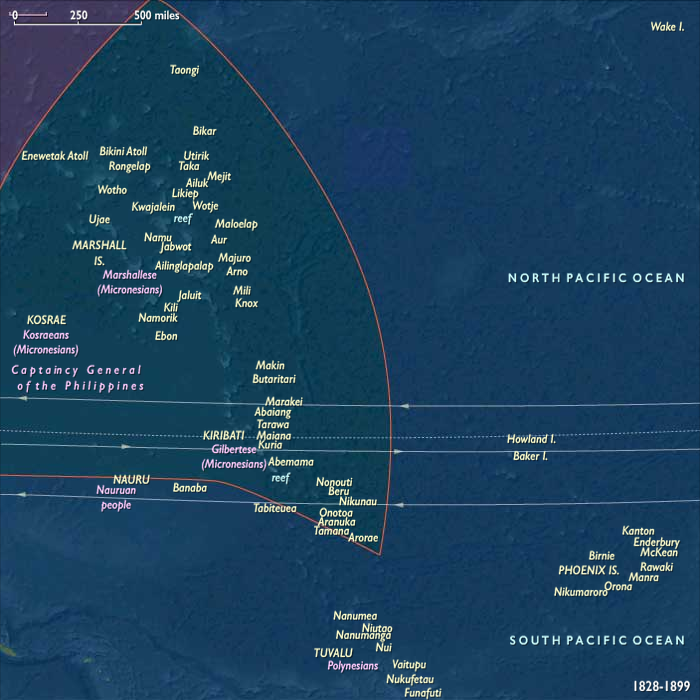
Between 820 and 1800 CE, indigenous East Micronesian societies, including those in Kosrae, the Marshall Islands, Kiribati, and Nauru, continued developing complex social structures and political systems based on clan leadership, community consensus, and strategic alliances.
European Exploration and Colonization
European exploration significantly impacted East Micronesia beginning in the 16th century, but substantial colonization efforts intensified in the late 19th century. Germany established colonial control over the Marshall Islands and Nauru in 1886 and 1888, respectively. Kiribati fell under British protection in 1892, while Kosrae became part of German Micronesia until it transferred to Japanese administration post-World War I.
Japanese and American Administration
Post-World War I, Japan administered the region under a League of Nations mandate until its defeat in World War II. Afterward, the United States assumed administrative authority over the Marshall Islands and Kosrae under the Trust Territory of the Pacific Islands. Nauru became jointly administered by Australia, New Zealand, and Britain, while Kiribati remained under British colonial rule.
Movement Toward Independence
Throughout the 20th century, nationalist movements and demands for self-governance intensified. By the late 1960s, significant strides toward independence occurred, culminating in eventual sovereignty for many island states in subsequent years.
Economic and Technological Developments
Economic Transformation under Colonial Rule
Colonial rule introduced significant economic transformations, including the commercialization of copra production, phosphate mining in Nauru beginning in 1906, and infrastructure improvements aimed at facilitating resource extraction and colonial governance.
Technological and Infrastructure Advances
Colonial powers introduced modern infrastructure such as transportation networks, telecommunications, and improved maritime facilities. These developments fundamentally reshaped local economies, social structures, and everyday life in East Micronesia.
Cultural and Artistic Developments
Cultural Preservation and Adaptation
Despite colonial pressures, East Micronesian communities preserved many traditional cultural practices, including oral histories, navigational traditions, and communal rituals. Artistic expressions blended indigenous and colonial influences, creating dynamic cultural landscapes.
Revival and Assertion of Indigenous Culture
The 20th century saw concerted efforts to revive and assert indigenous cultural identities, particularly in response to external influences and increasing calls for independence and autonomy.
Social and Religious Developments
Impact of Christianity
Missionaries significantly impacted religious and social structures throughout East Micronesia. Christianity, predominantly Protestantism and Catholicism, became widely adopted, integrating with traditional belief systems and influencing community practices and societal norms.
Social Transformation
Colonial administration introduced Western education, legal frameworks, and governance models, dramatically reshaping local societies. However, traditional kinship systems, clan structures, and communal decision-making practices persisted as core societal foundations.
Long-Term Consequences and Historical Significance
The period from 820 to 1971 CE marked transformative developments in East Micronesia, characterized by colonial encounters, economic changes, cultural adaptation, and the drive toward self-determination. These centuries profoundly influenced regional identities, social structures, and economic foundations, setting the stage for post-colonial nation-building and ongoing regional dynamics.
Groups
- Nauru (Pleasant Island)
- Marshall Islands
- United States of America (US, USA) (Washington DC)
- Britain (United Kingdom of Great Britain and Ireland)
- Gilbert Islands
- German Empire (“Second Reich”)
- Marshall Islands (Spanish colony)
- German Pacific Possessions
- Marshall Islands (German colony)
- Nauru (German colony)
- Gilbert Islands, British protectorate of
- Japan, Taisho Period
- Marshall Islands (Japanese occupied)
- Nauru (Australian colony)
- Marshall Islands (South Pacific Mandate)
- Japan, Showa Period
- Australia, Commonwealth of
- Britain (United Kingdom of Great Britain and Northern Ireland)
- Marshall Islands (Trust Territory of the Pacific Islands)
- Pacific Islands, Trust Territory of the
- New Zealand (Aotearoa)
- Nauru, Republic of
Commodoties
Subjects
Regions
Subregions
Related Events
Showing 10 events out of 54673 total
Years: 820 - 1971
Groups
- Nauru (Pleasant Island)
- Marshall Islands
- United States of America (US, USA) (Washington DC)
- Britain (United Kingdom of Great Britain and Ireland)
- Gilbert Islands
- German Empire (“Second Reich”)
- Marshall Islands (Spanish colony)
- German Pacific Possessions
- Marshall Islands (German colony)
- Nauru (German colony)
- Gilbert Islands, British protectorate of
- Japan, Taisho Period
- Marshall Islands (Japanese occupied)
- Nauru (Australian colony)
- Marshall Islands (South Pacific Mandate)
- Japan, Showa Period
- Australia, Commonwealth of
- Britain (United Kingdom of Great Britain and Northern Ireland)
- Marshall Islands (Trust Territory of the Pacific Islands)
- Pacific Islands, Trust Territory of the
- New Zealand (Aotearoa)
- Nauru, Republic of
Commodoties
Subjects
Regions
Subregions